Blue Switches on Mechanical Keyboards: Typing Performance and Noise
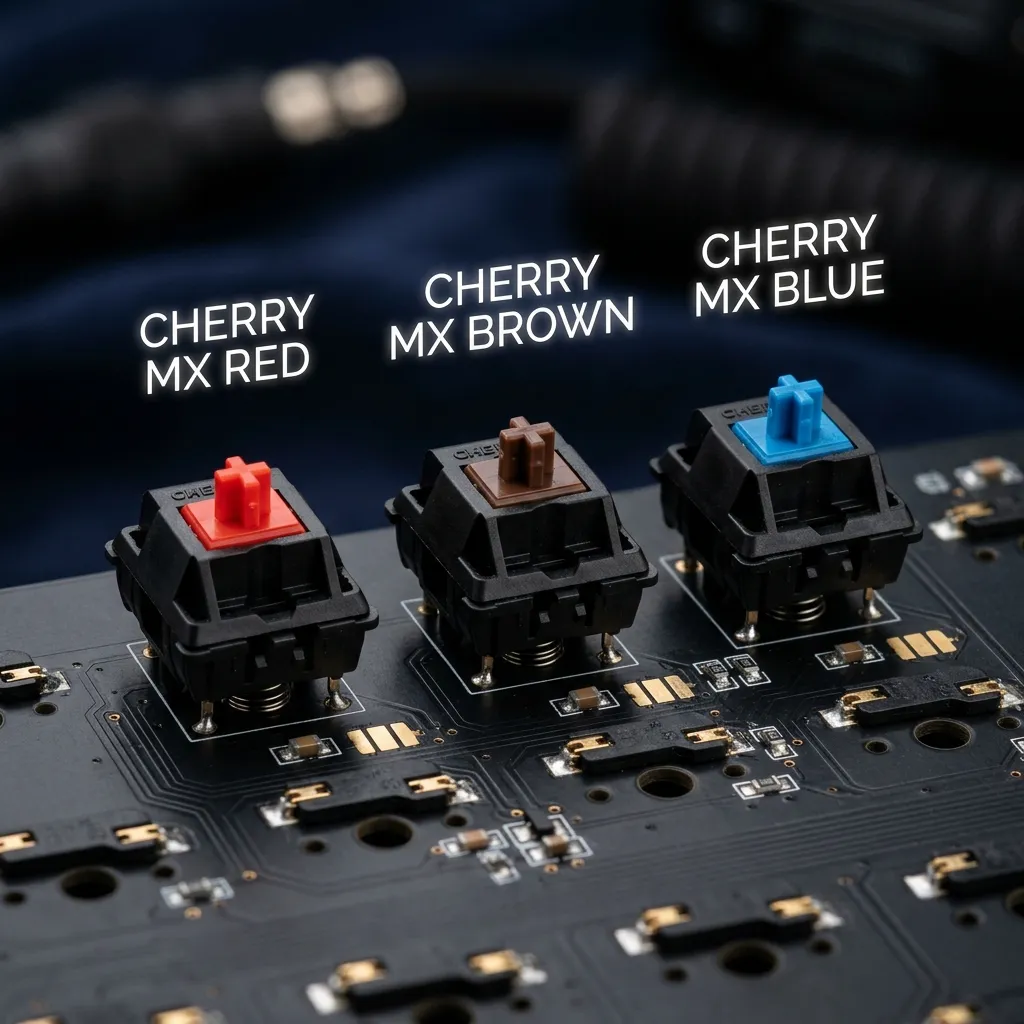
Blue switches offer a unique typing experience characterized by tactile feedback and audible click sound, enhancing typing performance.
Ergonomics of Blue Switches
Blue switches typically feature a tactile bump at the actuation point, providing physical feedback that can improve typing accuracy. However, the pronounced click sound may not be suitable for all work environments.
Performance Characteristics
These switches generally require 50g of actuation force, making them responsive for typists who favor a firmer keypress. The actuation point is reached at approximately 1.6mm, which allows for rapid typing speeds.
Materials and Construction
Blue switches often utilize high-quality plastic for the housing and metal for the spring mechanism. This combination ensures durability, with a lifespan exceeding 50 million keystrokes.
Design and Aesthetics
The design of blue switches usually incorporates a transparent casing, allowing LED backlighting to shine through, enhancing visual appeal. This aesthetic makes them popular among gamers and typists alike.
Noise Considerations
The audible click sound produced by blue switches can be a double-edged sword; it provides satisfying auditory feedback but can also be disruptive in quiet settings. Users should consider their environment before opting for these switches.
| Feature | Blue Switches | Red Switches | Brown Switches |
|---|---|---|---|
| Actuation Force | 50g | 45g | 55g |
| Actuation Distance | 1.6mm | 1.2mm | 2.0mm |
| Noise Level | High | Low | Medium |
| Tactile Feedback | Tactile | Linear | Soft Tactile |
| Typical Use | Typing | Gaming | Versatile |
DomineTec Tip: To mitigate noise, consider using O-rings on blue switches, which can dampen the sound without sacrificing the tactile experience.
- Evaluate typing habits to determine if tactile feedback is preferred.
- Test blue switches in-store to experience the noise level firsthand.
- Consider the workspace environment when selecting a switch type.
- Research keyboard models that feature high-quality blue switches.
- Explore customization options for keycaps to enhance aesthetics.
For further reading, explore the clean productivity desk setup and the mechanical keyboard switches comparison guide.
Typing Technique and Skill Development
The tactile feedback of blue switches can enhance typing technique significantly, encouraging users to develop a more deliberate approach to their keystrokes. This feedback prompts typists to adjust their finger positioning and pressure, potentially leading to improved accuracy over time.
As users become accustomed to the distinct actuation point, they often find themselves typing faster and with greater confidence. Moreover, the audible click of blue switches serves as an auditory cue that can help reinforce a more effective typing rhythm.
Compatibility with Different Operating Systems
Blue switches are widely compatible with various operating systems, making them a versatile choice for users across different platforms. Whether on Windows, macOS, or Linux, these switches ensure a consistent typing experience due to their standardized key layouts.
However, it is essential for users to consider any specific key mapping functionalities that may vary between operating systems. By understanding these differences, users can maximize their typing efficiency and overall productivity regardless of their chosen environment.
Gaming Performance with Blue Switches
While blue switches are primarily known for their typing benefits, they also have implications for gaming performance. The tactile feedback can provide gamers with a satisfying feel during gameplay, though the actuation force may not be optimal for all gaming styles.
Competitive gamers often prefer switches with faster actuation times, which can detract from the appeal of blue switches for high-stakes scenarios. Nonetheless, casual gamers may enjoy the tactile and auditory experience offered by blue switches, enhancing their overall enjoyment of games.
Maintenance and Longevity
Blue switches are designed for durability, often rated for tens of millions of keystrokes, which contributes to their long lifespan. Regular maintenance, such as cleaning the keyboard and ensuring that no debris accumulates between the keys, can further extend their usability.
Users should take care to avoid spills or excessive wear, which can compromise the performance of the switches over time. By implementing a routine maintenance schedule, users can ensure that their blue switch keyboards remain in optimal condition for years to come.
Comparative Analysis with Other Switch Types
When evaluating blue switches, it is critical to compare them with other switch types, such as red and brown switches. Red switches typically offer a smoother, linear experience, which may appeal to gamers needing rapid key presses without tactile feedback.
In contrast, brown switches provide a middle ground with subtle tactile feedback, catering to users who desire a balance between typing and gaming performance. Understanding these differences allows users to make informed decisions based on their specific needs and preferences.
User Experience and Community Feedback
The feedback from users regarding blue switches often highlights their unique typing experience, particularly the satisfaction derived from tactile and auditory responses. Many users report a sense of nostalgia or connection to traditional typewriters, which enhances their overall enjoyment of typing tasks.
Community forums and reviews frequently emphasize the importance of personal preference, suggesting that individual experiences can vary widely. It is beneficial for potential buyers to engage with these communities to gain insights and perspectives on their own needs.
Environmental Impact and Sustainability
The production and disposal of mechanical keyboards, including those with blue switches, raise important environmental considerations. Some manufacturers are focusing on sustainable practices, such as using recyclable materials and reducing waste during production.
Consumers are increasingly aware of the environmental impact of their purchases, prompting a shift towards eco-friendly options in the mechanical keyboard market. By choosing brands committed to sustainability, users can enjoy their blue switch keyboards while minimizing their ecological footprint.
Customization Options for Blue Switch Keyboards
Customization is a significant aspect of mechanical keyboards, especially for users of blue switches who often seek to enhance their typing experience. Keycap replacement is one of the most popular forms of customization, allowing users to change the look and feel of their keyboard while also potentially improving key feel.
Users can choose from a variety of materials, colors, and profiles, which can affect both aesthetics and typing performance. Additionally, many mechanical keyboards offer software that enables users to remap keys and create macros, streamlining workflows and enhancing productivity.
Impact of Key Travel Distance
The key travel distance of blue switches plays a crucial role in typing performance and user comfort. Typically, blue switches feature a travel distance of around 4mm, which can be beneficial for users who prefer tactile feedback and auditory confirmation while typing.
This longer travel distance may lead to increased typing speed for some users, although it could also be a disadvantage for those who favor rapid key presses. Understanding the implications of key travel distance can help users select the right switch type that aligns with their typing style and preferences.
Programming and Software Compatibility
Programming capabilities are becoming increasingly important for mechanical keyboard users, particularly in professional and gaming environments. Many keyboards equipped with blue switches come with dedicated software that allows for advanced configurations such as custom lighting effects and key mapping.
Compatibility with third-party software is also a factor, as it can provide additional functionality like creating complex macros or integrating with other applications. Users should evaluate the available software options to maximize the utility of their blue switch keyboards.
Suitability for Different Professions
The suitability of blue switches can vary significantly across different professions, influencing user satisfaction and productivity. Writers, software developers, and data analysts often prefer blue switches for their tactile and auditory feedback, which can enhance typing speed and accuracy.
In contrast, professionals in sound-sensitive environments, such as video editing and recording, may find blue switches less suitable due to their noise levels. Understanding the specific demands of one's profession can help in making an informed decision regarding the choice of mechanical switches.
Future Trends in Mechanical Keyboard Technology
The mechanical keyboard market is continuously evolving, with innovations poised to impact the future of switch technology, including blue switches. Emerging trends include the development of quieter switches that maintain the tactile feedback characteristic of blue switches while reducing noise levels.
Additions such as customizable actuation points and hybrid switch designs may also broaden the appeal of blue switches among diverse user bases. Keeping an eye on these trends can help consumers choose the best mechanical keyboard that fits their needs as technology advances.
Accessibility Features of Blue Switch Keyboards
Blue switches are notable for their tactile feedback, which can significantly enhance the typing experience for users with varying levels of accessibility needs. The distinct actuation point allows users to feel when a key is registered, making it easier for individuals who may have difficulty with fine motor skills.
For those with visual impairments, the sound produced by blue switches serves as an additional cue, indicating successful key presses. This auditory feedback can be particularly beneficial when engaging in tasks that require prolonged typing or data entry.
Moreover, the customization options available for blue switch keyboards can further enhance accessibility. Keycap designs that feature larger fonts or contrasting colors can aid in visibility, allowing users to interact with their keyboards more effectively.
Incorporating ergonomic considerations, such as adjustable angles and wrist supports, can complement the tactile benefits of blue switches, creating a more inclusive typing environment for a diverse user population.
Impact of Keycap Material on Typing Experience
The material of keycaps can greatly influence the overall typing experience on blue switch keyboards. Common materials include ABS and PBT, each offering unique characteristics that affect durability and feel.
ABS keycaps are often favored for their affordability and vibrant color options, but they tend to wear down more quickly, leading to a less satisfying typing experience over time. In contrast, PBT keycaps are more durable and resistant to fading, which can enhance the longevity of the tactile feedback provided by blue switches.
The surface texture of keycaps also plays a role in user experience. A smoother texture may allow for faster typing speeds, while a textured surface can provide additional grip, reducing finger slippage during extended typing sessions.
Ultimately, the choice of keycap material should align with user preferences and typing habits, as these factors can significantly affect both performance and satisfaction with blue switch keyboards.
Influence of Keyboard Layout on Typing Efficiency
The layout of a keyboard can have a profound impact on typing efficiency when using blue switches. Standard layouts, such as QWERTY, are widely used; however, variations like ergonomic or compact layouts may cater to specific user needs.
Ergonomic layouts are designed to reduce strain on the hands and wrists, potentially enhancing comfort during long typing sessions. This is particularly relevant for users who rely on tactile feedback from blue switches to maintain their typing rhythm.
Compact layouts, such as tenkeyless designs, can improve desk space and portability, making them ideal for users who travel frequently or have limited workspace. However, users may need to adapt their typing technique to accommodate the absence of certain keys.
Ultimately, the choice of keyboard layout should consider the user’s typing style, frequency of use, and personal comfort, as these factors can greatly influence typing efficiency and overall satisfaction with blue switch keyboards.
Key Switch Technology Evolution
The evolution of key switch technology has transformed mechanical keyboards significantly over the years. The introduction of Cherry MX Blue switches marked a pivotal moment, combining tactile feedback with audible clicks, which appealed to typists and gamers alike.
As advancements continue, manufacturers are exploring hybrid switch designs that blend the characteristics of traditional mechanical switches with membrane technology, aiming to cater to a broader audience. This innovation reflects an ongoing commitment to enhancing typing performance and user satisfaction.
Moreover, the development of optical and low-latency switches has emerged as a response to the growing demand for higher performance, particularly in gaming environments. These switches promise faster actuation times and increased durability, challenging the dominance of traditional mechanical switches.
Ultimately, the trajectory of key switch technology suggests a future where customization and adaptability are prioritized, allowing users to select switch types that best suit their individual needs and preferences.
Health Implications of Extended Use
Extended use of mechanical keyboards, particularly those with blue switches, can have implications for user health. The tactile feedback and audible clicks may encourage longer typing sessions, but they can also lead to fatigue if not used properly.
Ergonomists recommend taking regular breaks and practicing proper typing posture to mitigate the risk of repetitive strain injuries (RSI). Users should also consider the keyboard's height and angle to promote a comfortable hand position during prolonged use.
Additionally, the noise produced by blue switches can contribute to a stressful environment, especially in shared spaces. Users should assess their work conditions and possibly opt for quieter switches if noise levels become a concern.
Overall, awareness of these health implications is essential for users of blue switch keyboards, as it helps in fostering a balanced and sustainable typing experience.
Frequently Asked Questions
What are blue switches best for?
Blue switches are ideal for typists who enjoy tactile feedback and audible clicks, making them suitable for writing and programming tasks.
Are blue switches too noisy for an office?
The noise level of blue switches can be disruptive in quiet office settings; alternatives may be preferable for shared spaces.
How long do blue switches last?
Blue switches typically last for over 50 million keystrokes, making them a durable option for frequent users.
Can O-rings be used with blue switches?
Yes, O-rings can be installed on blue switches to reduce noise and soften the bottoming out sound during typing.
Are there alternatives to blue switches?
Alternatives such as red and brown switches provide different tactile experiences, with red switches being quieter and brown switches offering a softer tactile feedback.