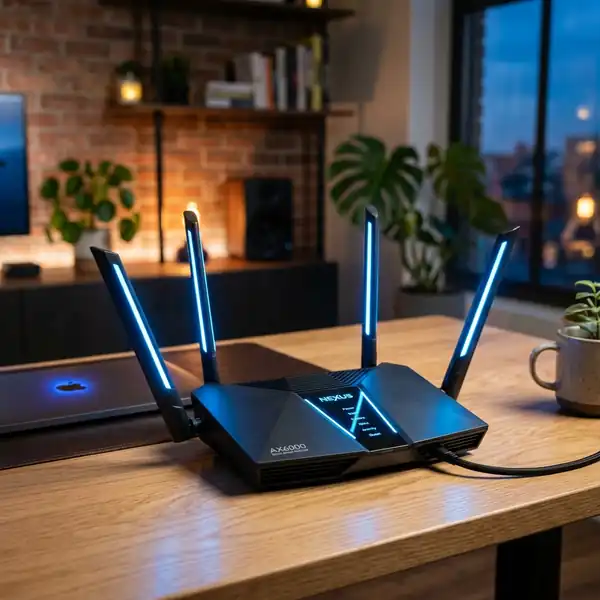
As modern internet connections scale up to gigabit speeds, traditional single routers struggle to distribute bandwidth evenly across large homes. Dense walls, furniture, and interference often degrade Wi-Fi signals, leading to frustrating dead zones. To resolve this without spending a fortune, budget-friendly mesh Wi-Fi systems have become the standard solution. The best budget-friendly mesh Wi-Fi router for 2026 is the TP-Link Deco M4 for sub-300 Mbps plans and the TP-Link Deco S7 or Deco X20 for faster Wi-Fi 6 connections, offering real Gigabit Ethernet ports, IEEE 802.11k/v/r seamless roaming protocols, and expansive coverage at a very affordable price point.
Unlike traditional Wi-Fi repeaters, which create separate network names (SSIDs) and cut bandwidth in half due to their half-duplex nature, mesh systems use multiple nodes to broadcast a single, unified wireless network. This allows your devices to automatically and seamlessly transition between nodes as you walk around the house (Seamless Roaming). The handover is handled dynamically behind the scenes by advanced protocols, ensuring that video calls, streaming sessions, and online gaming remain uninterrupted by packet loss or connection drops.
1. Why Choose Mesh Over Traditional Wi-Fi Extenders?
To understand the value of budget mesh systems, we must look at how legacy extension systems fail. Traditional range extenders connect to your router wirelessly and rebroadcast the signal using the same channel. Because they cannot send and receive data at the same time on a single channel without sharing time-slices, your connection speed drops by at least 50% as soon as you connect to the repeater.
Mesh nodes, on the other hand, utilize dynamic routing tables and multi-hop topology. They can dynamically choose the fastest path back to the main router. This backhaul connection can be established over a dedicated 5 GHz radio channel or via physical ethernet cables (Ethernet Backhaul). If one node experiences temporary interference from a household appliance, the system reroutes data through another path instantly, preserving your throughput. This self-healing architecture prevents the entire home network from dropping out when a single extension unit fails or is unplugged.
2. Key Features to Look For in a Budget Mesh System
When shopping for a budget mesh system, do not rely solely on the theoretical speed ratings (such as AC1200 or AX3000) printed on the packaging. Instead, focus on these critical hardware specifications to ensure optimal real-world performance:
- Gigabit Ethernet Ports: Ensure every node is equipped with 10/100/1000 Mbps (Gigabit) WAN/LAN ports. Some ultra-cheap mesh routers use 100 Mbps Fast Ethernet ports, which bottleneck your entire network to a maximum speed of 100 Mbps, regardless of how fast your Wi-Fi is.
- Wi-Fi Standard (Wi-Fi 5 vs Wi-Fi 6): Wi-Fi 6 (802.11ax) has become highly affordable. It introduces OFDMA (Orthogonal Frequency-Division Multiple Access) and bi-directional MU-MIMO, which allow the router to communicate with multiple devices simultaneously, preventing latency spike issues.
- Industry Standard Roaming Protocols (802.11k/v/r): These protocols manage device handovers. 802.11k provides a list of nearby nodes, 802.11v determines when to push a device to a better node, and 802.11r fast-tracks authentication, allowing devices to hop between nodes in under 50 milliseconds.
- WPA3 Encryption Support: Modern security protocols protect your wireless signals from decryption. Buying a system with hybrid WPA2/WPA3 support prevents attackers from sniffing local smart home traffic or exploiting legacy vulnerabilities.
3. Top Budget Mesh Wi-Fi Systems Reviewed
To help you choose the best setup for your home, we have thoroughly analyzed the leading budget-friendly mesh systems available on the market:
TP-Link Deco M4 (Best Overall Wi-Fi 5 Budget Mesh)
The Deco M4 remains incredibly popular due to its rock-solid stability. Operating on the AC1200 standard (867 Mbps on 5 GHz and 300 Mbps on 2.4 GHz), it features two gigabit ports per node. Configured easily through the user-friendly Deco smartphone app, it offers built-in parental controls, network isolation for smart home devices, and supports up to 100 client devices. It is perfect for home internet plans up to 300 Mbps. It provides a circular coverage pattern that is excellent for square or rectangular properties.
TP-Link Deco S7 (Stronger AC1900 Alternative)
For those with 400 Mbps or 500 Mbps connections who prefer to stay on Wi-Fi 5, the TP-Link Deco S7 offers a solid middle ground. With AC1900 speeds (1300 Mbps on the 5 GHz band and 600 Mbps on 2.4 GHz) and a 3x3 MIMO layout, it delivers faster raw file transfer speeds for compatible laptops and smartphones, reducing network overhead during high-bandwidth usage. It is built to last with robust internal antennas.
TP-Link Deco X20 (Best Affordable Wi-Fi 6 Mesh)
For users with fiber internet plans of 500 Mbps or more, the Deco X20 is the ideal choice. Operating on the AX1800 standard, it adds WPA3 security, OFDMA, and 80 MHz channel width support. It excels at handling busy networks with multiple smartphones, smart TVs, and IoT sensors, keeping ping low and connections stable. The X20 nodes are backward compatible, meaning they can join networks containing older Deco units seamlessly.
Xiaomi Mesh System AX3000 (Best Performance per Dollar)
Xiaomi's AX3000 system offers outstanding hardware specs for the price. With support for 160 MHz channels on the 5 GHz band, it can deliver real-world speeds exceeding 800 Mbps over Wi-Fi. The sleek, tower-style design features excellent internal heat dissipation and 256 MB of RAM, preventing bottlenecks during heavy downloading or streaming sessions. The unified web interface allows for precise configuration of subnets and DHCP pools.
Mercusys Halo H80X (Outstanding Value Option)
Mercusys, a sub-brand of TP-Link, offers the Halo H80X at a highly aggressive price. Operating on the AX3000 standard, it provides high speeds and simple app-based management. While it lacks some of the premium software features of the Deco lineup, it delivers excellent raw performance and coverage for budget-conscious buyers. Its square design makes it easy to integrate into any home decor.
4. Technical Specifications Comparison
The table below compares the essential technical features of the top budget mesh systems to help you identify the right model for your network requirements:
| Mesh Model | Wi-Fi Generation | Nominal Speed | Ethernet Ports | Max Coverage (2-Pack) |
|---|---|---|---|---|
| TP-Link Deco M4 | Wi-Fi 5 (802.11ac) | AC1200 (867 + 300 Mbps) | 2x Gigabit Ports | Up to 2,800 sq ft |
| TP-Link Deco X20 | Wi-Fi 6 (802.11ax) | AX1800 (1201 + 574 Mbps) | 2x Gigabit Ports | Up to 4,000 sq ft |
| Xiaomi AX3000 | Wi-Fi 6 (802.11ax) | AX3000 (2402 + 574 Mbps) | 3x Gigabit Ports | Up to 3,500 sq ft |
| Mercusys Halo H80X | Wi-Fi 6 (802.11ax) | AX3000 (2402 + 574 Mbps) | 3x Gigabit Ports | Up to 3,800 sq ft |

5. Optimal Placement Strategies for Mesh Nodes
One of the most common mistakes users make is placing their secondary mesh node directly in a Wi-Fi dead zone. Remember, a secondary node can only rebroadcast the signal it receives. If placed in an area where the signal is already weak, it will retransmit a slow, degraded connection.
Use these tips to optimize node placement:
- The Halfway Rule: Place your secondary node approximately halfway between your main router (connected to your ISP modem) and the dead zone you want to cover. This ensures the node has a strong link back to the gateway.
- Minimize Physical Obstacles: Keep nodes out of closets, drawers, and away from heavy brick or concrete walls. Metal objects, mirrors, large aquariums, and thick plaster walls absorb radio waves, particularly the 5 GHz band.
- Elevated Position: Elevate the nodes by placing them on shelves or tables about 3 to 5 feet off the ground. This provides a clearer line of sight than placing them on the floor or behind large furniture like sofas.
- Multi-Floor Spacing: In a multi-story house, try to avoid placing nodes directly above one another. Staggering them diagonally provides a better vertical signal pathway through concrete flooring slabs.
6. Step-by-Step Installation Guide
Setting up a modern budget mesh system is straightforward and does not require complex web browser configurations. It is completed via smartphone apps. Here is the general process:
- Power Cycle Your Modem: Unplug your existing modem's power cable for 30 seconds. This resets the ARP cache and allows it to properly assign an IP address to the new main mesh node.
- Connect the Main Node: Use the included Ethernet cable to connect one of the main node's WAN/LAN ports to your modem's Ethernet port.
- Power Up the Hardware: Plug your modem back into the wall outlet, then plug in the main mesh node. Wait for the node's LED status light to blink (usually blue or orange, indicating it is ready to pair).
- Open the Setup App: Download the manufacturer's configuration app (e.g., TP-Link Deco, Xiaomi Home) from your phone's app store. Turn on your phone's Bluetooth and Location services.
- Create Network Name and Password: Follow the on-screen prompts to set up a new network name (SSID) and a secure password (using WPA2 or WPA3 security).
- Add Secondary Nodes: Place your secondary node in its location and power it on. In the app, select "Add a node" and wait for the system to detect and configure it wirelessly.
7. Advanced Tips for Maximizing Mesh Efficiency
Once your mesh network is up and running, you can apply a few minor adjustments to maximize network speed and stability:
Implement Ethernet Backhaul: If your home has built-in Ethernet wiring, connect your secondary nodes to the main node using physical network cables. This bypasses wireless backhaul entirely, allowing the 5 GHz band to be used exclusively for client devices, resulting in faster speeds and lower ping.
Toggle Fast Roaming (802.11r): If you notice older smart home devices (like older Wi-Fi printers or legacy smart plugs) disconnecting, you may need to disable Fast Roaming in the app's advanced settings. Modern phones handle fast roaming smoothly, but legacy smart devices can struggle with the protocol's handovers.
Configure Quality of Service (QoS): In your mesh app settings, look for QoS or device prioritization. Assigning high priority to your work laptop or gaming console ensures that large downloads on other devices do not cause lag or audio stuttering during important video conferences.
Channel Width Tuning: If you reside in a highly congested apartment block, you might want to manually set your 5 GHz channel width to 40 MHz instead of 80 MHz or 160 MHz. While this lowers the maximum theoretical speed, it reduces susceptibility to co-channel interference from neighboring routers.
Dynamic IP Reservation: You should reserve local static IP addresses for network storage drives, Smart TVs, and security cameras within the DHCP server interface of the main mesh app. This prevents routing issues and IP address lease exhaustion.
8. Future-Proofing Your Home Network in 2026
With Wi-Fi 7 (802.11be) arriving on premium devices, consumers might worry that buying a Wi-Fi 6 system will leave them outdated. However, the high cost of Wi-Fi 7 hardware and the limited range of the 6 GHz spectrum make Wi-Fi 6 the most practical and cost-effective choice for average households. Investing in a solid budget-friendly Wi-Fi 6 mesh system provides ample bandwidth for streaming, gaming, and working from home, ensuring your network remains highly capable for years to come. In addition, the massive deployment of fiber optic internet means that standard AC and AX systems will easily handle consumer bandwidth demands for at least another five to seven years without needing any structural upgrades. Buying a system with solid customer support and firmware updates ensures your setup remains safe from security flaws.
Understanding EasyMesh and Ecosystem Lock-in
When buying a budget mesh Wi-Fi system, keep in mind that most manufacturers use proprietary protocols to manage synchronization between nodes. If you buy a TP-Link Deco kit, you will only be able to add other TP-Link Deco nodes to expand coverage. However, the industry has introduced EasyMesh, an open standard that allows routers from different brands to work together in a mesh configuration. If you plan to mix and match hardware in the future, check if your budget mesh system supports EasyMesh to avoid being locked into a single brand's ecosystem. Many budget systems are slowly adopting this standard via firmware updates, making it a great feature to look for in product spec sheets.
Frequently Asked Questions
How many mesh nodes do I need for my home?
For homes up to 1,500 sq ft, a single node is usually sufficient, though a 2-pack offers better coverage. For 2-story homes or spaces between 1,500 and 3,000 sq ft, a 2-pack is recommended. For larger homes or spaces with concrete walls, a 3-pack is ideal.
Can I mix different brands of mesh routers?
In most cases, no. Mesh systems from different brands do not communicate because they use proprietary protocols. However, if both devices support the open EasyMesh standard, they can be configured to work together.
Does a mesh system replace my internet modem?
No. You still need your ISP-provided modem (fiber, cable, or DSL) to connect to the internet. The main mesh node connects to your modem via an Ethernet cable to distribute the Wi-Fi network.
Is wired backhaul better than wireless backhaul?
Yes. Wired backhaul (connecting nodes with Ethernet cables) eliminates signal degradation over distance, providing a faster and more stable connection with lower latency.




