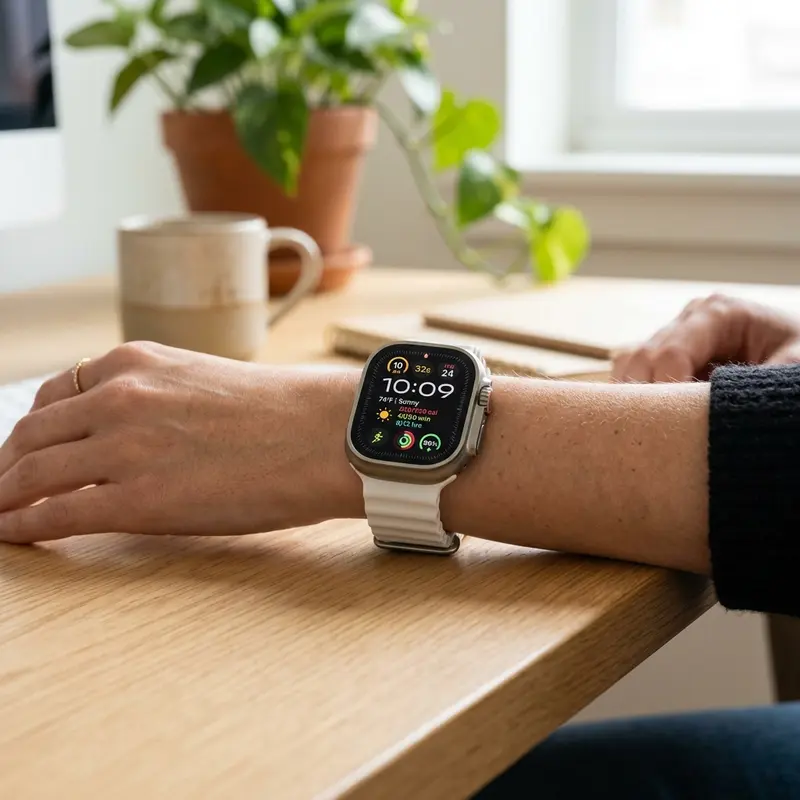
Best Apple Watch to Buy in 2026: Detailed Technical Model Comparison
The Apple Watch ecosystem continues to lead the smart wearables market in 2026. With the introduction of the new Apple Watch Series 11, the rugged Apple Watch Ultra 3, and the entry-level third-generation Apple Watch SE 3, buyers face highly distinct choices. However, selecting the right smartwatch requires comparing raw hardware specifications, active biosensor arrays, and daily battery capabilities to avoid paying for redundant features.
For most buyers in 2026, the Apple Watch Series 11 offers the ideal balance of advanced health tracking (including ECG and temperature checks), a refined thin display, and fast charging. Budget-conscious users will find excellent value in the Apple Watch SE 3, which delivers core activity tracking and notification alerts. Endurance athletes and adventure seekers should invest in the Apple Watch Ultra 3 for its 3000-nits screen, dual-frequency GPS, and up to 72-hour battery life. Mapping your daily needs against these model tiers ensures a high-value purchase.
To optimize your device experience across the broader Apple ecosystem, check out our guide on Apple Watch battery draining fast solutions and learn how to restart frozen Apple Watch to recover from screen freezes.
1. Apple Watch Series 11: The Mainstream Standard
The Apple Watch Series 11 refines the flagship form factor with its slimmed-down aluminum or titanium chassis. Powering the watch is the S11 SiP (System in Package), featuring a high-performance Neural Engine designed to process advanced machine learning models directly on the device. Its LTPO3 display improves viewing angles and screen power consumption when operating in Always-On mode.
On the health front, the Series 11 hosts a complete sensor suite, including an electrical heart sensor for ECG readings, blood oxygen (SpO2) tracking, and sleep temperature monitors. The chassis is thinner than the Series 9, making it highly ergonomic for sleep tracking and workout tracking alike.
2. Apple Watch Ultra 3: Built for the Extreme
The Apple Watch Ultra 3 targets athletes, divers, and outdoor explorers. Encased in a 49mm aerospace titanium frame with a flat sapphire crystal lens, the Ultra 3 is built to withstand high levels of mechanical impact and water pressures down to 40 meters. The screen features a peak brightness of 3000 nits, ensuring legibility under glare.
Battery performance remains the Ultra's defining asset, boasting up to 36 hours of normal battery life on a single charge and extending up to 72 hours under Low Power Mode settings. The dual-frequency GPS (L1 + L5) uses advanced spatial mapping to keep routes accurate even when training in forests or high-rise urban environments.
3. Apple Watch SE 3: High-Value Entry Point
The Apple Watch SE 3 serves as the entry point into watchOS in 2026. By utilizing a modified version of the S9 chipset, it delivers smooth performance for system apps, Siri processing, and workout logging. To hit its lower price point, Apple omitted the Always-On display, ECG sensor, blood oxygen sensor, and body temperature arrays.
However, it retains key safety features like Car Crash Detection, Fall Detection, Emergency SOS, and an optical heart sensor capable of identifying irregular heart rhythms. The back case is crafted from a lightweight nylon composite material, making it comfortable on the wrist.
4. Technical Specifications Comparison
| Technical Spec | Apple Watch SE 3 | Apple Watch Series 11 | Apple Watch Ultra 3 |
|---|---|---|---|
| Chassis Material | Aluminum / Nylon Composite | Aluminum or Polished Titanium | Aerospace Titanium |
| Display Size | 40mm or 44mm (No Always-On) | 42mm or 46mm (Always-On LTPO3) | 49mm (Sapphire Flat 3000 nits) |
| Processor (Chipset) | Modified S9 SiP | S11 SiP Neural Engine | S11 SiP Neural Engine |
| Active Biosensors | 2nd Gen Optical Heart Rate | ECG, SpO2, Sleep Temp, Electrical Heart | ECG, SpO2, Sleep Temp, Depth Sensor |
| GPS Radio | GPS L1 (Single-Frequency) | GPS L1 precision track | GPS L1 + L5 (Dual-Frequency) |
| Battery Rating | Up to 18 hours | Up to 18 - 24 hours (Fast Charge) | Up to 36 - 72 hours (Ultra Mode) |
5. GPS vs. GPS + Cellular: Is eSIM Connectivity Worth It?
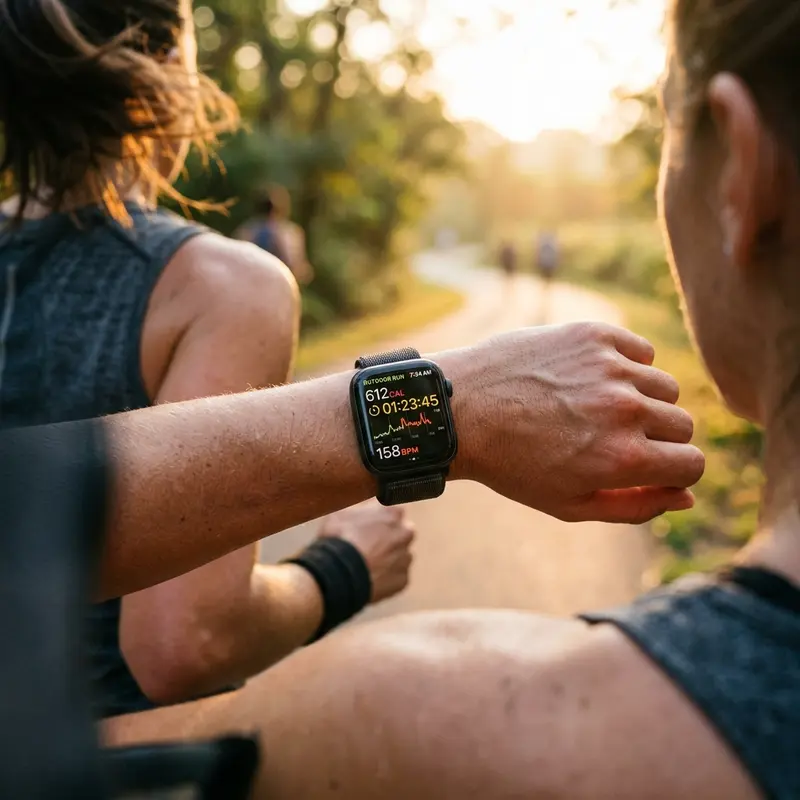
When selecting your model in 2026, you will need to choose between GPS-only and GPS + Cellular configurations. The cellular version allows your Apple Watch to connect directly to LTE networks, letting you make phone calls, stream music on Apple Music, use Apple Maps, and receive text notifications without carrying your iPhone. However, this feature adds a premium to the initial cost and requires a monthly wearable plan from your carrier. If you regularly run or exercise without your phone, cellular is highly recommended. Otherwise, the GPS model is more cost-effective.
6. Long-Term watchOS Support Cycles
One major technical advantage of purchasing a brand-new Apple Watch model is Apple's long-term firmware support. The company typically provides software updates for watchOS for five to six years. Buying a Series 11 or Ultra 3 ensures that you will receive new feature updates and security patches until at least 2031. This long lifecycle keeps the resale value of your wearable higher than competing platforms.
7. Health Sensors and ECG Analysis in 2026: Why Series 11 Matters
The inclusion of the electrical heart sensor (ECG) and the blood oxygen sensor (SpO2) in the Series 11 and Ultra 3 represents a significant step up from the SE 3. These sensors use specialized photodiode arrays to emit green, red, and infrared light onto the wrist blood vessels, measuring backscattered light to calculate oxygen saturation. The ECG operates via a closed loop when the user places their finger on the Digital Crown, measuring electrical signals across the heart. While the SE 3 is suitable for casual workout tracking, users who require rigorous cardiovascular monitoring should select the Series 11 or Ultra 3 for clinical-grade telemetry at home.
8. Cellular Independence vs. GPS Models: Cost Analysis
Choosing between GPS and Cellular variants requires analyzing total cost of ownership. The Cellular model demands an initial price premium from Apple, plus monthly subscription plans from carriers. However, for users who want to run, cycle, or commute without carrying a heavy smartphone, the freedom to stream music and receive emergency alerts standalone justifies the cost. If you always carry your iPhone, the GPS-only variant is the smartest purchase decision.
9. Environmental Initiatives and Battery Recycled Materials
Apple's 2026 wearable lineup utilizes 100% recycled aluminum in their standard cases, and the Ultra 3 makes extensive use of recycled aerospace titanium. The battery packs inside the wearables are built using recycled cobalt and gold in the circuit boards. This eco-friendly construction significantly minimizes carbon footprints, making the Apple Watch a compelling choice for environmentally conscious consumers.
10. Fast Charging Technology and Thermal Curves
The fast charging circuitry inside the Apple Watch Series 11 and Ultra 3 uses an intelligent battery charger algorithm that adapts to current battery temperatures. During the initial charging phase (0% to 50%), the charger supplies maximum current to minimize downtime. As the battery state of charge (SoC) passes 80%, the charger switches to a constant-voltage trickle charge. This prevention of heat accumulation protects the lithium-polymer battery cells from thermal stress, prolonging overall battery health.
11. Dual-Frequency GPS Accuracy in Urban Environments
The GPS system in the Apple Watch Ultra 3 operates on both the L1 and L5 satellite bands. Traditional L1-only GPS suffers from multi-path interference in cities where satellite signals bounce off buildings before reaching the wrist. The L5 frequency uses a higher bandwidth and advanced coding, allowing the wearable to identify and ignore reflected signals. This produces precise route logging in dense forests or downtown urban corridors.
12. Buyer Persona Matchup: Finding Your Specific Wearable
To simplify your selection process in 2026, we have mapped the models to three distinct user archetypes. The performance athlete or wilderness runner will benefit enormously from the Ultra 3's high-impact titanium housing, dual-band GPS receiver, and extended offline map capabilities. The mainstream professional or health tracker will find the Series 11 perfect, as its thin form factor sits comfortably under shirt cuffs while providing complete ECG diagnostics. Lastly, the young student or family relative will find the SE 3 to be the most logical choice, saving hundreds of dollars while keeping emergency crash detection and heart rate tracking active.
13. Thermal Limits and Battery Care in Extreme Cold
Lithium-ion batteries are highly sensitive to ambient temperature changes. Exposure to severe cold (below 0°C or 32°F) causes a rapid increase in internal impedance, leading to an apparent voltage drop that can shut down the watchOS system. The Ultra 3 features an insulated internal cavity to help protect the battery cells, but standard aluminum models like the Series 11 or SE 3 should be worn directly against the skin to use your body heat as an insulator during cold winter weather runs.
14. Advanced Display Glass Engineering: Sapphire vs. Ion-X
Apple uses two distinct glass formulations to protect the display of its wearables. The cheaper aluminum models (such as the standard Series 11 and SE 3) feature Ion-X glass, which is a lightweight, chemically strengthened glass similar to Gorilla Glass. While highly resistant to impact and drop fractures, Ion-X has a relatively low hardness rating on the Mohs scale (around 5 to 6), making it susceptible to hairline scratches from sand particles. In contrast, the premium stainless steel and titanium models (such as the Ultra 3 and high-end Series 11 models) employ physical sapphire crystal lenses. Sapphire features an exceptionally high hardness rating (9 on the Mohs scale), meaning it can only be scratched by diamonds or materials of equivalent hardness. However, sapphire is more brittle than Ion-X, making it slightly more prone to shattering if dropped directly on concrete from heights.
15. The Role of watchOS App Sandbox and Process Lifecycle
To maintain system fluidity and battery runtime, watchOS runs a highly restricted process lifecycle. Applications are not allowed to execute continuous arbitrary code in the background. Instead, watchOS employs a scheduler that grants execution slices to background daemons based on user context. For example, if you place a weather complication on your watch face, watchOS allows the weather app to wake up and fetch data for up to 15 seconds once every hour. If the app exceeds this runtime or uses excessive memory, the OS terminates the process immediately. Understanding this strict sandboxing helps users realize why certain third-party applications fail to update their widgets in real-time, as they are throttled by the OS to protect system resources and battery health.
Frequently Asked Questions (FAQ)
1. Does the Apple Watch Series 11 have Sleep Apnea Detection?
Yes. The Apple Watch Series 11 and Ultra 3 utilize the accelerometer sensor to monitor breathing disturbances during sleep. The watchOS algorithm compiles this telemetry over multiple nights to detect signs of moderate-to-severe sleep apnea and generates detailed PDF reports for health professionals.
2. Is Fast Charging supported on the Apple Watch SE 3?
No. Fast charging remains restricted to the Apple Watch Series 7 and later models, as well as the Ultra lineup. The Apple Watch SE 3 relies on the standard charging system, taking approximately 90 minutes to charge from empty to 100%.
3. Which Apple Watch is best for water sports and diving?
All Apple Watches have a WR50 rating (water resistant up to 50 meters), but the Apple Watch Ultra 3 is specifically certified to EN13319 standards for recreational scuba diving down to 40 meters. It features a built-in depth gauge, water temperature sensor, and the Oceanic+ app.
4. Can I use my old Apple Watch bands on a 2026 model watch?
Yes. Apple has maintained band compatibility across generations. Bands designed for 40mm and 41mm cases fit the new 42mm size, while bands designed for 44mm and 45mm cases fit the new 46mm and 49mm watch cases.
5. Can the Apple Watch work independently of a carrier plan?
Yes. Regardless of whether you purchase a GPS-only or a GPS + Cellular model, the watch can function completely via local Bluetooth pairing with your iPhone or connected Wi-Fi networks, without a separate carrier plan.