5GHz Wi-Fi Not Showing Up on Phone: Causes and How to Fix It
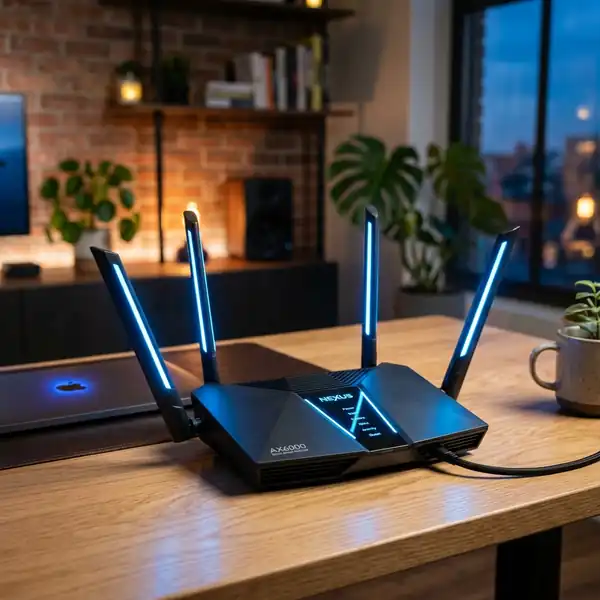
The technological transition of wireless connections has provided us with Dual-Band routers that transmit data on both the 2.4 GHz and 5 GHz frequencies simultaneously. The 5 GHz band is highly desirable because it offers much faster internet speeds and is free from congestion, making it perfect for online gaming and streaming videos in 4K resolution. If your 5 GHz Wi-Fi network is not showing up on your phone, it is usually because your phone's hardware is not compatible with the 5 GHz band (older or budget devices only support 2.4 GHz) or because the router is broadcasting on a high DFS channel (above channel 48) that your phone cannot scan, requiring you to manually set a lower channel (like 36, 40, 44, or 48) in the router settings.
Although this issue is common, it causes frustration when you subscribe to high-speed internet plans but cannot enjoy the speeds on your smartphone. Besides hardware incompatibility and DFS channel restrictions, other factors can hide the 5 GHz frequency, such as unified network names on the router, physical distance barriers, or cached network errors in your mobile phone's operating system. In this comprehensive guide, we will explain the differences between the bands, how to verify your phone's compatibility, how to change the channel settings on your router, and how to force your phone to detect the signal.
1. Understanding the Differences Between 2.4 GHz and 5 GHz Wi-Fi Bands
To understand why the 5 GHz network might disappear from your phone's screen, we must explore the physics of the radio waves utilized by both standard frequencies. The wavelength determines how the energy travels through open air and interacts with physical obstacles.
Here are the key differences that affect range and speed:
- 2.4 GHz Band: Uses longer radio waves, which can easily pass through solid barriers (such as walls, wooden doors, and concrete floors). Consequently, it has a wider signal range, but its maximum data speed is limited, and it suffers from constant interference from other home appliances (microwaves, cordless phones, baby monitors, and neighbors' networks).
- 5 GHz Band: Transmits data using shorter, faster waves. This results in extremely high connection speeds and low ping/latency. However, its range is much shorter, and it struggles to pass through walls or solid objects. In addition, the 5 GHz band has more channels available, reducing speed bottlenecks from neighboring networks.
2. How to Check if Your Smartphone Supports 5 GHz Wi-Fi
The first diagnostic step is to determine if the missing network is caused by incompatibility in the phone itself. Older or budget models are built with Single-Band Wi-Fi chips that can only scan and connect to 2.4 GHz networks.
To verify if your phone has the necessary hardware (Dual-Band or support for 802.11ac/ax), try the following methods:
- Check the phone's specifications: Look up your phone's specifications on the manufacturer's website or a tech specs site. Look at the "Wi-Fi specifications" section. If compatible, you will see protocols like 802.11 a/b/g/n/ac or 802.11 ax (Wi-Fi 6). If it only lists "802.11 b/g/n", your phone is Single-Band and only supports 2.4 GHz.
- Check available Wi-Fi networks on Android: Go to Settings > Connections > Wi-Fi. If your phone displays other networks in the area with "5G" or "5GHz" in their names, your phone is compatible, and the issue lies in your home router's settings.
- Use network analyzer apps: Download and install a free tool like "AIDA64" or "Wi-Fi Analyzer" from the app store. Under the network or hardware tab, the app will show whether your phone's wireless chip supports the 5 GHz band.
3. How to Change the 5 GHz Channel on Your Router to Make It Visible
If your phone is compatible with 5 GHz but the network still does not appear, the issue is likely the DFS (Dynamic Frequency Selection) channel selected by your router. Many phones (especially imported models or those built for other regional standards) cannot scan or connect to high DFS channels (channels 52 to 144) which are reserved for weather radar and military systems.
To resolve this, you must log into your router's setup panel and change the 5 GHz channel to a standard, non-DFS channel by following these steps:
- Log into your router's admin panel: Connect to your router (either via the 2.4 GHz network or an ethernet cable). Open your browser and type the router's default IP address (such as 192.168.0.1 or 192.168.1.1). Enter the admin username and password.
- Navigate to Wi-Fi Settings: In the menu, look for "Wireless Settings", "Wi-Fi Setup", or "Advanced Wireless".
- Select the 5 GHz frequency band: Open the specific settings for the 5 GHz network.
- Find the "Channel" setting: By default, this is usually set to "Auto".
- Select a low, non-DFS channel: Change the channel manually to one of the low, standard channels: 36, 40, 44, or 48. These channels do not use DFS and are supported by all 5 GHz devices.
- Set the Channel Width: Set the channel width for the 5 GHz network to 40 MHz or 80 MHz. Avoid using 160 MHz unless you have high-end modern devices, as this can cause compatibility issues.
- Save and reboot the router: Click "Save" or "Apply". The router will apply the changes and restart. Once it loads, the 5 GHz network should show up on your phone immediately.
4. Detailed Technical Analysis: DFS (Dynamic Frequency Selection) Explained
DFS is a regulatory requirement imposed by telecommunication agencies worldwide (such as the FCC in the US and ANATEL in Brazil). The 5 GHz radio band overlaps with radar frequencies used by meteorological stations, weather satellites, and military aviation systems. To avoid causing interference to these critical services, any router operating on DFS channels (specifically channels 52 to 144) must actively monitor the spectrum. If the router detects even a faint signature of radar usage, it must immediately vacate that channel and move to a different one. This monitoring process introduces a scanning delay (up to 10 minutes in some regions) during which the 5 GHz Wi-Fi is completely shut down.
Many smart TVs, streaming sticks, and older smartphones do not support DFS channels at all because certifying these devices to comply with DFS regulations increases hardware costs. Consequently, if your router is set to "Auto" channel mode and decides to jump to channel 56, your phone will instantly lose connection and the SSID will disappear from your screen, even though other devices (like modern laptops) remain connected. By forcing your router to use non-DFS channels (36, 40, 44, 48, 149, 153, 157, 161, 165), you eliminate this entire handshake mechanism, ensuring your 5 GHz Wi-Fi remains stable and visible 100% of the time.
5. Other Factors That Hide the 5 GHz Network
If your 5 GHz Wi-Fi still does not appear after fixing the channel, you should examine other network infrastructure details that might prevent detection:
Unified SSIDs (Smart Connect): Many modern Dual-Band routers use "Smart Connect" or "Band Steering" out of the box. This feature combines the 2.4 GHz and 5 GHz networks under a single Wi-Fi name. The router determines which band to assign to your device based on signal strength. If this is active, you will not see a separate 5 GHz network name. Disable Smart Connect in your router settings if you prefer to manage and connect to the bands manually.
Signal range and walls: Since 5 GHz waves are short, they lose strength quickly. If you are more than 8 to 10 meters away from the router, or if there are walls between you and the router, the 5 GHz signal might be too weak for your phone to detect. Move closer to the router to check if the network appears.
6. 5 GHz Wi-Fi Channel Selection Comparison
Selecting the correct channel in your router settings avoids interference from neighbors and ensures compatibility with your home devices. Here is a breakdown of the 5 GHz bands and their features:
| Channel Range | Channel Type | Phone Compatibility | Pros and Cons |
|---|---|---|---|
| 36 to 48 (U-NII-1) | Non-DFS (Free Use) | Excellent (100%) | Free from radar restrictions. This is the safest range to ensure all devices can detect your Wi-Fi. |
| 52 to 64 (U-NII-2A) | DFS (Shared) | Moderate (Newer devices only) | May disconnect temporarily if the router detects radar signals in the area. Older phones won't scan it. |
| 100 to 144 (U-NII-2C) | DFS (Shared) | Low (Older/Imported devices fail) | Subject to severe radar restrictions. Avoid selecting these channels manually if you experience disconnects. |
| 149 to 165 (U-NII-3) | Non-DFS (Free Use) | Excellent (100%) | Allows higher transmission power, which is ideal for increasing signal range inside the home. |
7. Phone System Settings to Resolve 5 GHz Signal Issues
If your router settings are correct and other devices can connect to the 5 GHz Wi-Fi, but your phone still cannot find it, the issue lies in your phone's software cache.
Try these steps to clear the wireless settings cache and force a fresh scan:
- Toggle Airplane Mode: Turn Airplane Mode on for 15 seconds and turn it off again. This forces the device's wireless chips to restart and clear search tables.
- Forget the saved Wi-Fi network: Go to Settings > Connections > Wi-Fi. Tap the gear icon next to your current 2.4 GHz network name and select "Forget". This clears the old configuration profile for the router.
- Reset Network Settings: Go to Settings > General Management (or System) > Reset, and select "Reset Network Settings". This will delete all saved Wi-Fi passwords, Bluetooth connections, and carrier details, clearing corrupted caches.
8. The Future of 5 GHz: Wi-Fi 6E, Wi-Fi 7, and the 6 GHz Band Spectrum
As the number of wireless devices in homes continues to grow exponentially, even the 5 GHz band is becoming increasingly congested. To address this, the Wi-Fi Alliance introduced Wi-Fi 6E and the newest Wi-Fi 7 standards, which open up the 6 GHz frequency band. The 6 GHz spectrum provides up to 1,200 MHz of additional bandwidth and accommodates up to seven non-overlapping 160 MHz channels (or three 320 MHz channels under Wi-Fi 7 specifications). This means that next-generation devices can bypass the congested 2.4 GHz and 5 GHz bands completely, achieving multi-gigabit speeds with near-zero latency.
However, the 6 GHz band is even more susceptible to atmospheric attenuation and physical barriers than 5 GHz. Its signals lose power rapidly when passing through solid materials. Furthermore, legacy devices cannot connect to the 6 GHz band at all, meaning that correctly configuring and optimizing your 5 GHz networks will remain a crucial troubleshooting skill for years to come. By masterfully managing your router's non-DFS channels, channel widths, and transmitter power levels, you can ensure a reliable network bridge that supports both legacy devices and modern high-speed peripherals seamlessly.
Understanding DFS Channels and Regional Restrictions
A very frequent technical reason why a 5GHz Wi-Fi network does not appear on a mobile phone is the automatic selection of DFS (Dynamic Frequency Selection) channels by your router. DFS channels (spanning from channel 52 to 144) are shared with weather radar and military communication systems. Under regulatory laws, if a router detects any radar pulses on these channels, it must immediately disable transmission on that frequency and jump to a different channel. If your smartphone does not support these specific DFS channels due to regional configuration mismatches, the 5GHz network will disappear from your phone's scan list. Fixing this requires logging into your router's admin panel and manually forcing the 5GHz channel to a non-DFS frequency, such as channel 36, 40, 44, or 48.
Frequently Asked Questions
How do I know if my phone supports 5 GHz Wi-Fi?
Check your phone specifications on the manufacturer's website. Look for 802.11ac or 802.11ax protocols under wireless specs. If listed, your phone supports 5 GHz.
What is the best channel for 5 GHz Wi-Fi on routers?
The best channels for 5 GHz Wi-Fi are low channels from 36 to 48 or high channels from 149 to 165. They do not use DFS and are supported by all 5 GHz devices.
Why does my 5 GHz Wi-Fi connection drop when I leave the room?
The 5 GHz frequency uses shorter radio waves that lose strength quickly when passing through obstacles like concrete walls and doors, resulting in a shorter range than 2.4 GHz.
Can Smart Connect hide my router's 5 GHz network?
Yes. If Smart Connect is enabled, your router broadcasts both frequencies under a single network name. Your device will swap between 2.4 GHz and 5 GHz automatically, hiding separate names.




