What is Business Intelligence (BI) in 2026? How Companies Use Data to Profit More
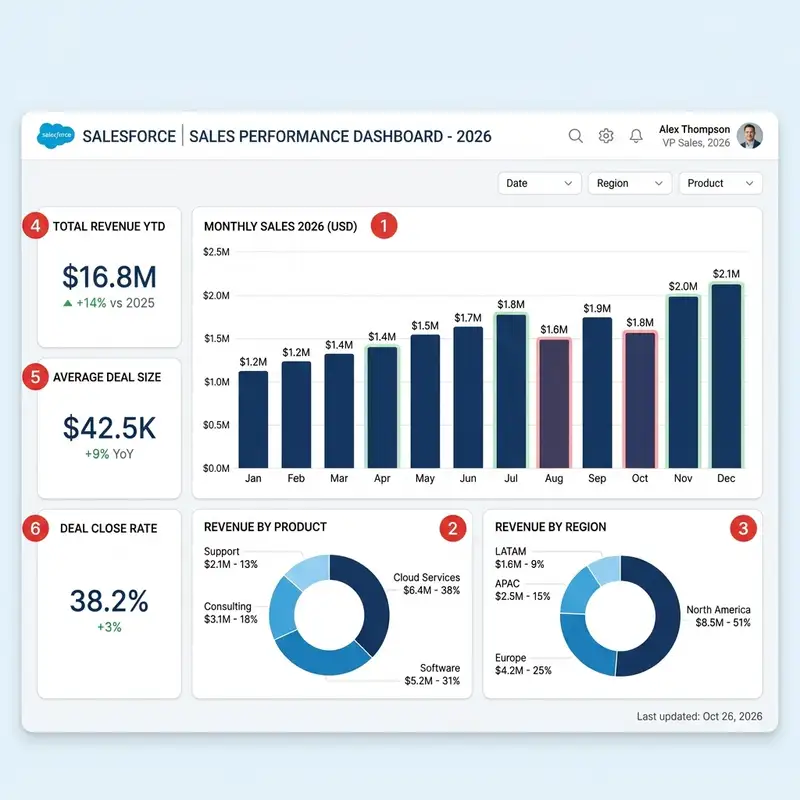
What is Business Intelligence (BI) in Practice?
If someone explained Business Intelligence in a truly useful way — and not as a generic college concept — the answer would be this:
Business Intelligence is transforming data into better decisions
Simple as that.
Every company generates data every day:
sales
customers
inventory
financial
marketing
support
HR
productivity
billing
operational performance
The problem is not having data.
The problem is:
knowing what to do with it
That's exactly where BI comes in.
Instead of looking at loose spreadsheets, confusing reports, and making decisions based on "guesswork," Business Intelligence organizes this information to show:
where the company is losing money
where there is a growth opportunity
which sectors perform best
which processes need adjustment
which customers generate more results
where the real bottlenecks are
This completely changes management.
BI is Not Just a Pretty Dashboard
This is a very common mistake.
Many people think BI just means:
charts
dashboards
colorful panels
No.
That's just the visible part.
The real value lies in:
making smarter decisions
A dashboard without action is just corporate decoration.
Real BI helps answer questions like:
Why did sales drop?
Which campaign brought more profit?
Where is the inventory stalling the operation?
Which team performs best?
Which customers have a higher risk of cancellation?
This clarity is worth much more than any pretty chart.
The Biggest Problem for Companies Without BI
Most companies still operate like this:
decision by feeling
↓
disconnected spreadsheets
↓
rework
↓
lack of predictability
↓
silent loss
This is expensive.
Very expensive.
Especially when the manager believes everything is "under control."
Without visibility, the problem grows hidden.
And when it appears, it usually has already turned into a loss.
Chart: Where Companies Lose the Most Without BI
Guesswork Decisions...........34%
Fulfillment Lack............24%
Operational Rework.........18%
Lost Opportunities.........14%
Weak Indicators.............10%
Visual:
Guesswork           ██████████████████
No Integration      ████████████
Rework              █████████
Opportunities       ███████
Indicators          █████
Notice:
the biggest loss is not in the tool.
It's in the lack of vision.
Does Business Intelligence Only Serve Large Companies?
No.
And this is one of the biggest changes of 2026.
Before, BI seemed like something exclusive to large corporations.
Today:
small and medium-sized businesses need it even more
Because smaller companies suffer more from:
limited time
lean teams
fast decisions
less margin for error
When the manager makes a wrong decision, the impact is immediate.
Therefore, BI is no longer a luxury.
It became a competitive advantage.
Sometimes, a necessity.
Real Examples of BI in Daily Life
Let's step out of theory.
See how it works in practice.
Commercial
Find out which salespeople convert more
↓
adjust process
↓
increase revenue
Financial
Understand where the biggest invisible costs are
↓
reduce waste
↓
improve margin
HR
Map turnover and productivity
↓
correct retention
↓
reduce talent loss
Marketing
Discover campaigns that generate real profit
↓
stop media waste
↓
grow with efficiency
Inventory and Logistics
Visualize bottlenecks and delays
↓
correct flow
↓
reduce losses
This is BI.
Not theory.
Result.
And Where Does Power BI Come In?
Here comes a huge question:
Are Business Intelligence and Power BI the same thing?
No.
And understanding this is important.
Microsoft Power BI is a tool.
Business Intelligence is the strategy.
In other words:
BI = business intelligence
Power BI = one of the tools to execute this
Confusing the two is like thinking:
marketing = Instagram
It's not.
Instagram is a tool.
Marketing is the strategy.
With BI, it's the same.
What You Will Learn in This Guide
In the next blocks, we will go deeper into:
how Business Intelligence works
real examples in companies
BI for small businesses
Power BI vs Business Intelligence
most used tools
common mistakes in implementation
when BI replaces Excel
how to start without complication
real ROI of BI
complete FAQ at the end
And mainly:
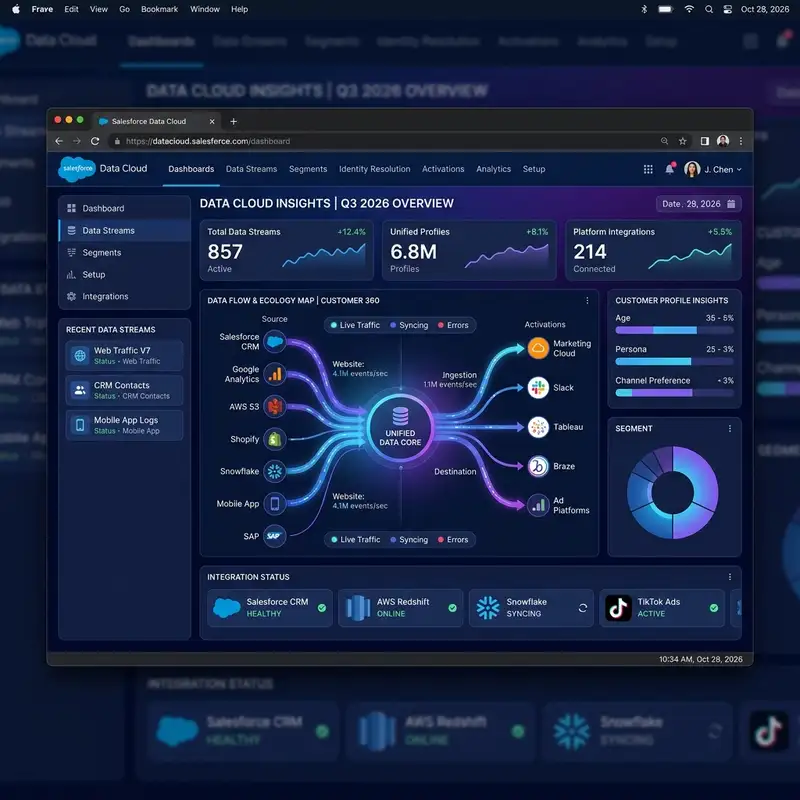
how to use BI to improve profit, productivity, and decisions
Because that is the point that really matters.
Not the concept.
The result.
How Business Intelligence Works Within a Company
Now that it's clear that Business Intelligence is not just a pretty dashboard, the most important question arises:
how does BI actually work within a company?
The answer is simple:
it transforms loose information into strategic decisions
Every company already has data.
The problem is that this data is usually scattered.
In places like:
Microsoft Excel
ERP
CRM
financial system
sales system
marketing platform
customer support
HR
inventory
emails
manual reports
Separated, they show little.
Together, they show everything.
That's where BI comes in.
The BI Process in Practice
The flow usually happens like this:
data collection
↓
organization
↓
analysis
↓
visualization
↓
decision
↓
continuous improvement
This process seems simple.
But it's exactly what separates organized companies from companies that live by putting out fires.
Let's break it down.
1. Data Collection
Here the goal is to gather relevant information.
Example:
monthly billing
number of sales
CAC
churn
stalled inventory
team productivity
delinquency
customer satisfaction
profit margin
conversion rate
Without correct collection:
BI doesn't exist
There is only opinion.
And opinion doesn't scale.
2. Organization and Cleaning
This step is ignored by many people.
And it causes disaster.
Bad data generates:
bad decisions
If the registration is wrong, if the system is outdated, or if each sector uses different information, the dashboard will be pretty…
and completely useless.
Therefore:
organizing data is worth more than creating fast charts.
Much more.
Chart: Where BI Fails Most
Disorganized Data...........38%
Lack of Integration............24%
Wrong Indicators............18%
Information Excess..........12%
Lack of Action...................8%
Visual:
Bad Data            ███████████████████
No Integration      ████████████
Indicators          █████████
Excess              ██████
No Action           ████
The problem is almost never in the software.
It's at the base.
3. Analysis of Indicators
After organizing, the right question comes in:
which numbers really matter?
Not everything needs to become a KPI.
Many companies make mistakes because they measure everything
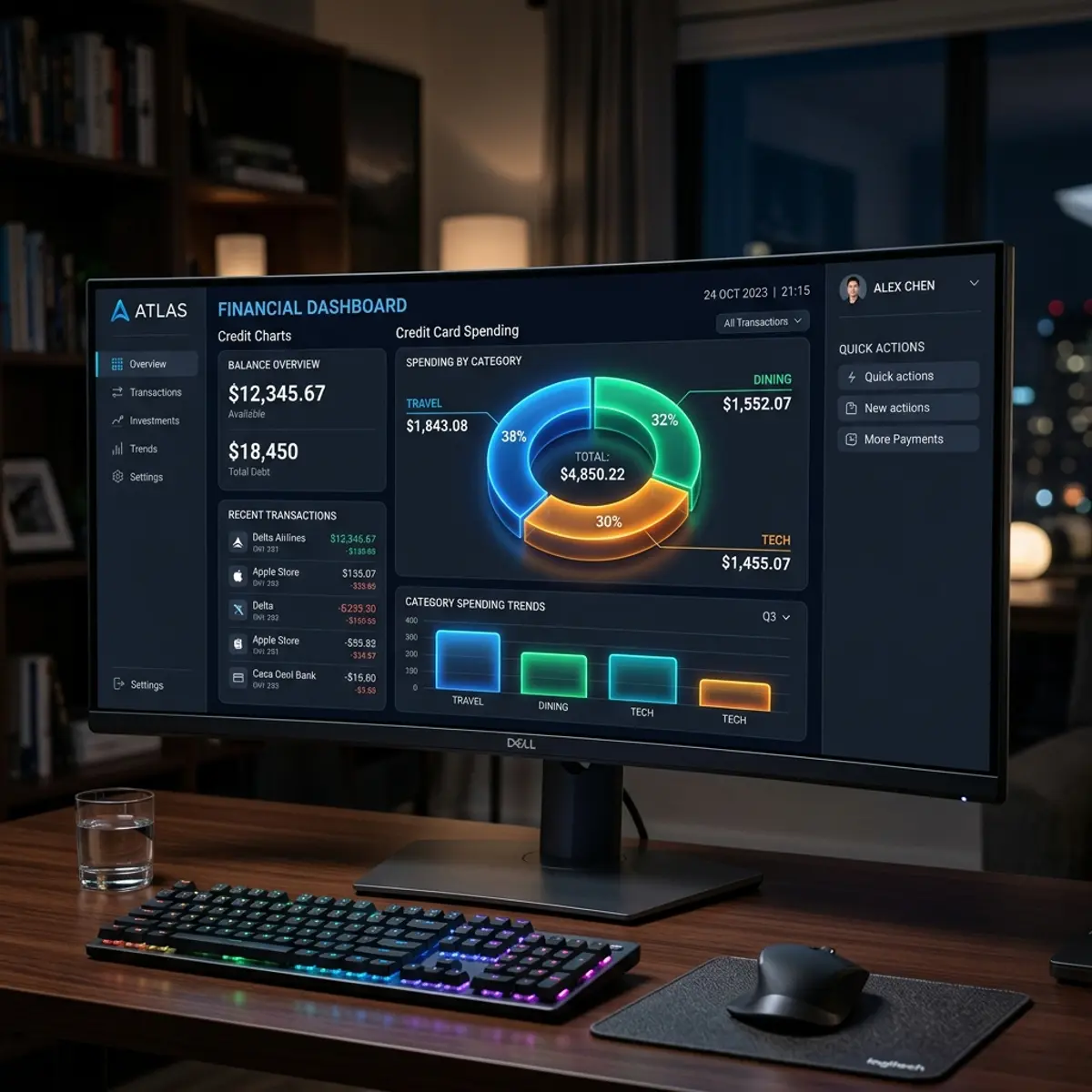
and understand nothing.
The best indicators are those that help decisions.
Example:
it's not enough to know billing
it is necessary to understand:
real profit
margin
cost per acquisition
retention
productivity
Good BI filters.
It doesn't just accumulate.
4. Visualization with Dashboards
Here tools like:
Microsoft Power BI
Tableau
Looker Studio
Qlik Sense
These platforms help to quickly see:
problems
opportunities
trends
risks
bottlenecks
But attention:
dashboard is not BI
Dashboard is the showcase.
BI is in the decision.
5. Decision Making
This is the real goal.
Real questions:
should we hire more?
is this campaign worth continuing?
where to cut cost?
which product generates more margin?
which customer brings more risk?
which sector needs intervention?
If BI doesn't help answer this,
it's still not working.
6. Continuous Monitoring
BI is not a one-day project.
It's a routine.
The market changes.
The customers change.
The numbers change.
Therefore:
Business Intelligence needs to be continuous.
Not something done “once a year.”
Smart management requires constant updates.
BI Without Data Culture Doesn't Work
This is a strong point.
If the company continues to decide everything on:
“I think”
BI becomes a decoration.
The culture needs to change to:
I decide based on what the data shows
This requires maturity.
But it generates a huge competitive advantage.
Good companies use data.
Excellent companies live by them.
Does the Role of Excel Still Exist?
Yes.
And a lot.
Microsoft Excel is still fundamental.
But there is a difference:
Excel helps operation
BI helps strategy
Excel alone resolves many things.
But when the business grows, it starts to limit.
That's when BI becomes inevitable.
The Most Expensive Error
Implementing BI just because “everyone is doing it”
No goal.
No clear KPI.
No defined decision.
This creates:
expensive project
low return
frustration
abandonment of the tool
The right way is to start with:
what problem do we want to solve?
And not:
what dashboard do we want to create?

This question changes everything.
The Most Valuable BI is Not the Most Complex
It's the one that generates fast action.
Sometimes, a simple dashboard that reduces waste is worth more than a giant project that no one uses.
Complexity does not mean intelligence.
Result does.
The Heart of Business Intelligence
In the end, it all comes down to this:
see before failing
This is perhaps the best practical definition of BI.
Anticipate.
Predict.
Correct before.
Grow with less waste.
This is business intelligence.
And this completely changes a company.
Real Examples of Business Intelligence in Companies
The best way to understand Business Intelligence is not with a definition.
It's with real results.
Because when someone asks:
what is BI?
actually, they are often asking:
where does this improve my company?
And that's the right question.
Let's move out of theory and show how BI works in everyday life.
Because this is where the reader really understands value.
BI in Sales: Finding Where the Money Is
Many companies look only at:
total billing
But this is superficial.
BI helps answer:
which salespeople perform best
which channels convert more
which products generate more margin
which customers buy with recurrence
where the funnel is stalling
which campaign brings bad customers
This changes everything.
Because selling more does not always mean profiting more.
Sometimes:
the problem is not selling little
it's selling wrong.
BI shows this quickly.
Practical Example
A company notices a drop in sales.
Without BI:
the reaction is usually
“we need to advertise more”
With BI:
it is discovered that the problem was in post-sales and cancellation.
That is:
more traffic would solve nothing.
It would only increase the loss.
This clarity saves a lot of money.
BI in Finance: Where Profit Disappears
This area is critical.
Because many companies bill well
and still have no profit.
BI helps to identify:
invisible costs
recurrent waste
growing delinquency
real margin per product
most expensive sectors
cash bottlenecks
financial predictability
This transforms financial management.
It's not just control.
It's strategic vision.
Chart: Where Companies Lose the Most Money
Invisible Costs..............30%
Decision Without Data..............24%
Bad Campaigns................18%
Stalled Inventory.................16%
Rework.....................12%
Visual:
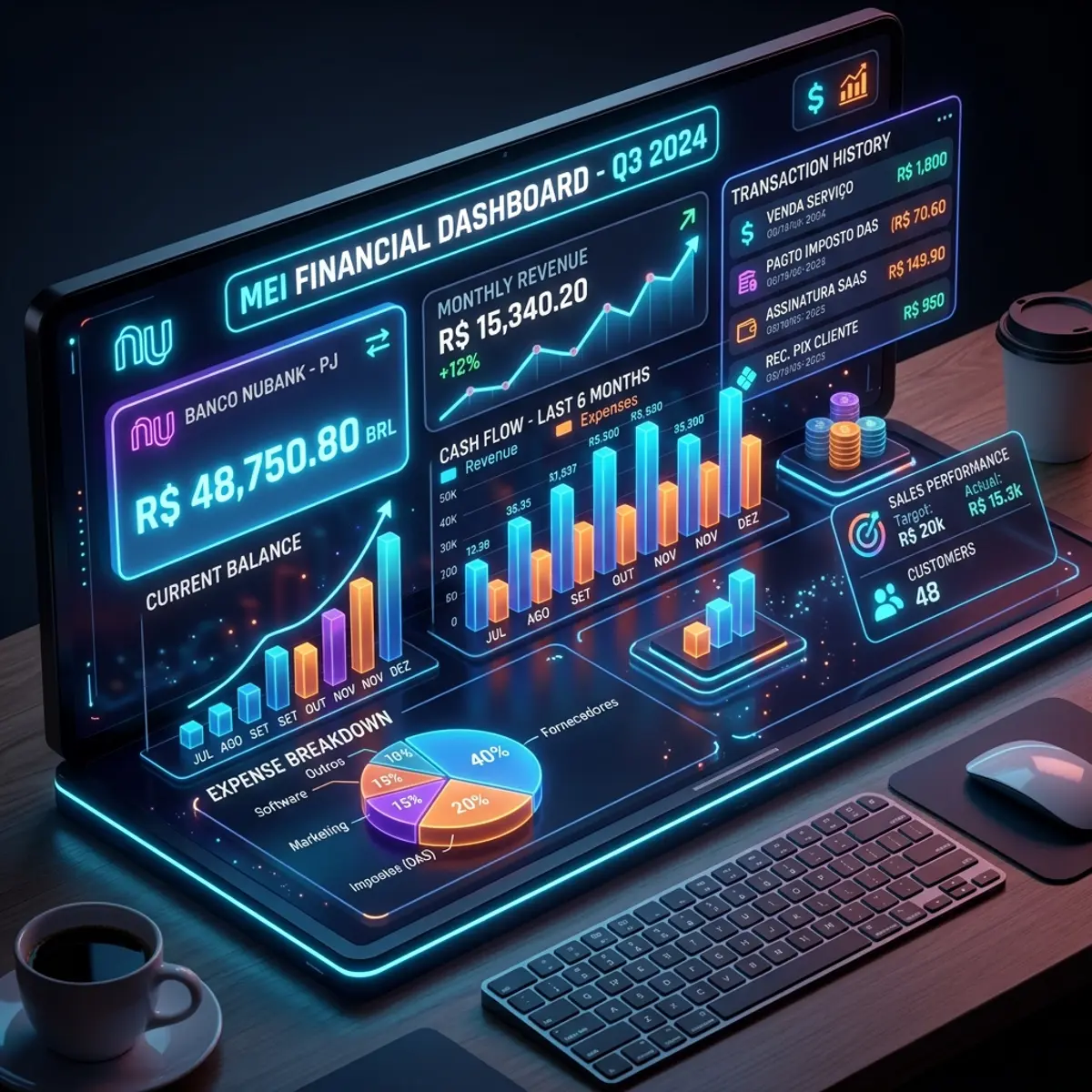
Invisible Costs     ███████████████
No Data             ████████████
Bad Campaigns       █████████
Inventory           ███████
Rework              ██████
Notice:
many losses do not appear in the report.
BI makes this appear.
BI in Marketing: Stopping Spending in the Dark
The impact here is huge.
Without BI, marketing becomes:
expensive gamble
With BI, it becomes:
controlled investment
You can measure:
CAC
ROI
profitable campaigns
channels with better conversion
qualified leads
lifetime value
retention
real cost per sale
This prevents absurd waste.
Especially in paid traffic.
And it greatly increases the commercial force of the content.
BI in HR: People Management with Data
Many people underestimate this.
But HR with BI is extremely powerful.
It allows visualizing:
turnover
absenteeism
productivity
talent retention
internal satisfaction
performance per team
cost of hiring
onboarding efficiency
This improves culture and reduces silent losses.
And talent loss is expensive.
Very expensive.
BI in Inventory and Operation
Companies that work with inventory suffer a lot from:
stalled product
out of stock
lack of predictability
delays
operational waste
BI helps to anticipate this.
Example:
before the product is missing
or
before excess capital is stalled
This predictability improves cash flow and reduces risk.
A lot.
Small Businesses Also Need BI
This point is crucial.
Many managers think:
“my company is still small”
and postpone everything.
In practice:
small companies need it even more
Because making mistakes costs proportionally more.
A bad campaign.
A wrong purchase.
A poorly made hire.
Everything weighs.
BI helps to reduce this risk.
Even with a simple structure.
Real Example of SME
A small company uses only:
Microsoft Excel + Microsoft Power BI
to monitor:
sales
average ticket
delinquency
margin
commercial performance
No giant ERP.
No expensive software.
Even so:
decision-making improves drastically.

That's the point.
BI doesn't need to start big.
It needs to start right.
The Most Common Mistake
Wanting to measure everything.
This generates:
confusion
paralysis
useless dashboards
low adoption
The best BI usually starts with:
few really important indicators
Example:
profit
retention
cost
productivity
conversion
Strategic simplicity beats unnecessary complexity.
Always.
The Strongest BI is the One that Generates Action
If the dashboard doesn't change behavior,
it's not BI.
It's decoration.
The right question is always:
what will we do with this information?
This answer defines the real value.
What Every Manager Wants
In the end, it's not a dashboard.
It's predictability.
Knowing:
where to invest
where to cut
where to accelerate
where to stop
BI delivers exactly that.
And that's why it's no longer a differentiator.
It became a necessity.
Are Power BI and Business Intelligence the Same Thing?
This is one of the most searched questions on Google:
Are Power BI and Business Intelligence equal?
And the short answer is:
no
But many people still confuse the two.
And this generates wrong decisions right at the beginning.
Because one thing is:
strategy
and another is:
tool
Understanding this difference avoids wrong investment, unrealistic expectations, and projects that start badly.
Business Intelligence is the Strategy
Business Intelligence (BI) means:
using data to make better decisions
It is the process of transforming loose information into business intelligence. It involves:
data analysis
indicators
processes
goals
data-driven culture
monitoring results
operational predictability
In other words:
BI is not a software.
It's a way of managing better.
A company can do BI even with:
Microsoft Excel
if the strategy is correct.
Power BI is the Tool
Microsoft Power BI is a platform created by Microsoft to:
visualize data
create dashboards
connect systems
generate reports
monitor KPIs
facilitate managerial analysis
It helps to execute BI.
But it is not BI.
This difference seems simple.
But it changes everything.
Easy to Understand Example
Think of it like this:
Business Intelligence = marketing strategy
Power BI = a tool like Google Ads
Or:
BI = smart financial management
Power BI = the calculator and the reports
The tool helps.
But it doesn't replace the strategy.
Without strategy, the tool becomes just a pretty screen.
The Most Common Mistake
Many companies do this:
buy Power BI
↓
think they now “have BI”
↓
continue to decide on guesswork
↓
total frustration
Because:
software does not resolve absence of process
Without defining:
goals
KPIs
responsibles
analysis routine
the dashboard changes nothing.
It just shows confusion with more design.
Chart: Where Companies Confuse BI with Power BI
Thinking BI is Just Dashboard....36%
Lack of Strategy............26%
Wrong Indicators............18%
Tool without Process........12%
Badly Organized Data...........8%
Visual:
Just Dashboard      ███████████████████
No Strategy         █████████████
Wrong KPIs          █████████
No Process          ██████
Bad Data            ████
The biggest mistake is always the same:
thinking tool solves culture.
When Power BI is Very Worthwhile
It usually is excellent when the company needs to:
consolidate multiple data sources
monitor KPIs in real-time
reduce manual spreadsheets
improve managerial dashboards
automate reports
provide visibility for leadership
scale analysis with security
Especially when there is:
operational growth
Then Excel starts to limit.
And Power BI gains strength.
Excel vs Power BI
This comparison is very strong.
And the correct answer is:
it's not one or the other
It is:
one after the other
Microsoft Excel works very well for:
fast operations
manual control
small analyses
initial organization
Power BI works better for:
scale
automation
dashboards
recurring management
executive vision
Excel helps in detail.
Power BI helps in vision.
Both remain important.
Does a Small Company Need Power BI?
Not always.
And this honest answer generates trust.
Many SMEs still resolve very well with:
Excel
Google Sheets
simple reports
basic KPIs
The mistake is wanting to sophisticate too early.
But when signals arise like:
too many spreadsheets
constant rework
lack of visibility
slow decision-making
scattered data
Power BI starts to make a lot of sense.
Does BI Without Power BI Exist?
Yes — totally
This point is important.
A company can have excellent Business Intelligence without using Power BI.
If it has:
good analysis
good indicators
data-driven decision-making
strong managerial routine
it already does BI.
The tool improves scale.
But it does not create intelligence alone.
Power BI Without BI Does Not Work
This is the inverse.
And it happens a lot.
The company buys a license.
Creates a dashboard.
But no one uses it.
No one decides with it.
No one changes process.
Result:
expensive and abandoned project
This is extremely common.
And totally avoidable.
The Right Question is Not “Do I Need Power BI?”
It is:
do I need to make better decisions with data?
If the answer is yes,
the strategy comes first.
The tool comes later.
This order saves a lot of money.
The Best BI Does Not Start on the Dashboard
It starts at the question:
what problem are we trying to solve?
Reduce churn?
Increase profit?
Improve sales?
Control inventory?
Without this, any dashboard becomes noise.
With this, even a simple panel generates real results.
The Real Value is in Clarity
In the end, the manager doesn't want software.
He wants:
clarity
Knowing:
what is happening
where to act
where to correct
where to accelerate
Power BI helps in this.
But Business Intelligence is what really delivers it.
And that difference is everything.
Is BI for Small Companies Worth It?
This is one of the most important — and most ignored — questions:
Is Business Intelligence only for large companies?
The real answer is:
no — and small companies often need it even more
Because smaller companies have less margin for error.
A wrong decision in a large company can be absorbed.
In a small company, it can turn into:
cash flow problem
profit drop
operational delay
layoff
immediate loss
Therefore, BI is no longer a luxury.
It became strategic protection.
The Myth That BI is Too Expensive
Many business owners think:
“this is a multinational thing”
“I need expensive software”
“my business hasn't reached that level yet”
This thinking delays growth.
Because BI does not start in software.
It starts with the question:
which numbers really control my business?
You can start with:
Microsoft Excel
Google Sheets
simple reports
clear KPIs
And that already changes a lot.
Really a lot.
What a Small Company Should Measure First
Here is the main point.
It's not about measuring everything.
It's about measuring what really matters.
Example:
Commercial
sales
average ticket
conversion
margin
Financial
cash flow
delinquency
invisible costs
real profit
Marketing
CAC
ROI
most profitable channel
retention
Operation
productivity
delay
rework
bottlenecks
Starting simple is much better than starting complex.
Chart: What Most Harms SMEs Without BI
Guesswork Decision.............35%
Lack of Financial Control...26%
Campaigns without ROI..............18%
Poorly Managed Inventory.............12%
Rework......................9%
Visual:
Guesswork           ███████████████████
Financial           █████████████
Marketing           █████████
Inventory           ██████
Rework              ████
The biggest enemy is almost always the same:
lack of visibility.
How to Start Without Spending Much
The best strategy is usually:
Step 1
define key indicators
↓
Step 2
centralize data
↓
Step 3
create analysis routine
↓
Step 4
make decisions based on that
↓
Step 5
only then invest in more robust tools
This order avoids waste.
And it greatly increases ROI.
When Power BI Starts to Make Sense
Microsoft Power BI usually is worth more when signals appear like:
excessive spreadsheets
constant rework
slow manual reports
lack of managerial vision
difficulty in consolidating data
accelerated operational growth
When this happens, continuing only in Excel starts to cost more.
And then the investment starts to make sense.
The Most Common Mistake of SMEs
Buying tool before understanding the problem.
This generates:
pretty dashboard
low usage
zero decision
frustration
And then comes the classic phrase:
“BI doesn't work”
Actually:
the problem wasn't BI
it was the absence of strategy.
This happens all the time.
Real Example of Small Business
A service company starts measuring only:
lead intake
sales closing
average ticket
delinquency
real margin
Using only:
Microsoft Excel + simple reports
In a few months, it realizes:
bad customers
campaigns that gave loss
sectors with rework
time lost in processes
Without hiring an expensive system.
Without a giant project.
Only with clarity.
This is BI.
BI Also Serves to Avoid Bad Growth
This point is powerful.
Not all growth is healthy.
Sometimes the company grows:
in billing
and worsens:
in profit
BI helps to avoid this.
Because it shows:
sustainable growth
and not just pretty numbers.
This is worth gold.
Small Business Does Not Need Complex Dashboard
It needs:
clarity
This is the truth.
Sometimes a simple panel with:
sales
margin
delinquency
retention
productivity
is worth more than 30 dashboards that no one opens.
Complexity doesn't sell.
Good decision does.
The Best Moment to Start
It's not when the company is large.
It is:
before growing wrong
This phrase defines everything.
Because correcting later costs much more.
Much more.
BI is Not Technology
It's smart management.
This is perhaps the biggest shift.
When the business owner understands this,
he stops asking:
“which software to buy?”
and starts asking:
which decisions are making me lose money?
That is the right question.
And it completely changes the business.
Complete FAQ + Also Asked About Business Intelligence (BI)
Now let's answer directly the most searched questions on Google about Business Intelligence.
These questions constantly appear in:
featured snippets
People Also Ask
corporate searches
B2B queries
queries about Microsoft Power BI
high commercial intent
Answering this correctly greatly strengthens SEO, GEO, and page authority.
What is Business Intelligence (BI)?
Business Intelligence is the process of transforming data into better decisions
It organizes sales, financial, marketing, HR, inventory, and operational information to help managers make decisions with more clarity and less guesswork.
BI is not just a dashboard.
It is a data-driven management strategy.
Are BI and Power BI the same thing?
No
Business Intelligence is the strategy.
Microsoft Power BI is a tool created by Microsoft to execute part of this strategy.
BI is business intelligence.
Power BI is a software that helps in this.
Do small businesses need BI?
Yes — and often more than large companies
Because small companies have less margin for error.
A bad decision can quickly impact cash flow, profit, and operation.
Even using only Microsoft Excel and simple reports, it's already possible to start with BI.
Does Business Intelligence replace Excel?
Not exactly
Excel remains excellent for operation and fast analyses.
BI enters when the company needs:
scale
dashboards
data consolidation
automation
executive vision
continuous monitoring
In practice, Excel and BI usually work together.
What is the difference between BI and data analysis?
Data analysis is part of the process.
BI is broader.
It involves:
collection
organization
indicators
visualization
decision
continuous monitoring
Analyzing data is a step.
Business Intelligence is the complete strategy.
Does BI need programming?
Not necessarily
Many companies start BI with Excel, Power BI, and visual reports without the need for programming.
In more advanced projects, automations and integrations may require technical knowledge.
But the start is usually much simpler than it seems.
What is the best BI software?
It depends on the company.
The most used include:
Microsoft Power BI
Tableau
Looker Studio
Qlik Sense
The best is not the most famous.
It's the one that best solves your process and integrates with your business.
When is it worth investing in Power BI?
Usually when signals arise like:
excessive spreadsheets
constant rework
slow manual reports
difficulty in consolidating data
lack of managerial vision
uncontrolled growth
When this happens, Power BI usually generates ROI quickly.
Is BI only for large companies?
No
This is one of the biggest myths.
Small and medium-sized businesses can use BI with enormous efficiency. In fact, they often need it even more because every mistake impacts cash more directly.
What is the biggest mistake in implementing BI?
Buying tool before defining the problem
Many companies hire software before knowing:
what they want to measure
which decision they want to improve
which indicators matter
This generates pretty dashboards and little result.
BI should start with strategy. Not with the tool.
Final Conclusion
Business Intelligence is not about technology.
It's about:
seeing better to decide better
This is perhaps the most useful definition.
Every company already has data.
The difference is in:
using this data
or continuing to decide in the dark.
BI helps companies to:
grow with more security
reduce waste
increase profit
improve productivity
anticipate problems
find opportunities
And that applies to large companies
and especially small ones.
Because today:
not deciding with data is too expensive
Much more expensive than implementing BI.
The best Business Intelligence is not the most complex.
It's the one that generates action.
That's the difference between a report
and a result.
Recommended Internal Links
Collaboration Platform
https://dominetec.com.br/en/collaboration-platform/Enterprise Management Software
https://dominetec.com.br/en/enterprise-management-software/Productivity Tools
https://dominetec.com.br/en/productivity-tools/Automation Apps
https://dominetec.com.br/en/automation-apps/Digital Transformation
https://dominetec.com.br/en/what-is-digital-transformation/
Authority External Link
Microsoft Power BI Official
https://powerbi.microsoft.com/
Final Promise
If you made it this far, you already understand something essential:
BI is not about dashboards
it's about better decisions
This difference changes companies.
And often,
it completely changes the profit.




