1. Direct Introduction
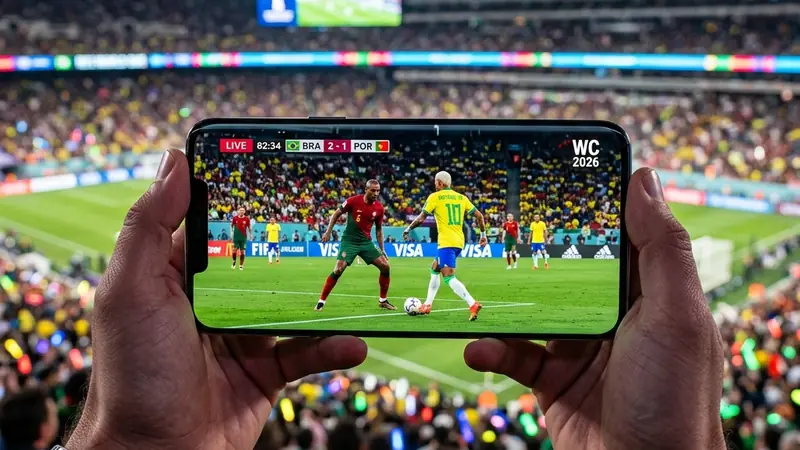
The paradigm of ubiquitous media consumption has shifted unequivocally towards mobile interfaces, fundamentally altering how end-users engage with real-time broadcasting. To watch live TV on phone is no longer a mere convenience but a baseline expectation driven by rapid advancements in cellular telecommunications and mobile processing architectures. This phenomenon intersects deeply with intricate multimedia streaming protocols, demanding a rigorous understanding of the underlying data transmission mechanisms that facilitate seamless playback on heterogeneous mobile devices. When we examine the foundational elements that allow a mobile device to act as a primary television receiver, we uncover a sophisticated interplay of adaptive bitrate streaming, dynamic network condition assimilation, and hardware-accelerated decoding pipelines. The convergence of these technological domains ensures that high-definition video payloads can traverse volatile mobile networks without catastrophic frame drops or buffering stalls. Consequently, the discourse surrounding mobile television transcends superficial application design, plunging into the depths of algorithmic efficiency, packet encapsulation strategies, and real-time buffer management.
As we navigate this expansive technical landscape, it becomes evident that delivering live television to a handheld apparatus represents one of the most formidable achievements in contemporary digital engineering. The orchestration required to synchronize audio-visual components across a myriad of varying screen resolutions and refresh rates necessitates a comprehensive mastery of both server-side provisioning and client-side rendering capabilities. Furthermore, the imperative to minimize latency introduces complex trade-offs between buffer depths and instantaneous playback, forcing system architects to continuously refine their theoretical models against empirical network behaviors. In this meticulously detailed exploration, we will dissect the multifaceted infrastructure that supports this ubiquitous capability, analyzing every critical juncture from the initial video ingestion at the broadcasting source to the final photon emission on the mobile display matrix.
By deconstructing the theoretical frameworks and practical implementations of live streaming technologies, this guide aims to illuminate the profound technical intricacies that remain largely invisible to the average consumer but are absolutely paramount to the uninterrupted delivery of real-time televisual content. The transition from legacy broadcasting standards such as DVB-H or ATSC-M/H to purely IP-based Over-The-Top (OTT) delivery mechanisms signifies a monumental architectural pivot. This transition relies heavily on the robust nature of TCP/IP and UDP protocols, alongside the sophisticated framing provided by the HTTP suite. Understanding this evolution is critical for appreciating the sheer volume of computational effort exerted every microsecond to ensure that live television on a mobile device feels as instantaneous and reliable as traditional terrestrial or satellite broadcasting. The intricate dance of bits and bytes over the airwaves is a testament to the ingenuity of modern network engineering, establishing a foundation for unprecedented multimedia accessibility.
2. Basic Architecture
The basic architecture facilitating the capability to watch live TV on phone is a labyrinthine construction of interconnected digital systems, beginning with the primary ingestion phase. At the point of origin, a raw baseband video signal, typically serialized via SDI (Serial Digital Interface) or transmitted over IP via SMPTE ST 2110, is captured and routed into a high-capacity transcoding matrix. This ingestion process is highly sensitive to packet jitter and requires precision time protocols (PTP) to maintain absolute synchronization across disparate audio, video, and ancillary data tracks. Once ingested, the raw signal undergoes immediate, real-time compression utilizing advanced video coding standards such as H.264/AVC, H.265/HEVC, or increasingly, AOMedia Video 1 (AV1). The transcoding layer is responsible for generating multiple rendition profiles, also known as a bitrate ladder, which represents the same content at varying spatial resolutions and quantization parameters.
Following the transcoding phase, the independent media streams are fed into a packaging engine. The packager is the architectural fulcrum where continuous streams are segmented into discrete, chronologically sequenced chunks, typically ranging from two to ten seconds in duration. This segmentation is fundamental to Adaptive Bitrate (ABR) streaming methodologies such as HTTP Live Streaming (HLS) and Dynamic Adaptive Streaming over HTTP (MPEG-DASH). The packager concurrently generates manifest files—playlists that describe the hierarchical structure of the available renditions and direct the client application to the precise Uniform Resource Locators (URLs) for each segment. These manifests are dynamically updated in real-time as new segments are appended to the live broadcast, requiring a highly synchronous temporal alignment between the transcoding outputs and the packager's operational cadence.
The encapsulated segments and their corresponding manifests are subsequently propagated outward into a Content Delivery Network (CDN). The CDN acts as a geographically distributed caching layer, positioning the heavy media payloads as close to the mobile consumer as possible at the network edge. This proxy architecture mitigates the overwhelming traffic that would otherwise suffocate the origin servers, leveraging anycast IP routing and sophisticated cache-eviction heuristics to maintain optimal delivery velocities. Finally, the mobile client application polls the edge server for the manifest, parses the available renditions, and initiates a heuristic decision-making process based on current TCP throughput estimates and hardware buffer states. The client seamlessly requests subsequent segments, potentially switching between different rungs of the bitrate ladder mid-stream, and feeds the decoded frames into the mobile device’s graphics processing pipeline for ultimate display.
3. Challenges and Bottlenecks
Deploying a robust infrastructure to watch live TV on phone invariably exposes a multitude of severe technical challenges and intrinsic bottlenecks that threaten the fidelity and continuity of the broadcast. Chief among these is the inherent volatility of mobile radio access networks (RAN). Unlike fixed-line broadband, cellular connections—whether 4G LTE or 5G NR—are highly susceptible to environmental attenuation, multipath fading, and cell-tower handover interruptions. These phenomena introduce significant packet loss, dramatic fluctuations in available bandwidth, and erratic latency spikes (jitter). When a mobile user transits between different geographic zones, the client player must aggressively adapt to collapsing throughput, frequently resulting in rapid quality degradation or catastrophic buffer under-runs. Managing this volatility requires extraordinarily sophisticated client-side algorithms capable of predicting bandwidth trends based on historical packet arrival times and adjusting requested segment qualities before the playback buffer is entirely depleted.
Another profound bottleneck manifests in the extreme fragmentation of the mobile device ecosystem. Android and iOS platforms encompass thousands of unique hardware configurations, varying wildly in their decoding capabilities, memory bus speeds, and thermal dissipation characteristics. A high-bitrate HEVC stream that plays flawlessly on a flagship smartphone may completely overwhelm the System-on-Chip (SoC) of a mid-tier device, leading to dropped frames, audio-video desynchronization, and rapid battery depletion. Consequently, service providers must generate and maintain a bloated matrix of encoding profiles to ensure baseline compatibility across the entire device spectrum, thereby exponentially increasing storage and computational costs at the origin. Furthermore, the reliance on hardware-accelerated decoding pipelines means that software-level anomalies within specific OEM firmware can induce unpredictable playback failures, necessitating the implementation of complex, device-specific software fallbacks.
Thermal throttling and power consumption represent a critical physical limitation in mobile live streaming. The continuous operation of cellular modems, Wi-Fi antennas, primary processing units (CPUs), graphics processing units (GPUs), and brilliant OLED/LCD displays places an immense metabolic load on the mobile hardware. As the device temperature rises, the operating system's thermal management daemon will aggressively underclock the processors to prevent permanent silicon damage. This sudden reduction in computational capacity can severely degrade the software’s ability to parse complex manifests, decrypt digital rights management (DRM) payloads, and decode subsequent video frames in a timely manner. Thus, application developers are locked in a perpetual struggle to optimize their rendering loops, minimize thread context switching, and leverage low-power hardware decoders to maintain a sustainable equilibrium between streaming quality and thermal viability.
4. Scalability Benefits
The implementation of modern, cloud-native architectures for delivering the capability to watch live TV on phone introduces unprecedented scalability benefits, transforming how broadcasters handle massive, sudden influxes of concurrent viewers. Traditional on-premises broadcast architectures are constrained by rigid hardware limitations; scaling requires significant capital expenditure and lengthy procurement cycles. Conversely, leveraging elastic cloud computing allows for the instantaneous provisioning of transcoding matrices and packaging clusters in response to real-time demand. During high-profile live events, such as international sporting finals or breaking news broadcasts, the origin infrastructure can autonomously spin up additional computing instances to process supplementary camera feeds, execute complex per-title encoding algorithms, and distribute the processing load across multiple availability zones, ensuring absolute fault tolerance.
The symbiotic relationship between the origin packager and an intelligent, multi-tier Content Delivery Network (CDN) is the cornerstone of global scalability. By utilizing HTTP-based streaming protocols (HLS and DASH), live video segments are treated as standard web objects, allowing them to be cached by thousands of edge servers distributed worldwide. This means that a single live stream can be consumed by millions of simultaneous users without generating a corresponding million-fold load on the origin servers. Modern CDNs employ advanced request-collapsing mechanisms; if a thousand mobile clients simultaneously request the same video segment, the edge server will query the origin only once, subsequently distributing the cached payload to all requesting clients. This microsecond-level efficiency prevents the cascading failures traditionally associated with distributed denial-of-service (DDoS) characteristics of viral live streams.
Furthermore, the decoupling of the manifest generation from the actual media segmentation allows for highly personalized, dynamically scalable stream provisioning. Utilizing server-side ad insertion (SSAI) and microservices architectures, the system can generate unique manifest files for every individual mobile client, weaving targeted advertisements and localized content directly into the primary live feed. Because the manifest generation requires minimal computational overhead compared to video transcoding, these microservices can scale horizontally with ease via container orchestration platforms like Kubernetes. This level of granular control enables broadcasters to monetize their live streams dynamically at an immense scale, transforming a monolithic broadcast into millions of individualized viewing experiences without compromising the fundamental reliability of the underlying video transport mechanisms.
5. Practical Integration
The practical integration of the software necessary to watch live TV on phone requires a meticulous approach to mobile application development, focusing intently on the symbiotic integration of the media player framework within the native OS environment. On the Android platform, this typically involves deploying Google’s ExoPlayer, an open-source, highly extensible application-level media player. ExoPlayer bypasses the limitations of the native Android MediaPlayer, providing granular control over the buffering logic, adaptive track selection algorithms, and network connection protocols. Developers must meticulously configure ExoPlayer’s `LoadControl` interfaces to strike the optimal balance between startup latency and buffer resilience, defining exact thresholds for when the player should request new segments and when it should throttle network activity to conserve battery. On iOS, developers generally rely on Apple’s robust AVFoundation framework and `AVPlayer`, which natively supports HLS and provides deep integration with iOS’s hardware decoding and power management subsystems.
Beyond the core player instantiation, integrating Digital Rights Management (DRM) is an absolute necessity for commercial live television broadcasts. This involves interfacing the mobile application with complex cryptographic modules. For Android, this means utilizing the Android MediaDRM API to interact with the device’s secure hardware enclave, provisioning Widevine modular DRM licenses. The application must asynchronously request a license from a secure Key Management Server (KMS) prior to, or concurrently with, the downloading of the first video segment. On iOS, a similar workflow is executed using FairPlay Streaming. The practical integration of these DRM systems is notoriously fragile; it requires robust error handling to manage token expirations, key rotations mid-stream, and the nuanced differences in security levels (e.g., Widevine L1 vs L3) across disparate mobile devices, ensuring that high-definition streams are only delivered to devices with hardware-backed decryption capabilities.
Finally, the integration of comprehensive telemetric and analytic SDKs is critical for maintaining the operational health of the live streaming service. Developers must embed sophisticated tracking logic directly into the playback event listeners to monitor key performance indicators (KPIs) such as the video startup time (VST), rebuffering ratio, average bitrate consumed, and catastrophic playback failures. These metrics are periodically serialized and dispatched to massive data lakes via lightweight JSON payloads. This real-time telemetry allows network operations centers (NOC) to identify regional CDN degradation, track the proliferation of specific hardware anomalies, and dynamically reroute traffic or adjust encoding profiles on the fly. The integration of these analytics must be implemented asynchronously and with extreme efficiency, ensuring that the sheer volume of telemetric reporting does not inadvertently congest the device’s network stack or disrupt the primary video decoding threads.
6. Security and Compliance
When engineering systems to allow users to watch live TV on phone, the paramount importance of security and compliance cannot be overstated, as premium broadcast content represents high-value intellectual property susceptible to piracy and unauthorized redistribution. The foundation of this security posture is the implementation of multi-DRM architectures, which encrypt the underlying video and audio elementary streams using robust cipher suites such as Advanced Encryption Standard (AES) with 128-bit keys. The encryption is typically applied at the packaging stage using the Common Encryption (CENC) standard, allowing a single encrypted media payload to be decrypted by varying DRM systems (Widevine, PlayReady, FairPlay) depending on the mobile platform. This cryptographic enforcement ensures that even if a malicious actor intercepts the network traffic or extracts the media segments from the device's cache, the raw bitstream remains entirely unintelligible without the cryptographically bound license key issued by an authenticated licensing server.
Beyond content encryption, securing the perimeter of the streaming infrastructure is critical. This is achieved through the pervasive use of Transport Layer Security (TLS 1.3) across all HTTP communications, preventing man-in-the-middle (MitM) attacks and ensuring data integrity between the client application and the CDN edge nodes. Furthermore, access to the manifest files and segment URLs is rigorously gated using dynamic, token-based authentication mechanisms, often relying on JSON Web Tokens (JWT). These tokens are cryptographically signed, temporally limited, and explicitly bound to a specific user session and IP address. If a user attempts to share their live stream URL with an unauthorized party, the CDN edge server will automatically validate the signature and the temporal validity of the appended token, instantly rejecting the request with an HTTP 403 Forbidden status if the parameters are violated. This mechanism is crucial for preventing stream ripping and unauthorized simulcasting.
Compliance with global broadcasting regulations and geographic licensing agreements introduces another layer of profound technical complexity. Geoblocking, or regional restriction, must be enforced with extreme precision to prevent the distribution of live TV content outside of legally licensed territories. This involves integrating the CDN edge nodes with sophisticated IP geolocation databases and utilizing advanced routing rules to deny service based on the client's topological origin. However, because mobile users frequently utilize Virtual Private Networks (VPNs) or proxy servers, mere IP lookup is often insufficient. Therefore, advanced compliance systems employ heuristic analyses of network routing paths, DNS resolution patterns, and known VPN autonomous system numbers (ASNs) to identify and block circumventive traffic. Maintaining this delicate balance between stringent security protocols and seamless user access requires continuous algorithmic refinement and a deep understanding of evolving regulatory frameworks.
7. Costs and Optimization
The economic ramifications of deploying an infrastructure to watch live TV on phone at scale are immense, requiring a rigorous focus on cost mitigation and architectural optimization. The primary financial burden in live streaming is bandwidth egress costs, as CDNs charge based on the sheer volume of data transferred to end-users. Consequently, optimizing the efficiency of the video codec is paramount. Transitioning from older standards like H.264 to advanced high-efficiency video coding (HEVC) or AV1 can yield bitrate reductions of 30% to 50% for equivalent perceptual quality. However, these modern codecs demand significantly higher computational resources during the transcoding phase. Therefore, system architects must perform continuous cost-benefit analyses, weighing the increased expenditure on dense, GPU-accelerated cloud instances for encoding against the substantial savings accrued from reduced CDN egress bandwidth. This optimization is further nuanced by the need to ensure the target mobile devices possess the necessary hardware decoders to process these advanced codecs efficiently.
Per-title, or in the context of live broadcasting, dynamic context-aware encoding, represents a sophisticated optimization strategy to minimize payload sizes. Unlike static encoding ladders that apply rigid bitrates regardless of the content, dynamic encoding utilizes machine learning algorithms to analyze the spatial and temporal complexity of the live video in real-time. If a live broadcast transitions from a high-motion sporting event to a static studio interview, the encoder automatically adjusts the quantization parameters and frame structures, drastically reducing the required bitrate without perceptible quality loss. This intelligent allocation of bits ensures that data is not wasted on visually simplistic scenes, thereby optimizing the overall bandwidth consumption and significantly reducing the total cost of ownership (TCO) for the streaming service. Implementing this requires immense parallel processing power and specialized algorithmic tuning at the ingestion tier.
Furthermore, optimizing the CDN strategy is crucial for cost management. Relying on a single CDN vendor exposes the service to monopolistic pricing and localized outages. The implementation of a multi-CDN architecture utilizes intelligent DNS routing or client-side load balancing to dynamically distribute mobile client requests across several CDN providers based on real-time performance metrics and regional pricing tiers. If CDN 'A' experiences latency spikes in a specific geographic sector, the routing logic automatically shifts new requests to CDN 'B', ensuring continuous quality of service. Additionally, developers can optimize the mobile client application to utilize aggressive caching strategies for manifest files and employ byte-range requests efficiently, minimizing the overhead of HTTP headers and reducing the total number of transactions processed by the edge servers, which directly impacts the billing metrics.
8. Future of the Tool
The evolutionary trajectory of technologies allowing users to watch live TV on phone is heavily oriented towards drastically minimizing latency and integrating profoundly immersive broadcast capabilities. Current HLS and DASH implementations typically incur latencies ranging from 15 to 30 seconds due to the necessity of buffering multiple multi-second segments. The immediate future is dominated by the deployment of Low-Latency HLS (LL-HLS) and Low-Latency DASH (LL-DASH). These advanced protocols utilize HTTP/2 and HTTP/3 mechanisms, specifically chunked transfer encoding, to transmit video segments as they are being generated at the encoder, rather than waiting for the entire segment to finalize. This allows the mobile client to begin decoding and rendering frames almost immediately upon ingestion at the origin, driving end-to-end latency down to the sub-three-second threshold. Achieving this requires fundamental overhauls of the CDN edge architecture to support continuous, stateful connections and rapid chunk propagation.
Simultaneously, the widespread deployment of 5G Standalone (SA) networks and the integration of Multi-access Edge Computing (MEC) will redefine mobile live television. 5G networks offer ultra-reliable low-latency communication (URLLC) and immense bandwidth, but more importantly, they enable network slicing. Broadcasters can negotiate dedicated network slices with cellular operators, guaranteeing pristine Quality of Service (QoS) for live TV traffic, completely isolated from general internet congestion. Coupled with MEC, the transcoding and packaging infrastructure can be physically relocated from centralized cloud datacenters directly into the cellular provider's switching facilities, mere milliseconds away from the mobile consumer. This topological shift virtually eliminates the unpredictable routing hops of the public internet, ensuring that live video delivery is as deterministic and reliable as traditional terrestrial broadcasting, while simultaneously enabling highly localized, context-aware content insertion.
Looking further ahead, the mobile live TV experience will transcend planar video, incorporating volumetric broadcasting and Augmented Reality (AR) overlays. The advent of Neural Radiance Fields (NeRFs) and advanced depth-sensing camera arrays will allow broadcasters to transmit live 3D representations of sporting events or concerts. The mobile device, leveraging dedicated neural processing units (NPUs), will decode these complex spatial payloads, allowing the user to dynamically alter their viewing angle or project the live event onto their physical environment via AR frameworks. This paradigm shift will require entirely novel streaming protocols designed for spatial data, astronomically higher bandwidths, and rendering pipelines that seamlessly blend live network streams with localized sensor data. The future of watching live TV on a phone is not merely a passive viewing experience, but a fully interactive, spatially aware digital immersion.
9. Final Conclusion
In summation, the technological capability to watch live TV on phone is a marvel of modern digital engineering, representing the convergence of advanced signal processing, distributed systems architecture, and mobile hardware optimization. The journey of a single video frame from a live camera sensor to the retina of a mobile user involves a staggering array of sequential operations, each fraught with distinct theoretical challenges and practical bottlenecks. From the instantaneous compression algorithms executed at the origin encoder to the sophisticated cache-eviction heuristics of global Content Delivery Networks, every component must operate with absolute precision and synchronized temporal alignment. The reliance on Adaptive Bitrate Streaming (ABR) over HTTP forms the resilient backbone of this infrastructure, allowing mobile clients to elegantly navigate the treacherous and volatile waters of cellular radio networks without sacrificing the continuity of the broadcast.
We have explored the intricate necessities of secure integration, where multi-DRM architectures and robust cryptographic tokenization are deployed to protect high-value intellectual property from rampant digital piracy. Simultaneously, the economic realities of scale dictate a relentless pursuit of optimization, driving the adoption of next-generation codecs like HEVC and AV1, alongside the implementation of complex, machine-learning-driven per-title encoding strategies. The balance between computational expenditure and bandwidth mitigation remains the primary calculus for system architects striving to maintain profitability while delivering unparalleled visual fidelity. Furthermore, the practical challenges of mobile application development—navigating fragmented hardware ecosystems, managing thermal constraints, and optimizing low-level rendering pipelines—highlight the profound software engineering required at the terminal node of the delivery chain.
Ultimately, the continuous evolution of mobile live television is far from stagnant. The imminent ubiquitousness of Low-Latency protocols, 5G network slicing, and Edge computing paradigms promises to obliterate existing latency barriers, bringing the responsiveness of IP delivery in line with legacy broadcast standards. As we look toward a future dominated by spatial computing and volumetric video, the fundamental architectures described in this guide will serve as the bedrock upon which next-generation immersive experiences are built. The ability to watch live television on a mobile device is a testament to the relentless innovation within the telecommunications and software industries, a silent symphony of algorithmic brilliance that seamlessly connects the global populace to the pulse of real-time human endeavor.