TN vs IPS Panel on Gaming Monitors: Speed vs Color Quality
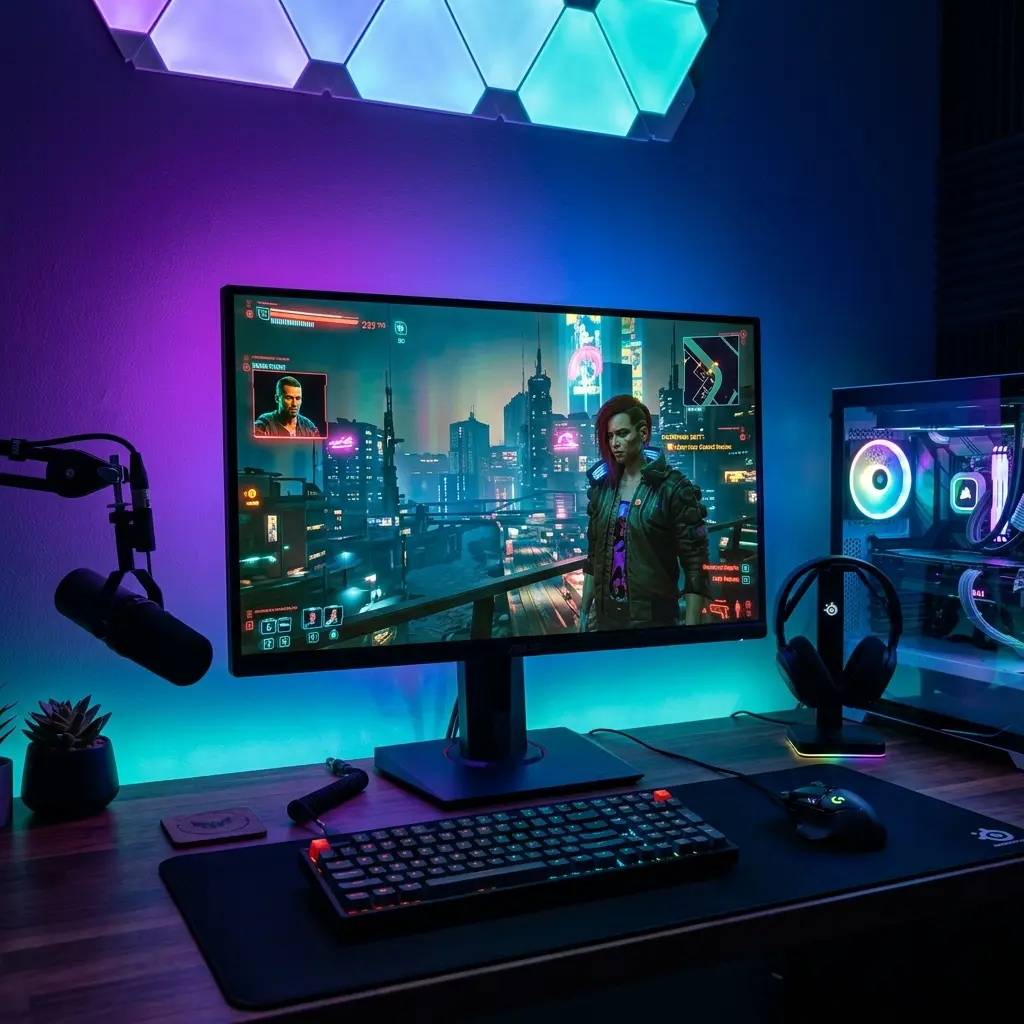
Choosing between TN and IPS panels for gaming monitors hinges on speed versus color quality.
Physical Aspects and Resolution
TN (Twisted Nematic) panels typically boast faster response times, ranging from 1ms to 5ms, making them ideal for fast-paced gaming.
IPS (In-Plane Switching) panels, on the other hand, offer superior color accuracy and viewing angles but often come with response times of 4ms to 8ms.
Performance and Technology
TN panels utilize a simpler structure that allows for quicker pixel response, reducing motion blur during gaming.
IPS technology involves liquid crystals aligning horizontally, enhancing color reproduction but increasing latency slightly.
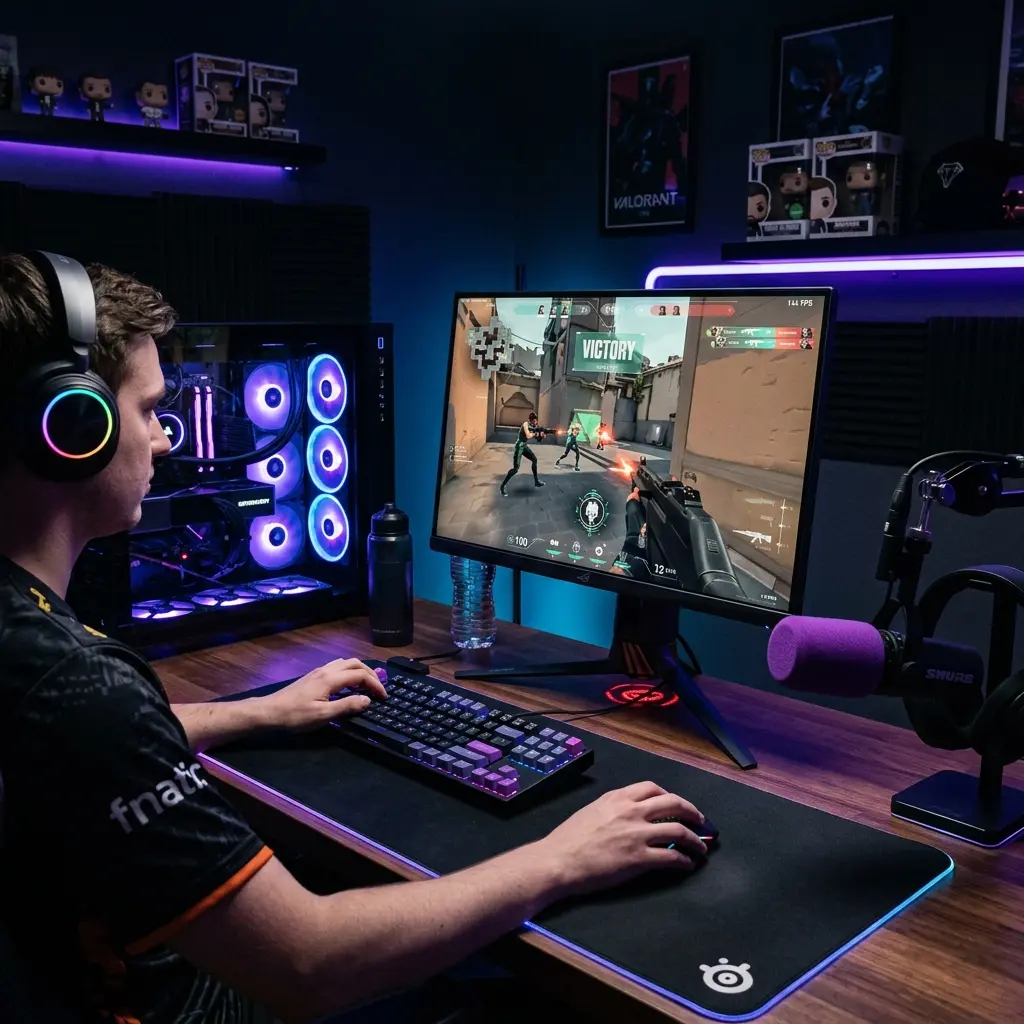
Ergonomics and Visual Comfort
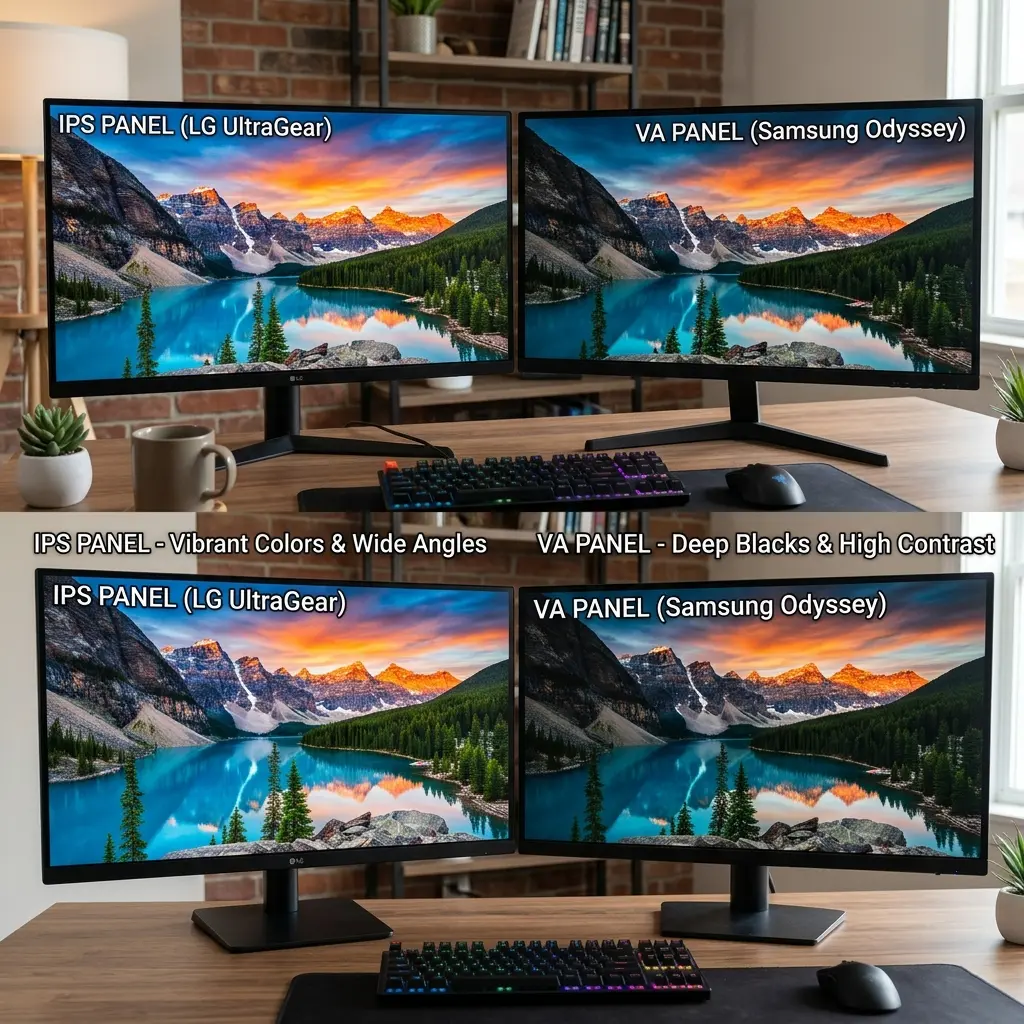
Viewing angles in TN panels are limited, often resulting in color distortion when viewed from off-angles.
Conversely, IPS panels maintain color integrity across wider angles, providing a more comfortable viewing experience for multiplayer scenarios.
| Feature | TN Panel | IPS Panel |
|---|---|---|
| Response Time | 1ms - 5ms | 4ms - 8ms |
| Color Accuracy | Lower | Higher |
| Viewing Angles | Limited | Wide |
| Price | Lower | Higher |
| Best Use Case | Competitive Gaming | Casual Gaming and Content Creation |
Materials and Durability
Most TN panels utilize simpler materials that may result in lower durability over time compared to IPS panels.
IPS panels often feature higher-quality components, contributing to longevity and resistance to pixel degradation.

DomineTec Tip: Consider investing in a monitor arm to enhance ergonomics and create a more flexible workspace.
Buying Recommendations and Brands
Top choices for TN panels include brands like ASUS and BenQ, known for their gaming-centric features.
For IPS options, LG and Dell offer impressive color performance and build quality.

- Identify primary gaming needs: competitive vs. casual.
- Evaluate budget constraints and desired specifications.
- Research user reviews and expert recommendations.
- Consider monitor size based on desk space and usage.
- Look for warranties and customer support options.
Value Analysis and Verdict
Ultimately, the choice between TN and IPS panels depends on individual gaming preferences and priorities.
For competitive gamers, TN panels deliver speed, while IPS monitors excel in color quality for immersive experiences.
Cost of Ownership Over Time
When evaluating TN and IPS panels, the total cost of ownership (TCO) should be considered beyond the initial purchase price. TN panels generally tend to be cheaper at the outset, making them appealing for budget-conscious gamers.
However, IPS panels often come with a higher price tag but provide superior color accuracy and viewing angles, which can enhance the gaming experience significantly.
In the long run, the investment in an IPS panel may pay off through increased satisfaction and potentially lower replacement frequency due to better durability and performance.
Additionally, gamers who prioritize visual quality may find that spending more upfront on an IPS monitor leads to a more enjoyable and immersive gaming experience.
Response Time and Input Lag
Response time is crucial for gamers, particularly in fast-paced genres such as first-person shooters. TN panels typically have faster response times, often rated as low as 1ms, which minimizes motion blur.
IPS panels have historically lagged behind in this area, with response times around 4ms to 5ms; however, recent advancements have significantly closed this gap.
Input lag is another critical metric, as it measures the delay between a user's action and the monitor's response. Typically, TN panels excel here, providing a more responsive feel during gameplay.
Although IPS panels may have slightly higher input lag, many high-end models now offer competitive performance, making them suitable for most gaming scenarios.
Color Gamut and Calibration
The color gamut refers to the range of colors a monitor can display, and it plays a significant role in gaming visuals. IPS panels typically cover a wider color gamut, providing more vibrant and lifelike colors.
For gamers who enjoy visually rich titles, a monitor with a broader color gamut can enhance immersion and overall enjoyment.
Calibration also becomes important, as many IPS monitors offer factory calibration options, ensuring that colors are accurate right out of the box.
In contrast, TN panels may require manual calibration to achieve optimal color accuracy, which can be a drawback for those who prefer plug-and-play convenience.
Viewing Angles and Multi-Display Setups
Viewing angles are a critical consideration, especially for gamers who use multi-monitor setups or who play games with friends. IPS panels boast wider viewing angles, allowing for consistent color and brightness regardless of the viewer's position.
This can be advantageous in a gaming environment where multiple players may be watching the same screen or when using multiple monitors for an extended field of view.
On the other hand, TN panels suffer from color distortion and reduced brightness at wider angles, which can lead to a less enjoyable gaming experience for those sharing the screen.
Ultimately, the choice between TN and IPS may hinge on whether the user prioritizes a single monitor experience or a multi-monitor setup.
Refresh Rate and Gaming Performance
Refresh rate plays a significant role in a gaming monitor's performance, especially in competitive gaming. TN panels often support higher refresh rates, reaching up to 240Hz, which can provide a smoother experience in fast-paced games.
IPS panels have been catching up, with many high-end models now offering refresh rates of 144Hz or higher, making them suitable for competitive play.
For gamers seeking a balance between refresh rate and color quality, IPS panels now provide options that can meet high-performance demands.
Ultimately, the choice of refresh rate will depend on individual gaming preferences and the types of games played.
Heat Generation and Power Consumption
Heat generation and power consumption are often overlooked aspects when choosing a gaming monitor. TN panels generally consume less power and generate less heat compared to IPS panels, making them more energy-efficient.
This difference can be significant for users who spend extended hours gaming, as it may impact overall comfort and electricity bills.
However, advancements in technology have improved the energy efficiency of many IPS monitors, reducing the gap in power consumption.
Still, gamers should consider their usage patterns and whether energy efficiency is a critical factor in their purchasing decision.
Future-Proofing and Technology Trends
As technology evolves, the landscape of gaming monitors continues to change. Future-proofing is an important consideration, especially for gamers looking to invest in a monitor that will remain relevant for years to come.
IPS technology has made significant strides in recent years, with innovations such as Mini LED and OLED, offering even better color accuracy and contrast ratios.
On the other hand, TN panels are also evolving, but they may be more limited in terms of future enhancements, particularly in color reproduction and viewing angles.
Investing in an IPS panel could provide a more resilient option for gamers who want to stay on the cutting edge of display technology.
Adaptive Sync Technologies
Adaptive sync technologies, such as AMD's FreeSync and NVIDIA's G-SYNC, play a crucial role in enhancing gaming experiences across various panel types.
These technologies work by synchronizing the refresh rate of the monitor with the frame rate output of the graphics card, minimizing screen tearing and stuttering.
While TN panels may offer faster refresh rates, IPS panels often provide better support for these adaptive technologies, allowing for smoother gameplay in demanding scenarios.
Gamers should consider monitors that support adaptive sync features, especially for competitive gaming where fluid motion is essential.
Color Depth and Representation
Color depth refers to the number of bits used to represent the color of a single pixel, significantly influencing the visual output of gaming monitors.
IPS panels typically offer a higher color depth, allowing for more vibrant and accurate color representation compared to TN panels.
This is particularly important in games with rich visual environments, where nuanced colors can enhance immersion and overall aesthetic quality.
When selecting a gaming monitor, considering color depth is essential for those who prioritize visual fidelity and artistic rendering in their gameplay experience.
Gaming Environment and Lighting Conditions
The gaming environment and lighting conditions can significantly affect the performance of TN and IPS panels.
TN panels generally perform well in bright environments due to their higher brightness levels but may struggle with color accuracy in such settings.
In contrast, IPS panels excel in controlled lighting conditions, providing consistent color representation and wider viewing angles regardless of the ambient light.
Gamers should assess their setup and lighting to choose a panel type that best suits their gaming environment for optimal visual performance.
Long-Term Use and Eye Strain
Long-term use of gaming monitors can lead to eye strain, making it essential to consider panel type in relation to visual comfort over extended periods.
IPS panels are often preferred for their better color accuracy and wider viewing angles, reducing the need for frequent adjustments and minimizing eye fatigue.
In contrast, the lower color fidelity of TN panels might lead to more strain, particularly in prolonged gaming sessions.
Choosing a monitor with features aimed at reducing eye strain, such as flicker-free technology and blue light filters, is advisable for all panel types to promote long-term comfort.
Panel Coatings and Glare Reduction
The type of coating applied to a monitor panel can significantly influence the gaming experience, particularly in brightly lit environments. Anti-glare coatings help reduce reflections and distractions, allowing gamers to focus more on their gameplay instead of the surrounding light sources.
TN panels often feature a matte finish that minimizes glare, making them suitable for well-lit rooms. In contrast, IPS panels typically have a glossy surface, which can enhance color vibrancy but may increase glare under direct sunlight.
When selecting a gaming monitor, consider the typical lighting conditions of your gaming environment. An anti-glare coating can make a substantial difference in visibility during intense gaming sessions, especially for competitive gamers who require maximum focus.
Moreover, some manufacturers offer advanced coatings that improve both glare reduction and color accuracy, providing gamers with a balanced solution that caters to both performance and visual quality.
Calibration and Color Accuracy Over Time
The importance of calibration in maintaining color accuracy cannot be overstated, especially for gamers who value visual fidelity. Over time, monitors can drift from their initial color settings, necessitating regular calibration to ensure consistent performance.
While both TN and IPS panels can benefit from calibration, IPS panels typically offer a wider color spectrum, making them more sensitive to calibration adjustments. This sensitivity allows for finer-tuned color accuracy, which is essential for genres that rely heavily on visual storytelling.
Advanced calibration tools and software can help gamers achieve the desired color profiles, enhancing their overall experience. Investing in a colorimeter can provide precise adjustments, ensuring that the monitor delivers the best possible visual performance over its lifespan.
Additionally, regular calibration not only enhances color accuracy but also extends the useful life of the monitor by ensuring it operates within optimal parameters, thus providing gamers with a reliable and high-quality display throughout their usage.
Compatibility with Gaming Consoles and PCs
When selecting a gaming monitor, compatibility with gaming consoles and PCs is a crucial factor to consider. TN panels typically offer faster refresh rates, making them suitable for competitive gaming on consoles and high-performance PCs. This advantage can be critical for gamers who prioritize speed in fast-paced titles.
On the other hand, IPS panels are favored for their superior color accuracy and wider viewing angles, which can enhance the gaming experience, especially for visually rich titles. Gamers using consoles like the PlayStation or Xbox may benefit from the vibrant colors and detailed visuals that an IPS monitor provides.
Additionally, many modern gaming consoles support higher resolutions and refresh rates, making it essential to pair them with a monitor that can take full advantage of these capabilities. Understanding the specifications of both the console and the monitor can help in making an informed choice.
Ultimately, the decision between TN and IPS may also depend on personal preferences and gaming habits. Competitive players may lean towards TN for speed, while those who enjoy immersive single-player experiences may prefer the color quality of IPS panels.
Impact of Panel Type on Competitive Gaming
The choice between TN and IPS panels can significantly impact competitive gaming performance. TN panels are known for their ultra-fast response times, which can result in a more fluid gaming experience during high-stakes matches. This feature is particularly beneficial in genres like first-person shooters and real-time strategy games, where quick reflexes are essential.
However, IPS panels have made great strides in response times and refresh rates, closing the gap with TN technology. Many modern IPS monitors now offer refresh rates up to 240Hz and response times as low as 1ms, making them increasingly viable for competitive gaming. This evolution allows gamers to enjoy superior color representation without sacrificing performance.
Moreover, the competitive gaming landscape often involves multi-monitor setups, where visual consistency across panels becomes crucial. IPS panels, with their excellent color accuracy and viewing angles, can provide a more uniform experience across multiple screens, enhancing overall gameplay immersion.
Ultimately, while TN panels may still hold the edge in terms of speed, the advancements in IPS technology have made them a formidable alternative for competitive gamers. Balancing speed and color quality is essential, as both elements contribute to a winning gaming strategy.
Frequently Asked Questions
What is the main advantage of TN panels?
TN panels are primarily favored for their faster response times, making them suitable for competitive gaming.
Are IPS panels worth the extra cost?
IPS panels provide superior color accuracy and viewing angles, making them ideal for content creators and casual gamers.
Can TN panels be used for professional work?
While TN panels can be used for general tasks, their limited color accuracy makes them less suitable for professional graphic design work.
What refresh rate is ideal for gaming monitors?
A refresh rate of 144Hz or higher is optimal for smooth gameplay, particularly in competitive settings.
How do viewing angles affect gaming?
Wider viewing angles in IPS panels ensure consistent colors and brightness, enhancing the gaming experience when viewed from different positions.




