1. Direct Introduction
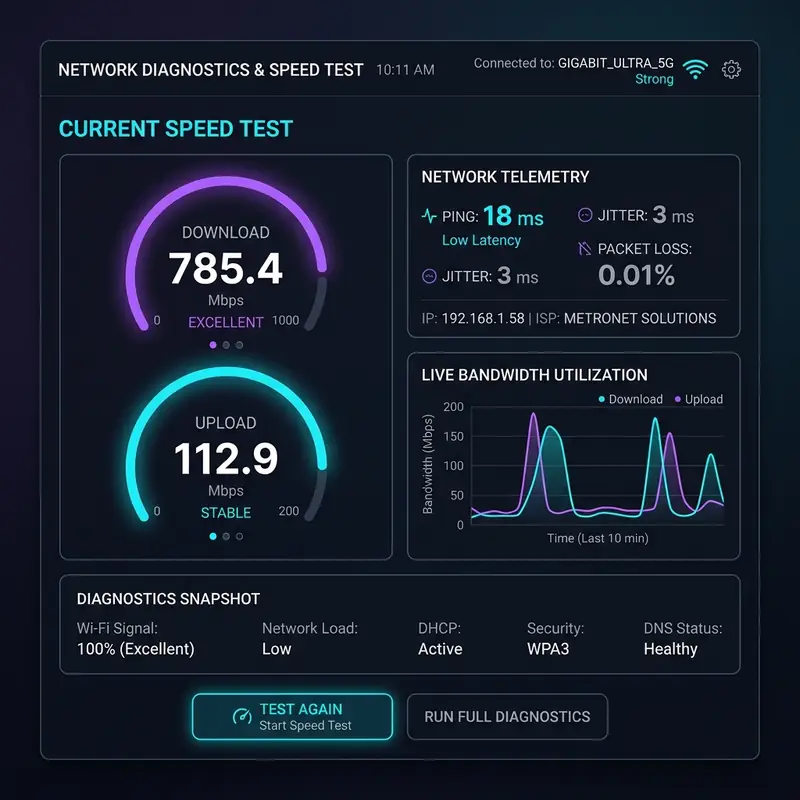
The modern digital ecosystem is fundamentally predicated upon the seamless, uninterrupted, and high-velocity transmission of data packets across vast and intricate topologies of interconnected network infrastructure. When an end user experiences what is colloquially referred to as a slow internet connection, they are in reality observing a complex manifestation of underlying systemic failures, architectural bottlenecks, or physical limitations within the data transmission pathway. A comprehensive understanding of a slow internet fix requires a paradigm shift away from superficial troubleshooting methodologies and toward a profound, granular analysis of the Open Systems Interconnection model, spanning from the physical layer of signal propagation up to the application layer of software interpretation. The pervasive reliance on cloud computing, real-time bidirectional video communication, and high-frequency algorithmic financial trading demands latency metrics measured in single-digit milliseconds and bandwidth capacities that can accommodate exponential data growth. Consequently, rectifying suboptimal network performance is no longer merely a matter of user convenience; it is a critical operational imperative for both enterprise continuity and personal digital participation. To engineer a robust slow internet fix, one must meticulously dissect the complex interplay between local area network configurations, wide area network routing protocols, Internet Service Provider peering agreements, and the fundamental physics governing electromagnetic wave propagation. This highly technical exploration will dismantle the traditional, often oversimplified narratives surrounding internet speed, replacing them with a rigorous examination of the diagnostic and remedial frameworks necessary to achieve theoretical maximum throughput and absolute minimum latency across any given network topology. The ensuing discourse will systematically evaluate the multifarious vectors that contribute to signal degradation, packet loss, and latency spikes, providing a sophisticated architectural blueprint for comprehensive network optimization. By leveraging advanced diagnostic methodologies and deploying enterprise-grade traffic shaping algorithms, network administrators and technically proficient consumers can effectively mitigate the myriad factors that artificially constrain digital communication. This guide will therefore serve as the definitive technical treatise on conceptualizing, architecting, and deploying a permanent, scalable slow internet fix within any complex networking environment.
Furthermore, the diagnostic phase of addressing a slow internet fix necessitates an uncompromisingly detailed evaluation of the entire transmission corridor, beginning with the immediate local gateway and extending to the terminating edge servers of the requested digital resource. It is imperative to recognize that bandwidth, often erroneously conflated with speed, merely dictates the volumetric capacity of the transmission medium, whereas latency defines the temporal delay inherent in the propagation and processing of individual data frames. A technically sound slow internet fix must simultaneously optimize both of these distinct but interrelated metrics. For instance, a fiber-optic connection boasting gigabit throughput capabilities will still render a highly degraded user experience if the localized domain name system resolution is impaired, or if the transmission control protocol handshake process is subject to excessive retransmissions due to localized electromagnetic interference. Thus, the introductory premise of any effective slow internet fix is the realization that internet connectivity is not a monolithic service, but rather a fragile, highly synchronized orchestration of thousands of independent micro-transactions, any one of which can introduce catastrophic cascading delays if not properly architected, monitored, and maintained.
2. Basic Architecture
The foundational architecture underpinning any discussion of a slow internet fix must be analyzed through the rigorous lens of both local and wide-area networking topologies, starting with the physical demarcation point where the external service provider network interfaces with the localized internal environment. At the physical layer, the transmission medium plays an inescapable role in dictating the theoretical upper bounds of network performance. Environments utilizing legacy asymmetric digital subscriber line technologies are inherently constrained by the attenuation characteristics of unshielded twisted pair copper wiring over extended distances, rendering them highly susceptible to crosstalk and environmental signal degradation. Conversely, modern architectures leveraging gigabit passive optical networks utilize light pulses over single-mode silica fibers, effectively eliminating electromagnetic interference and vastly expanding the available bandwidth spectrum. However, even the most sophisticated fiber-to-the-premises deployments must eventually transition into localized routing and switching hardware, which serves as the primary focal point for a localized slow internet fix. The central routing appliance functions as the definitive orchestrator of local packet traffic, maintaining complex network address translation tables that map internal, non-routable internet protocol addresses to the single public address assigned by the service provider. The processing capability of this routing hardware is a critical architectural component; an underpowered central processing unit within the router will inevitably fail to sustain maximum throughput during periods of high concurrency, resulting in a localized buffer overflow and subsequent packet dropping.
Beyond the primary gateway appliance, the wireless local area network architecture represents the most common locus for performance degradation and the most frequent target for a slow internet fix. Modern wireless architectures rely on the Institute of Electrical and Electronics Engineers 802.11 standards, operating predominantly within the 2.4 gigahertz, 5 gigahertz, and increasingly the 6 gigahertz radio frequency bands. The 2.4 gigahertz spectrum, while offering superior penetrative capabilities through physical obstructions, is notoriously congested, featuring only three non-overlapping channels. This density necessitates complex carrier-sense multiple access with collision avoidance mechanisms, wherein wireless access points must constantly negotiate for airtime, introducing significant latency overhead. The transition to 5 gigahertz and 6 gigahertz bands mitigates this congestion by providing substantially more contiguous spectrum for wider channel bonding, up to 160 megahertz or 320 megahertz, respectively. However, these higher frequency signals suffer from significantly faster inverse-square attenuation and severely reduced material penetration, requiring a meticulously planned multi-node mesh architecture or strategically positioned independent wireless access points connected via gigabit ethernet backhauls to maintain ubiquitous, high-throughput coverage. The architectural mandate for a permanent slow internet fix requires the complete elimination of wireless repeaters that rely on half-duplex communication, replacing them with full-duplex wired infrastructure connecting enterprise-grade, multi-user multiple-input multiple-output capable broadcasting nodes. Furthermore, the switching architecture interconnecting these nodes must employ non-blocking backplanes capable of processing millions of packets per second without introducing microsecond delays, ensuring that the local layer-two distribution network remains functionally transparent to the overarching transmission stream.
3. Challenges and Bottlenecks
The execution of a definitive slow internet fix is constantly challenged by an extensive array of highly technical bottlenecks that manifest across multiple layers of the networking stack, often requiring sophisticated packet-level analysis to accurately diagnose and resolve. One of the most pervasive and insidious challenges in modern network engineering is the phenomenon known as bufferbloat. This condition occurs when intermediary routing equipment, in an misguided attempt to prevent packet loss, utilizes excessively large memory buffers to queue incoming data packets during transient periods of network congestion. While this prevents immediate drop rates, it introduces massive, fluctuating latency spikes, thoroughly destroying the performance of real-time protocols such as voice over internet protocol or competitive online gaming telemetry. Overcoming bufferbloat is a mandatory component of any successful slow internet fix and typically requires the implementation of advanced active queue management algorithms, such as fair queuing controlled delay, which intelligently preempts congestion by strategically dropping packets before the hardware buffers reach maximum capacity, thereby signaling the transmission control protocol window to scale back throughput harmoniously. Another significant challenge originates from localized radio frequency interference in the wireless environment. A slow internet fix in a dense urban topology must account for co-channel interference from neighboring networks, non-Wi-Fi electromagnetic emitters such as microwave ovens or Bluetooth peripherals, and the complex multipath fading effects caused by signal reflection and refraction off structural materials. This necessitates sophisticated spectrum analysis tools to identify clean transmission frequencies and dynamically adjust spatial streams to optimize signal-to-noise ratios.
Beyond the localized environment, a substantial subset of challenges necessitating a slow internet fix resides within the broader infrastructure of the wide area network and the internet service provider's peering arrangements. Even if a local network is architected flawlessly, the ultimate speed of data retrieval is dictated by the path vector routing decisions made by the border gateway protocol at the edge of the provider's network. If an internet service provider engages in suboptimal peering practices, routing traffic through congested transit providers rather than utilizing direct private peering links, the user will experience significant delays regardless of their localized bandwidth capacity. Furthermore, domain name system resolution latency is a frequently overlooked bottleneck. When a user requests a web resource, the translation of the human-readable domain into a routable network layer address must occur rapidly. Relying on the default, often overloaded domain name system resolvers provided by consumer internet service providers can add hundreds of milliseconds to the initial connection time. Implementing a slow internet fix therefore requires manually configuring local dynamic host configuration protocol servers to distribute the addresses of highly optimized, anycast-routed enterprise domain name system resolvers, thereby drastically reducing the initial time-to-first-byte metric. Lastly, asymmetric routing paths, suboptimal maximum transmission unit configurations resulting in continuous packet fragmentation, and the computational overhead of deep packet inspection appliances all contribute to a degraded transmission state, requiring meticulous, step-by-step diagnostic procedures utilizing tools like bidirectional trace-routing and precise transmission control protocol window scaling analysis to fully mitigate.
4. Scalability Benefits
Implementing a rigorous, architecturally sound slow internet fix yields profound scalability benefits that extend far beyond the immediate resolution of local connectivity complaints, transforming the network into a dynamic, highly elastic infrastructure capable of accommodating exponential increases in client density and data volume. When the fundamental bottlenecks of packet queuing and signal degradation are eradicated, the network transitions from a fragile, contention-based environment to a deterministic, high-capacity transmission matrix. One of the primary scalability advantages of executing a comprehensive slow internet fix is the ability to leverage dense spatial multiplexing technologies inherent in modern wireless standards. By properly configuring orthogonal frequency-division multiple access, a wireless access point can logically divide a single wireless channel into numerous distinct resource units, allowing the simultaneous transmission of data to dozens of discrete clients without incurring the traditional latency penalties associated with sequential airtime allocation. This architectural enhancement allows a single physical location to scale its localized user base massively without requiring a corresponding proportional increase in physical hardware deployment, ensuring that the network remains performant even under conditions of extreme concurrency. Furthermore, the optimization of localized switching fabrics through the implementation of link aggregation control protocols enables the seamless bundling of multiple physical gigabit or ten-gigabit ethernet connections into singular, high-bandwidth logical pipelines, providing crucial fault tolerance and scalable capacity for backbone connections between primary switching hardware and localized attached storage arrays or edge computing nodes.
In addition to localized capacity expansions, a properly executed slow internet fix dramatically enhances the scalability of cloud-integrated operations and hybrid software-defined wide area network deployments. By stabilizing latency and virtually eliminating uncontrolled packet loss, organizations can confidently transition highly sensitive, bandwidth-intensive workloads—such as uncompressed high-definition video production, massive relational database synchronizations, and real-time artificial intelligence model training datasets—from localized bare-metal servers to distributed cloud architectures. The predictability achieved through a fundamental slow internet fix enables the implementation of aggressive multi-path transmission control protocol configurations and dynamic load balancing across multiple distinct internet service provider links. This multi-wan architecture not only ensures theoretical maximum uptime through automated failover mechanisms but also allows for the granular, policy-based routing of distinct traffic types across the most optimal physical paths based on real-time latency and jitter metrics. Ultimately, the scalability benefits derived from a comprehensive slow internet fix manifest as a foundational uncoupling of operational growth from localized infrastructure constraints. By designing a network that operates consistently at the theoretical limits of its underlying physical layer, network architects create a highly resilient digital foundation that can seamlessly adapt to the integration of future emerging technologies, ensuring that the network serves as a powerful accelerant for technological integration rather than a chronic, localized impediment to digital expansion.
5. Practical Integration
The practical integration of a highly effective slow internet fix requires a systematic, multi-phased deployment strategy that transitions from passive analytical diagnostics to aggressive, active configuration of localized network hardware and software protocols. The initial step in this practical methodology necessitates a comprehensive baseline performance analysis utilizing advanced localized telemetry. Administrators must deploy packet capture utilities to perform deep analysis of the existing transmission streams, identifying specific transmission control protocol retransmissions, evaluating domain name system resolution times, and mapping the precise latency introduced at every localized routing hop. Once the baseline metrics are established, the physical layer must be ruthlessly optimized. This involves replacing any compromised, improperly shielded, or legacy category 5 ethernet cabling with certified, solid-copper category 6a or category 7 cabling to ensure uninhibited multi-gigabit throughput across the localized switching fabric. Following physical layer remediation, the practical integration of a slow internet fix shifts to the configuration of the primary gateway router. The immediate implementation of strict quality of service algorithms is paramount. Network administrators must explicitly define traffic classification rules, utilizing deep packet inspection to identify and prioritize latency-sensitive traffic—such as session initiation protocol packets and critical video conferencing streams—placing them into strict priority queues while simultaneously applying rigorous bandwidth limiters to non-essential, bulk data transfers like background operating system updates or peer-to-peer file sharing protocols.
The subsequent phase of practical integration focuses intensely on the localized wireless topology, which is statistically the most vulnerable segment requiring a slow internet fix. This requires transitioning away from centralized, monolithic high-power routers toward a distributed architecture utilizing discrete wireless access points managed by a centralized software controller. Each access point must be manually configured following a rigorous radio frequency site survey. The practical integration demands that automatic channel selection features be disabled; instead, non-overlapping channels must be statically assigned based on contiguous spectrum analysis to mathematically minimize co-channel and adjacent-channel interference. Furthermore, transmission power levels must be carefully attenuated; setting broadcast power to maximum often increases noise and induces asymmetric routing problems where mobile clients can hear the access point but lack the transmission strength to reply, causing severe performance degradation. A true slow internet fix requires tuning the broadcast power to precisely match the reception capabilities of the weakest localized client devices. Finally, practical integration must address the logical network topology through the implementation of virtual local area networks. By segmenting the localized broadcast domain, administrators can isolate noisy internet of things devices, guest networks, and critical production workstations into distinct logical subnets. This strict segmentation drastically reduces the volume of localized broadcast radiation that every device must process, directly freeing up central processing unit cycles on network switches and end-user devices alike, thereby dramatically contributing to the overall perceived speed, responsiveness, and absolute stability of the integrated internet connectivity infrastructure.
6. Security and Compliance
The implementation of a comprehensive slow internet fix cannot be executed in isolation from the stringent security and compliance mandates that govern modern digital infrastructure, as the very mechanisms utilized to accelerate data transmission often possess the inherent potential to introduce severe vulnerabilities if not properly secured. The intersection of network optimization and cryptographic security creates a complex computational paradox: the rigorous encryption required to maintain data confidentiality inherently adds computational overhead and packet encapsulation bulk, which can directly contribute to the latency and bandwidth limitations that a slow internet fix is attempting to resolve. For example, implementing a robust virtual private network utilizing the internet protocol security suite requires extensive mathematical transformations utilizing advanced encryption standard algorithms in Galois/Counter Mode. If the local routing hardware lacks dedicated cryptographic acceleration processors, the central processing unit will become completely saturated attempting to encrypt high-bandwidth traffic in real-time, resulting in a catastrophic degradation of network throughput. Therefore, a secure slow internet fix mandates the deployment of enterprise-grade hardware featuring dedicated application-specific integrated circuits designed exclusively for wire-speed cryptographic processing, ensuring that the mandatory implementation of robust security protocols does not artificially throttle the underlying physical layer capacity.
Furthermore, a comprehensive slow internet fix must integrate seamlessly with stateful firewall architectures and modern unified threat management systems without introducing unmanageable processing delays. Deep packet inspection engines, intrusion detection systems, and automated malware sandboxing appliances require the buffering and analysis of significant portions of the data stream before allowing packets to proceed to the localized client. If these security appliances are not highly optimized or are lacking in necessary memory resources, they will introduce massive latency spikes and contribute to localized bufferbloat. To resolve this, a compliant slow internet fix requires the implementation of hardware-accelerated fast-path routing, wherein established and verified data streams are securely offloaded from the main central processing unit and routed directly through silicon-based switching fabrics, drastically reducing latency while maintaining strict compliance with zero-trust architectural principles. Additionally, compliance frameworks such as the Payment Card Industry Data Security Standard or the Health Insurance Portability and Accountability Act mandate strict logical separation of sensitive data streams. Achieving a slow internet fix in these regulated environments requires the highly technical implementation of secure virtual local area networks interconnected via strictly controlled access control lists. The challenge is to maintain absolute isolation of these compliance-bound subnets without introducing routing loops, asymmetric routing paths, or excessive firewall processing delays, demanding a meticulously architected logical topology that prioritizes both absolute cryptographic security and maximum algorithmic routing efficiency simultaneously.
7. Costs and Optimization
The financial architecture required to facilitate a permanent, enterprise-grade slow internet fix is highly complex, demanding a rigorous cost-benefit analysis that weighs immediate capital expenditures on advanced networking hardware against the long-term operational optimizations and productivity gains derived from unconstrained digital connectivity. The optimization of a degraded network topology rarely involves zero-cost software tweaks; rather, a true slow internet fix necessitates the systematic replacement of consumer-grade, computationally limited networking appliances with sophisticated, highly resilient prosumer or enterprise infrastructure. The initial capital outlay must account for the procurement of multi-gigabit routing gateways, layer-three managed switches with power over ethernet capabilities, and a fleet of high-density wireless access points. When evaluating the costs of a slow internet fix, administrators must eschew heavily marketed consumer mesh systems—which frequently rely on fundamentally flawed, shared wireless backhaul topologies that halve available bandwidth with every hop—in favor of discrete components from enterprise manufacturers. While this approach significantly increases the initial hardware procurement budget, it results in a modular, highly scalable infrastructure where individual components can be optimized or upgraded in isolation, ultimately reducing the total cost of ownership over a ten-year hardware lifecycle by avoiding the need for complete systemic replacements as new wireless standards emerge.
Beyond capital hardware expenditures, the financial optimization of a slow internet fix requires a critical reevaluation of the recurring operational expenses associated with the internet service provider agreement. Many organizations overspend drastically on high-bandwidth, asymmetric commercial connections, erroneously believing that purchasing a gigabit download tier will organically resolve latency and connectivity issues. In reality, a highly optimized fifty-megabit symmetric connection with a strictly enforced service level agreement guaranteeing low latency and zero packet loss will vastly outperform a heavily contended, heavily oversubscribed gigabit cable connection for the vast majority of real-time operational tasks. Therefore, the financial execution of a slow internet fix involves negotiating dedicated enterprise internet circuits, such as localized direct fiber internet access, which provides guaranteed bandwidth and dedicated peering pathways, completely bypassing the congested residential and commercial nodes that plague standard broadband connections. Furthermore, optimization requires the implementation of rigorous centralized management and telemetry software. While advanced network controllers and predictive analytics platforms introduce recurring software licensing fees, they allow network administrators to proactively identify degrading fiber optics, failing switch ports, or localized radio interference before they manifest as a catastrophic connectivity failure for the end user. This transition from a reactive troubleshooting model to a proactive, telemetry-driven optimization framework minimizes costly operational downtime and ensures that the financial investment in the slow internet fix delivers sustained, measurable returns through unparalleled digital efficiency and uncompromising structural reliability.
8. Future of the Tool
As the global digital paradigm accelerates toward absolute interconnectedness, the methodologies and architectural frameworks constituting a definitive slow internet fix are undergoing a radical, highly technical evolution driven by the convergence of predictive artificial intelligence, advanced radio frequency engineering, and fundamental shifts in wide-area routing protocols. The future of network optimization will not rely on manual intervention by systems administrators, but rather on the deployment of autonomous, machine-learning-driven network controllers capable of executing a dynamic slow internet fix in real-time. These advanced neural network architectures will continuously ingest massive volumes of localized telemetry—including microsecond-level latency variations, minute fluctuations in electromagnetic interference, and predictive usage patterns based on historical client behavior. Upon detecting the nascent signatures of network congestion or localized bufferbloat, these autonomous systems will preemptively rewrite traffic shaping algorithms, dynamically shift active wireless clients to pristine radio frequencies, and automatically re-route wide area network traffic across redundant internet service provider links before the end user ever perceives a degradation in service. This transition from static quality of service rules to dynamic, computationally intelligent traffic orchestration represents the ultimate realization of the slow internet fix, transforming the network infrastructure from a rigid, deterministic system into a highly elastic, self-healing digital organism capable of maintaining theoretical maximum efficiency under constantly fluctuating environmental conditions.
Concurrently, the physical and data link layers of the network stack are evolving to mathematically eliminate the bottlenecks that currently necessitate a slow internet fix. The widespread deployment of the Institute of Electrical and Electronics Engineers 802.11be standard, colloquially known as Wi-Fi 7, introduces multi-link operation, allowing localized client devices to simultaneously transmit and receive data across the 2.4 gigahertz, 5 gigahertz, and 6 gigahertz bands concurrently. This fundamental restructuring of wireless communication provides immense, multi-gigabit throughput while utilizing dynamic channel puncturing to intelligently route around localized narrow-band interference, essentially immunizing the wireless local area network against the most common causes of environmental signal degradation. Furthermore, the future of the macro-level slow internet fix is being rapidly defined by the proliferation of low-earth-orbit satellite constellations. By bypassing the limitations of terrestrial fiber-optic deployments and the routing inefficiencies of localized transit providers, these space-based architectural frameworks utilize advanced phased-array antennas and inter-satellite laser communication links to provide highly optimized, low-latency broadband directly to previously constrained geographic topologies. As edge computing architectures continue to push critical data processing out of centralized server farms and directly into the localized networking hardware, the future methodologies required to execute a slow internet fix will demand an unprecedented synthesis of localized computational power, advanced predictive routing algorithms, and ubiquitous, multi-spectrum transmission capabilities, culminating in an era where network latency is fundamentally eradicated as a computational variable.
9. Final Conclusion
The pursuit and execution of a definitive slow internet fix is an incredibly demanding technical endeavor that transcends mere consumer troubleshooting, requiring a profound, granular mastery of the complex physical, mathematical, and logical systems that constitute modern digital telecommunications. We have established that the perception of a slow internet connection is rarely the result of a singular localized failure, but rather the cumulative manifestation of subtle architectural flaws, misconfigured routing protocols, localized electromagnetic interference, and fundamental limitations within the internet service provider's peering infrastructure. To implement a truly permanent slow internet fix, one must abandon superficial methodologies in favor of a rigorous, engineering-focused approach that systematically analyzes and optimizes every single localized routing hop, wireless transmission frame, and wide area network vector. By aggressively mitigating bufferbloat through the deployment of advanced active queue management, restructuring wireless environments to leverage dense spatial multiplexing while mathematically minimizing co-channel interference, and utilizing deep packet inspection to enforce highly specific traffic prioritization, network architects can forge localized environments that operate flawlessly at the theoretical limits of their physical transmission mediums. This level of optimization requires a transition away from computationally constrained consumer hardware and toward modular, enterprise-grade switching and routing fabrics that can process millions of packets per second without introducing microsecond latency penalties.
Ultimately, the successful deployment of a comprehensive slow internet fix serves as the foundational bedrock for all modern digital operations, ensuring that the network infrastructure functions as an invisible, friction-less conduit for data rather than a chronic operational bottleneck. The detailed architectural optimizations, stringent security implementations, and rigorous cost-benefit analyses detailed throughout this technical treatise provide the definitive blueprint required to isolate, diagnose, and permanently eradicate the myriad factors contributing to data transmission degradation. As the demands of cloud computing, real-time algorithmic processing, and ubiquitous ultra-high-definition streaming continue to exert exponential pressure on localized networks, the necessity for a highly technical, architecturally sound slow internet fix will only become more critical. By embracing the principles of dynamic traffic orchestration, comprehensive telemetry analysis, and rigorous physical layer remediation, both individuals and large-scale enterprises can construct highly resilient, future-proof network topologies. These optimized architectures will not only seamlessly accommodate the massive bandwidth requirements of tomorrow's technological innovations but will entirely redefine the baseline expectations for digital connectivity, ensuring that the flow of information remains perpetually unconstrained, immediately responsive, and absolutely secure across any complex digital ecosystem.

![Como Navegar Anônimo na Internet de Verdade [Guia Antirrastreamento]](/images/posts/wifi-router.webp)