How to Setup Tenda AC11 AC1200 Dual-Band Router using Phone
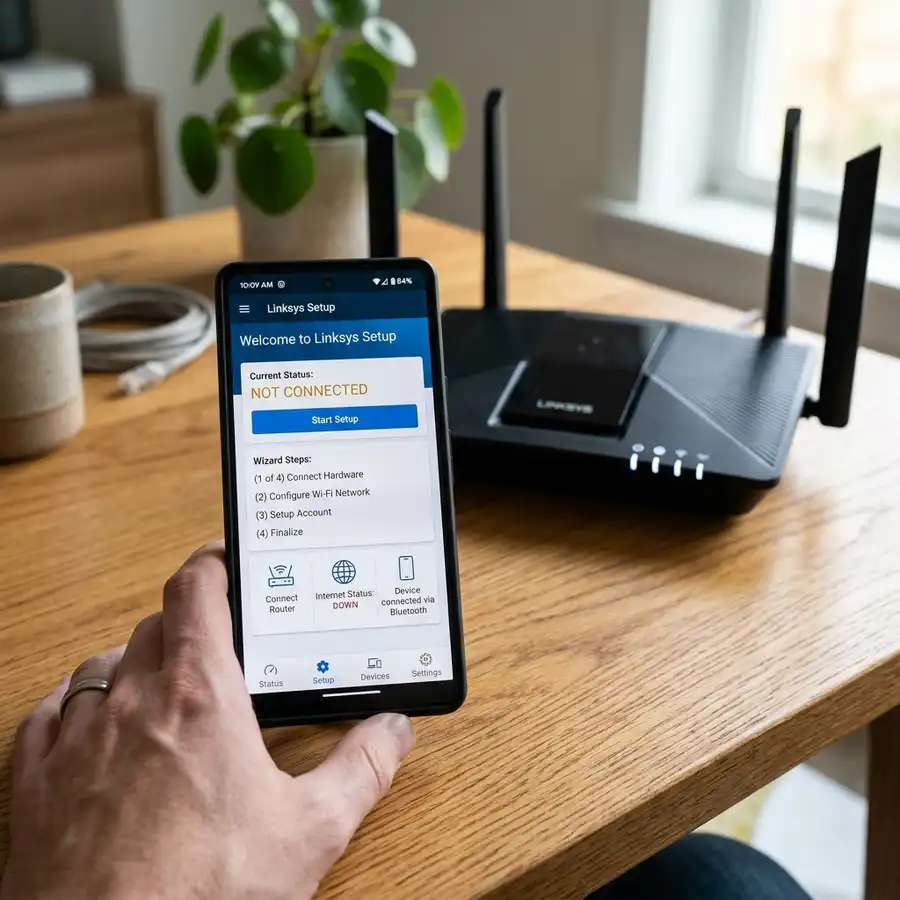
The Tenda AC11 AC1200 Dual-Band router stands out as an attractive option in the budget segment, offering excellent signal coverage with its 5 external high-gain 6 dBi antennas and full support for Gigabit network connections. Conducting the initial setup of this wireless device from a smartphone is a highly convenient process that eliminates the need for physical ethernet cables or desktops to bring your home internet connection live. To setup your Tenda AC11 AC1200 router using a phone, connect to the default Tenda Wi-Fi signal, open a mobile browser to 192.168.0.1, and follow the setup wizard to establish the connection type and set your Wi-Fi name and password.
Following the correct configuration steps for PPPoE or DHCP prevents connection drops and IP lease loops. If you manage other network devices in your home network, you can also check our guide on how to set up a TP-Link router from your phone or read our guide on how to configure the Xiaomi Mi Wi-Fi Pro repeater.
1. Hardware Assembly and Physical Connection of Tenda AC11
Before proceeding with the digital setup on your mobile phone's web browser, you must ensure that all physical connections are correctly established. Since the Tenda AC11 is a Gigabit router, its network interfaces support throughput speeds of up to 1000 Mbps. If your home fiber optic plan is faster than 100 Mbps, ensure you utilize a high-quality Cat5e or Cat6 ethernet cable to connect your ISP modem to the WAN port (colored blue or separated physically on the back) of the Tenda router.
The Tenda AC11 WAN port is equipped with a high-quality physical Ethernet transformer chip that isolates electrical surges coming from external lines. Additionally, it features Auto-MDI/MDIX automatic crossover detection, meaning the interface will adapt dynamically to crossover or straight-through Ethernet cables, preventing hardware handshake failures between older modems and the router. Follow these hardware connection steps:
- Unplug your ISP modem (such as Vivo, Claro, Comcast, or Spectrum) from the wall power outlet;
- Insert one end of your high-speed RJ-45 network cable into the primary LAN port on the modem, and the other end into the WAN port on the Tenda AC11;
- Plug the ISP modem back into the electrical outlet and wait for all indicator lights (DSL, Fiber, Online) to turn steady green;
- Plug the Tenda AC11 power adapter into the wall outlet. The System (SYS) indicator LED will begin flashing slowly, confirming the router's firmware has loaded and the default wireless network is active for mobile pairing.
2. Technical Architecture: Inside the Tenda AC11
Beneath its striking black spaceship-like shell, the Tenda AC11 incorporates an optimized hardware design engineered for fast packet processing. The heart of the router is a Realtek RTL8197FH system-on-chip (SoC) operating at a high clock speed of 1 GHz. This high-efficiency processor is built on a MIPS 24Kc processor architecture core and handles physical routing, packet inspections, and address translations (NAT) at the hardware level, preventing CPU overheating and network drops during heavy use.
The internal PCB layout also features several key hardware components:
- RAM Capacity: 64 MB DDR2 memory. This acts as the temporary workspace for holding ARP and routing tables, active NAT sessions, and buffering real-time data packets.
- Flash Storage: 8 MB SPI flash memory, containing the Linux-based proprietary Tenda firmware.
- Wireless Transceivers: Power amplifier (PA) and low-noise amplifier (LNA) modules for both the 2.4 GHz and 5 GHz bands, paired with the 5 external omnidirectional 6 dBi antennas.
- EIRP Power Levels: Transmitter power is rated at up to 20 dBm (100mW) on the 2.4 GHz frequency and 23 dBm (200mW) on the 5 GHz frequency, conforming to strict global radiation standards while delivering maximized indoor signal density.
Having 64 MB of RAM and a MIPS 24Kc 1 GHz processor allows the Tenda AC11 to maintain stable connections for 25 to 30 client devices simultaneously. Budget routers with only 16 MB or 32 MB of memory often crash or drop connections under heavy traffic, requiring frequent manual power cycles to clear kernel memory leaks.
3. Connecting Your Smartphone to the Default Tenda Wi-Fi Network
Once the router is powered on and broadcasting its factory wireless signal, you must connect your mobile phone to this temporary network to gain access to the router's administration IP. The default factory Wi-Fi SSID is unsecured (requires no password) and is usually broadcast as Tenda_XXXXXX (where the suffix corresponds to part of the device's MAC address).
To pair your phone with the network, follow these steps:
- Open the Settings menu on your smartphone and go to Wi-Fi or Connections;
- Scan the local wireless environment and select the SSID beginning with Tenda_;
- Tap the network to connect. Because this is an unconfigured link with no active internet access, your phone's operating system (Android or iOS) may display a prompt stating "Network has no internet access". Select "Keep Wi-Fi Connection". If your smartphone tries to drop the connection and return to cellular data (3G/4G/5G), disable mobile data temporarily until the configuration is finished.
4. Using the Tenda Quick Setup Wizard (IP 192.168.0.1)
With your smartphone connected to the temporary Tenda wireless network, open a web browser (Chrome, Safari, or Firefox) and follow these steps to configure the device:
- Type the default administrative IP address in the browser's URL address bar:
192.168.0.1and press Enter. If the page fails to load, typetendawifi.comin the bar; - The Tenda Quick Setup Wizard homepage will display. Tap the blue "Start" button;
- The wizard will analyze your WAN port connection type. Select the connection protocol required by your Internet Service Provider:
- Dynamic IP (DHCP): Commonly used for modems that operate in router mode. The Tenda router automatically obtains the public IP;
- PPPoE: Used by fiber optic connections from local providers. Requires you to input the Username and Password provided in your subscription contract. Set the MTU to 1492 for PPPoE connections to avoid packet fragmentation;
- Static IP: Requires manual entry of the IP address, subnet mask, and default gateway details;

5. Tenda AC11 AC1200 Router Specifications Table
The Tenda AC11 is designed to handle modern high-bandwidth home networks. Here is a breakdown of its technical specifications:
| Feature / Component | Technical Specification | Real-World Impact |
|---|---|---|
| Wi-Fi Standards | IEEE 802.11ac wave2/a/n (5 GHz) and IEEE 802.11b/g/n (2.4 GHz) | Supports Dual-Band operation with combined throughput speeds up to 1167 Mbps. |
| External Antennas | 5x 6 dBi High-Gain Omnidirectional Antennas | Improves signal range and helps penetrate thick indoor walls and floors. |
| Ethernet Ports | 1x WAN Gigabit and 3x LAN Gigabit Ports (10/100/1000 Mbps) | Allows full compatibility with high-speed fiber plans over 100 Mega. |
| MU-MIMO Tech | MU-MIMO 2x2 and Beamforming+ technology | Transmits data to multiple devices concurrently, reducing network latency. |
6. Optimizing Your Wi-Fi: Split vs. Unified Band SSIDs
The Tenda AC11 AC1200 transmits signals on both the 2.4 GHz and 5 GHz bands. By default, the router has "Unify 2.4 GHz & 5 GHz" (Smart Connect) enabled. This unifies both frequencies under a single Wi-Fi name. While this is simple, heavy internet users like online gamers or 4K streamers often choose to split the bands manually to maintain direct control over connections.
When Smart Connect is enabled, the router's internal Band Steering algorithm constantly monitors the Received Signal Strength Indicator (RSSI) of your device. If your phone's RSSI is stronger than -70 dBm, the router steers it to the faster 5 GHz band. If you walk away and the signal drops below -75 dBm, the router dynamically handshakes your connection down to the 2.4 GHz band. However, this steering process can cause temporary delays or brief disconnections, which can disrupt real-time voice calls, online video games, or live streams. Splitting the bands into two distinct SSIDs (like HomeNetwork_2.4G and HomeNetwork_5G) bypasses this algorithm, giving you manual control over which band your device stays connected to.
7. Remote Management via the Tenda Wi-Fi Mobile App
Once your Tenda AC11 router is configured through the web interface, you can manage it using the official Tenda Wi-Fi smartphone application (available for Android and iOS). The mobile app connects to your router using cloud services, allowing you to monitor and configure your home network even when you are away from home. This is particularly useful for checking which devices are active or adjusting parental control schedules on the go.
Key features available within the Tenda Wi-Fi app include:
- Bandwidth Allocation (QoS): Set download and upload speed limits for each connected device. This prevents single devices from consuming your entire internet bandwidth with large downloads;
- Parental Controls: Schedule specific internet access times for children's devices and block access to unauthorized websites;
- LED Indicator Scheduling: Schedule times for the physical LED lights on the router to turn off (e.g., from 10:00 PM to 6:00 AM) to prevent flashing lights from disrupting sleep;
- Reboot Scheduling: Configure your router to automatically restart at a specified time (e.g., every Sunday at 3:00 AM) to clear the 64 MB RAM cache and optimize long-term network stability.
- Guest Network Isolation: Create a separate network for visitors with WPA2-PSK security. The app allows you to isolate guest traffic, preventing visitors from accessing local devices like smart cameras or file servers.
8. Troubleshooting Common Tenda Setup Failures
If you encounter configuration errors while setting up your Tenda AC11 using a smartphone, follow these troubleshooting steps:
- The 192.168.0.1 IP address does not open: Confirm if your smartphone has returned to cellular data. If the Tenda Wi-Fi has no internet yet, the phone may ignore it. Turn off mobile data in your phone's shortcut panel and refresh the browser;
- Automatic LAN IP Conflict Resolution: If your ISP modem also uses the 192.168.0.1 IP subnet, it will conflict with the Tenda router's default IP. The Tenda firmware detects this conflict on the WAN port and automatically changes its own LAN IP address to
192.168.1.1or192.168.2.1. If 192.168.0.1 fails to load, check your phone's network details to see the new gateway IP assigned by the router; - SYS LED is off or flashing rapidly: This indicates a firmware error or system freeze. Unplug the router's power adapter for 2 minutes, then plug it back in. If the SYS light remains off, perform a factory reset;
- How to factory reset Tenda AC11: While the router is powered on, press and hold the RST/WPS button on the back panel for 10 to 15 seconds with a paperclip. The LEDs will flash and turn off, signaling the reset is complete and default settings are restored.
Frequently Asked Questions (FAQ)
Does Tenda AC11 support internet plans over 300 Mega?
Yes. The Tenda AC11 features full Gigabit WAN and LAN ports matching the 10Base-T/100Base-TX/1000Base-T standards. It will easily support and deliver the maximum speeds of your high-speed fiber optic subscription both on wired connections using Category 5e/6 cables and on the 5 GHz Wi-Fi band under the 802.11ac wave2 standard.
What is the default admin password for Tenda AC11?
The Tenda AC11 does not have a default admin password from the factory. When you access the IP gateway address 192.168.0.1 for the first time, the Tenda OS setup wizard will force you to configure a custom administrative login password to ensure security. If you forget this customized password, you must perform a hard factory reset.
Can I manage the Tenda AC11 router using a mobile app?
Yes. Tenda offers the official "Tenda WiFi" app on Google Play and Apple App Store. The app allows you to monitor bandwidth allocation in real-time, block unauthorized client devices from your network, configure parental controls, set wireless sleep schedules, and manage guest network profiles remotely from anywhere.
What does the Beamforming+ feature do on Tenda AC11?
Beamforming+ is an advanced spatial filtering technology that concentrates the radio waves directly toward the physical location of connected wireless devices. Instead of broadcasting the signal uniformly in all directions, the router adjusts phase arrays to focus the energy, enhancing range and connection stability through thick walls.




