Port Isolation vs VLAN Isolation on Ubiquiti UniFi: Setup Comparison
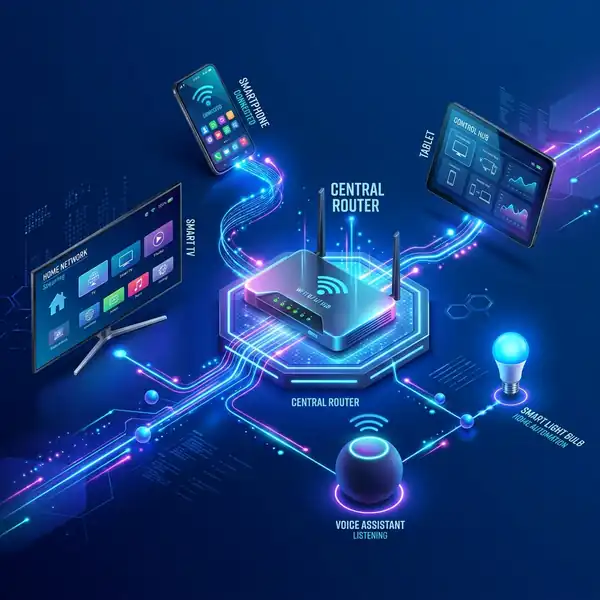
Port Isolation and VLAN Isolation on Ubiquiti UniFi serve different purposes in network segmentation, with distinct setup processes.
Understanding Port Isolation
Port Isolation restricts traffic between devices connected to the same switch or access point. This ensures that devices cannot communicate directly, enhancing security within the same broadcast domain.
Understanding VLAN Isolation
VLAN Isolation involves segmenting the network into Virtual Local Area Networks, allowing for controlled communication and isolation between different network segments. This method requires configuring VLAN IDs and supporting infrastructure.
Comparison of Isolation Methods
Port Isolation is simpler and suited for small networks, while VLAN Isolation offers more flexibility and scalability in larger environments. The choice depends on network architecture and security requirements.
| Feature | Port Isolation | VLAN Isolation |
|---|---|---|
| Complexity | Low | High |
| Scalability | Poor | Excellent |
| Network Segmentation | Limited | Extensive |
| Configuration Time | Quick | Time-consuming |
| Use Case | Small networks | Enterprise environments |
DomineTec Tip: Always document VLAN configurations for future reference and audits.
Setting Up Port Isolation
- Log into the UniFi Controller.
- Navigate to the “Devices” section and select the switch.
- Go to the “Ports” tab and select the desired port.
- Enable “Port Isolation” for the selected port.
- Apply the changes and confirm the configuration.

Setting Up VLAN Isolation
- Access the UniFi Controller interface.
- Go to the “Settings” section and select “Networks.”
- Create a new VLAN by entering a name and VLAN ID.
- Assign the VLAN to the appropriate ports under the “Devices” section.
- Configure the firewall rules to restrict inter-VLAN traffic as needed.
Firewall Considerations
When implementing VLAN Isolation, firewall rules must be defined to manage inter-VLAN traffic. For additional guidance, refer to blocking inter-VLAN routing.
Best Practices for VLAN Security
Implementing VLAN security best practices is crucial for protecting network integrity. For comprehensive guidelines, consult the VLAN security best practices documentation.
Performance Implications of Port Isolation
Port isolation can lead to reduced network congestion, as devices on isolated ports do not communicate with each other. This separation enhances performance by ensuring that broadcast traffic does not reach devices on isolated ports.
However, the effectiveness of port isolation may vary depending on the network topology and the number of devices connected. In scenarios with high traffic, port isolation can significantly improve the responsiveness of individual devices.
Scalability of VLAN Isolation
VLAN isolation is inherently scalable, allowing administrators to segment large networks into manageable portions. As the network grows, new VLANs can be created without the need for physical reconfiguration of the network hardware.
This flexibility enables organizations to efficiently manage user groups and departmental needs without extensive downtime. Moreover, VLANs can be adjusted dynamically, facilitating quick adaptations to changing network requirements.
Security Benefits of Port Isolation
Port isolation provides an additional layer of security by minimizing the attack surface available to potential intruders. By preventing devices from communicating directly, it reduces the risk of lateral movement within the network.
This is particularly useful in environments where sensitive data is processed, as it limits exposure to threats. Port isolation acts as a straightforward method to enforce a zero-trust security model at the physical layer.
Management and Monitoring Tools for VLANs
Effective management of VLANs requires robust monitoring tools to track network performance and security events. These tools can provide insights into traffic patterns, helping administrators identify potential issues before they affect the network.
Additionally, many modern management systems offer automated alerts for anomalous behavior within various VLANs. Using these tools, organizations can maintain optimal performance while ensuring compliance with internal policies.
Cost Considerations for Implementation
When deciding between port isolation and VLAN isolation, cost can be a crucial factor for many organizations. Port isolation often requires less hardware investment, as it can be implemented on existing switches with minimal configuration changes.
Conversely, VLAN isolation may necessitate more advanced switches that support VLAN tagging and management features. Organizations must evaluate both initial setup costs and long-term maintenance when selecting the best isolation method.
Interoperability Issues with Port Isolation
One potential drawback of port isolation is its limited interoperability with devices that rely on broadcast communication. Devices such as printers and IoT sensors may struggle to function correctly if they are placed on isolated ports.
This can lead to operational challenges, particularly in environments where seamless device interaction is essential. Network administrators must carefully consider device requirements when implementing port isolation to avoid service disruption.
Real-World Case Studies
Real-world implementations of port and VLAN isolation provide valuable insights into their practical applications. For instance, a university network might implement VLAN isolation to separate student and faculty traffic for security and performance reasons.
In contrast, a retail environment may utilize port isolation to protect POS systems from unauthorized access on the network. Analyzing these case studies can help organizations choose the most effective method of isolation for their specific needs.
Limitations of Port Isolation
Port isolation provides a straightforward solution for limiting traffic between devices on the same switch, but it comes with notable limitations. It may not effectively manage large networks where multiple switches are interconnected, as isolation is typically confined to a single switch.
Moreover, port isolation lacks the flexibility of VLANs, as it does not allow for dynamic reconfiguration or segmentation based on user roles or policies. In environments requiring frequent changes or expansions, relying solely on port isolation can become cumbersome and inefficient.
Integration with Network Policies
Implementing network policies alongside port and VLAN isolation can enhance overall network security and performance. Network policies can define access controls, quality of service, and traffic shaping, allowing for a more comprehensive isolation strategy.
By integrating these policies, administrators can ensure that both port and VLAN isolation work synergistically to enforce security measures. This creates a layered security approach that provides better protection against unauthorized access and potential breaches.
Impact on Network Latency
The choice between port isolation and VLAN isolation can significantly affect network latency, which is crucial for performance-sensitive applications. Port isolation may introduce minimal latency since it operates on a switch level, but the absence of broader segmentation can lead to traffic congestion.
In contrast, VLAN isolation can help balance loads by efficiently managing traffic across different virtual networks, potentially reducing latency in larger setups. Understanding these impacts is vital for network administrators aiming to optimize both security and performance in their environments.
Future Trends in Network Isolation Technology
The landscape of network isolation is evolving with advancements in technology and increasing security threats. Emerging trends include the integration of machine learning algorithms to dynamically adjust isolation settings based on traffic patterns and threat detection.
Additionally, the rise of Software-Defined Networking (SDN) is paving the way for more intelligent and flexible isolation methods that can adapt to changing network conditions. Staying informed about these trends can help organizations future-proof their network architectures and improve overall resilience.
Advanced Configuration Options for Port Isolation
Advanced configuration settings for port isolation can enhance the security posture of a network. Administrators can implement specific rules tailored to individual ports, enabling granular control over traffic flows.
This customization allows for the definition of different isolation levels based on user roles or device types. In many scenarios, integrating advanced features such as MAC address filtering can further restrict access to specific devices.
This ensures that only authorized devices can communicate, even within an isolated port environment. Furthermore, combining port isolation with access control lists (ACLs) provides an additional layer of security.
Another consideration is the use of monitoring tools that can track and analyze traffic on isolated ports. By leveraging these tools, network administrators can identify unusual patterns or potential security breaches more effectively.
Real-time alerts can help in quickly responding to threats. Finally, documentation of port isolation configurations is critical for maintaining network integrity.
Limitations of VLAN Isolation
While VLAN isolation offers significant advantages, it is not without limitations. One primary limitation is the complexity of managing multiple VLANs, which can lead to configuration errors and potential security vulnerabilities.
Misconfigured VLANs may inadvertently expose sensitive data. Another challenge is the reliance on the underlying physical infrastructure, which must support VLAN tagging.
Older switches or routers may not have the capability to handle advanced VLAN configurations, limiting the deployment of VLAN isolation in certain environments. Moreover, inter-VLAN routing can create security risks if not properly managed.
Unauthorized access between VLANs can occur if routing rules are misconfigured. Therefore, strict policies and vigilant monitoring are essential to safeguard against such vulnerabilities.
Lastly, while VLAN isolation can segment traffic effectively, it does not inherently encrypt data. This means that sensitive information traversing VLANs may still be susceptible to interception unless additional encryption measures are employed.
Integrating Port Isolation with Wireless Networks
Integrating port isolation with wireless networks poses unique challenges and opportunities. Wireless access points (APs) can be configured to implement port isolation by limiting the communication capabilities of clients connected to the same SSID.
This is crucial in public or guest networks to prevent unauthorized access to internal resources. Furthermore, configuring APs to support port isolation requires an understanding of how wireless traffic is handled.
Unlike wired connections, wireless packets may include additional overhead, which can impact performance. Network administrators need to balance isolation with user experience to maintain satisfactory performance levels.
To enhance security, implement captive portals that require authentication before granting access to the network. This adds an additional layer of security, ensuring that only verified users can connect and that their traffic is isolated from other clients.
Lastly, continuous monitoring of wireless traffic is essential to detect potential security threats in real-time. Tools that analyze traffic patterns can help identify anomalies that may indicate attempts to breach isolation protocols.
Future Directions in Network Isolation Techniques
Future developments in network isolation techniques are likely to focus on automation and artificial intelligence. Automated systems can dynamically adjust isolation settings based on real-time traffic analysis and user behavior, enhancing security without requiring constant manual intervention.
Moreover, advancements in software-defined networking (SDN) may revolutionize how network isolation is implemented. SDN allows for more flexible and centralized control over network resources, making it easier to manage isolation policies across diverse environments.
Another promising area is the integration of machine learning algorithms to predict and mitigate potential security threats. By analyzing historical data, these algorithms can identify patterns associated with security breaches and automatically adjust isolation strategies in response.
Finally, as organizations move towards hybrid and cloud environments, network isolation techniques will need to evolve. Developing solutions that seamlessly integrate on-premises and cloud-based isolation methods will be critical for ensuring comprehensive security across all network segments.
Operational Complexity of Port Isolation
Port isolation can introduce operational complexity within network management. Each port must be manually configured to enforce isolation, requiring careful planning and documentation.
This can lead to increased administrative overhead, especially in larger networks where multiple devices are connected. In addition, troubleshooting issues related to port isolation can be challenging.
Network administrators may need to verify each port's configuration to identify potential misconfigurations or connectivity problems. This process can be time-consuming and may require additional tools or scripts to streamline the auditing of port settings.
Furthermore, the lack of centralized management for port isolation can complicate policy enforcement. Network policies may need to be replicated across multiple switches, leading to inconsistencies if not properly managed.
This scattered approach can increase the risk of human error during configuration changes or updates. Ultimately, the operational complexity of port isolation necessitates a skilled network team.
Integration Challenges with Unified Management Systems
Integrating port isolation with unified management systems can present unique challenges. Many advanced network management tools are optimized for VLAN configurations, potentially limiting their effectiveness in managing port isolation.
This can lead to a fragmented management experience for administrators. Moreover, when deploying a comprehensive network architecture, organizations may encounter compatibility issues between existing infrastructure and new isolation configurations.
Legacy systems may not support port isolation features, necessitating additional investments in hardware or software to achieve the desired isolation level. Additionally, real-time monitoring and alerting functionalities may be less robust for port isolation compared to VLAN-based setups.
Unified management systems typically offer enhanced visibility and analytics for VLANs, which might not extend to individual ports. As a result, network visibility can be compromised, making it harder to detect anomalies or security breaches.
To address these integration challenges, organizations should consider selecting management solutions that provide seamless support for both port isolation and VLANs. This approach can streamline operations and enhance overall network security while minimizing the potential for integration-related issues.
Frequently Asked Questions
What is the primary difference between Port Isolation and VLAN Isolation?
Port Isolation restricts communication between devices on the same switch, while VLAN Isolation segments traffic across different network segments.
Can Port Isolation be used in a large network?
Port Isolation is generally not recommended for large networks due to its limited scalability and flexibility compared to VLANs.
Is VLAN Isolation more secure than Port Isolation?
VLAN Isolation provides enhanced security as it allows for more granular control over traffic between different segments, reducing the risk of unauthorized access.
How do VLANs affect network performance?
Properly configured VLANs can improve network performance by reducing broadcast traffic, but misconfiguration can lead to performance degradation.
What tools are available for monitoring VLANs?
Network monitoring tools, such as PRTG or SolarWinds, can effectively monitor VLAN performance and traffic patterns for better management.




