1. Direct Introduction
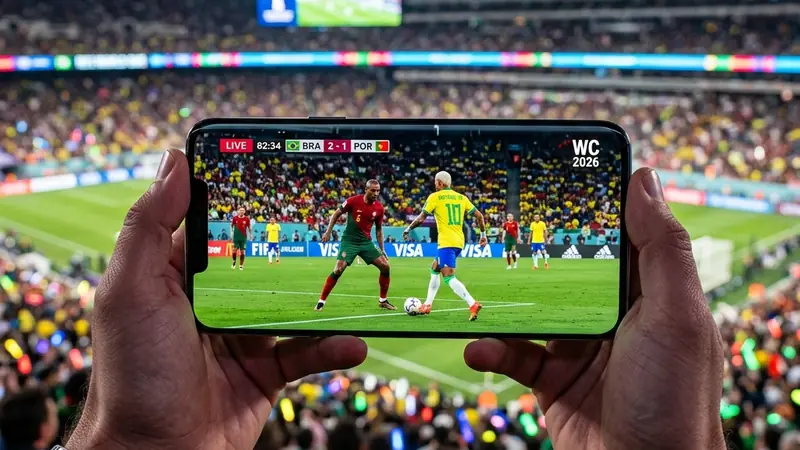
The advent of cloud gaming, particularly the execution and streaming of sophisticated interactive entertainment through Microsoft's Xbox Cloud Gaming ecosystem to mobile devices, represents a monumental paradigm shift in distributed computing, edge rendering, and mobile hardware utilization. When we analyze the fundamental proposition of enabling users to play xCloud on mobile, we are essentially examining a highly optimized, ultra-low-latency remote desktop protocol specifically engineered for the transmission of interactive, high-fidelity graphics over fluctuating wireless networks. This technological leap effectively decouples the rendering pipeline from the local hardware constraints of cellular phones and tablets, transferring the immense computational burden of calculating polygon geometry, physics simulations, artificial intelligence routines, and high-resolution texture mapping to remote server farms situated within Microsoft Azure data centers. By leveraging this architecture, mobile devices are transformed from localized computation engines into highly efficient thin clients whose primary responsibilities are reduced to capturing user input, transmitting telemetry, and decoding a continuous, high-bitrate video stream. The implications of this architectural redirection are profound, fundamentally altering the traditional hardware upgrade cycle and democratizing access to computationally expensive software applications that were previously restricted to dedicated desktop consoles or high-end personal computers.
Furthermore, the execution of xCloud on mobile platforms necessitates a deep integration of telecommunications infrastructure, specifically the utilization of advanced 4G LTE and emerging 5G network topologies, to ensure that the rigorous demands of real-time interactive streaming are met with uncompromising reliability. Unlike static video streaming protocols utilized by platforms such as Netflix or YouTube, which can heavily rely on deep localized buffering to mitigate network jitter and bandwidth fluctuations, cloud gaming strictly prohibits extensive buffering due to the absolute necessity of maintaining synchronous motion-to-photon latency. Every localized input, whether a screen tap or a Bluetooth controller actuation, must be transmitted across the network to the Azure rendering blade, processed by the game engine, encoded into a new video frame, and transmitted back to the mobile device display within a window of milliseconds to prevent perceptible input lag. This bidirectional, latency-sensitive communication loop forms the foundational challenge and the ultimate triumph of the xCloud mobile architecture, requiring unprecedented coordination between the physical network layers, the transport protocols, and the application-level video decoding algorithms operating on the mobile device's system-on-a-chip architecture.
As we delve deeper into the technical intricacies of deploying and maintaining such a ubiquitous service, it becomes increasingly apparent that playing xCloud on mobile is not merely a software application, but rather a complex symphony of edge computing methodologies, dynamic bitrate scaling, hardware-accelerated video decoding, and psychovisual engineering. The psychological perception of latency and visual fidelity plays a crucial role in the user experience, prompting engineers to develop sophisticated algorithms that prioritize frame delivery and input responsiveness over absolute graphical perfection during moments of network degradation. This guide will meticulously deconstruct the underlying architecture, explore the myriad of technical bottlenecks, evaluate the scalability frameworks, and analyze the practical, security, and economic considerations that define the current state and the future trajectory of running Microsoft's xCloud environment on highly constrained, battery-powered mobile operating systems.
2. Basic Architecture
The fundamental architecture powering the xCloud experience on mobile devices is a masterclass in hyperscale infrastructure deployment, custom silicon engineering, and optimized network transmission protocols. At the core of this system are the custom Xbox Series X server blades installed within Microsoft Azure data centers globally. Unlike traditional virtualized server environments that abstract hardware through a hypervisor layer to run generic compute workloads, the xCloud architecture relies on bare-metal execution environments specifically designed to mimic the exact hardware configuration of consumer Xbox consoles. These custom blades are tightly packed into high-density server racks, featuring specialized power delivery and sophisticated thermal management systems necessary to handle the continuous, maximum-utilization workloads generated by rendering demanding AAA game titles simultaneously for thousands of concurrent mobile users. By utilizing the exact architectural footprint of the console silicon, developers are completely spared the immense burden of porting their software to a different instruction set or graphics API; the games run natively, exactly as they would on a local machine, ensuring flawless compatibility and predictable performance profiles.
Once the game engine renders a frame on the Azure server blade, the visual output is immediately intercepted by a dedicated hardware video encoder situated on the custom system-on-a-chip. This encoder is tasked with compressing the raw, uncompressed frame buffer into a highly efficient video format, typically utilizing advanced implementations of the H.264 or HEVC (H.265) codecs, depending on the capabilities of the receiving mobile client and the prevailing network conditions. This encoding process must be completed in a matter of low single-digit milliseconds to prevent adding unacceptable latency to the pipeline. The encoder employs dynamic bitrate scaling, constantly adjusting the compression ratio, resolution, and frame rate on a frame-by-frame basis in response to real-time telemetry received from the mobile client regarding available network bandwidth and packet loss rates. This adaptive streaming methodology ensures that the video feed remains uninterrupted, dynamically trading absolute visual clarity for temporal smoothness and responsiveness when the user's mobile connection encounters physical interference or cellular tower congestion.
The transmission layer of the xCloud architecture heavily leverages customized implementations of real-time communication protocols, frequently drawing upon the foundational principles of WebRTC, modified to operate over UDP (User Datagram Protocol) rather than TCP (Transmission Control Protocol). The selection of UDP is absolutely critical for cloud gaming on mobile devices because UDP does not require the receiver to acknowledge the successful delivery of every packet. In a TCP environment, a dropped packet would halt the entire transmission pipeline until the missing data is retransmitted, causing catastrophic stuttering and unacceptable latency spikes in a real-time gaming scenario. By utilizing UDP, the xCloud protocol simply discards lost packets and immediately focuses on processing the most recently arrived data, relying on error-correction algorithms and the inherent temporal compression of the video stream to quickly recover visual fidelity in subsequent frames. This aggressive, forward-looking transmission strategy is essential for navigating the inherently volatile nature of wireless mobile networks.
On the receiving end, the mobile device operates as a highly specialized thin client. Its primary computational task is the continuous ingestion, decoding, and display of the incoming video stream. Modern mobile application processors (SoCs) from manufacturers like Apple, Qualcomm, and MediaTek feature dedicated hardware decoding blocks designed explicitly to process H.264 and HEVC video streams with minimal CPU intervention and extremely low power consumption. This hardware acceleration is paramount for playing xCloud on mobile, as relying on software decoding via the primary CPU cores would result in severe thermal throttling, rapid battery depletion, and unplayable frame latency. Simultaneously, the mobile client must capture user input—either through on-screen virtual touch controls or via a connected Bluetooth peripheral—and transmit this telemetry back to the Azure server over the same UDP channel with the highest possible priority. The synchronization of this bidirectional data flow, ensuring that the decoded video frame directly corresponds to the user's most recent input state, forms the critical closed-loop system of the xCloud basic architecture.
3. Challenges and Bottlenecks
Despite the sophisticated engineering underpinning the xCloud mobile ecosystem, the platform confronts a multitude of severe technical challenges and inherent bottlenecks, primarily stemming from the hostile operational environment of wireless mobile networks and the physical constraints of smartphone hardware. The most formidable adversary in the realm of mobile cloud gaming is latency, specifically the aggregation of processing delays, encoding times, network propagation delays, decoding intervals, and display refresh cycles that collectively define the motion-to-photon latency. In the context of cellular networks, network jitter—the variation in packet transit delay—is particularly devastating. While a user might boast a high overall bandwidth connection on a 4G LTE or 5G network, microscopic fluctuations in signal strength, handoffs between cellular towers, and localized interference can cause packets to arrive out of order or clumped together. This jitter disrupts the smooth cadence required for real-time video playback, forcing the xCloud client to either drop frames or implement dynamic resolution scaling, resulting in a degraded visual experience that can induce motion sickness or sever the feeling of interactive agency for the player.
Another significant bottleneck resides in the "last mile" connectivity, specifically the behavior of local Wi-Fi networks and Bluetooth communication stacks on the mobile device itself. Many users attempt to play xCloud on mobile devices connected to congested 2.4GHz Wi-Fi bands, which are highly susceptible to interference from household appliances, neighboring networks, and physical obstructions. This local interference can introduce massive packet loss and latency spikes that completely negate the high-speed fiber-optic connections bridging the local ISP to the Azure data center. Furthermore, the reliance on Bluetooth controllers introduces an additional layer of input latency. The polling rate of the Bluetooth protocol, combined with the processing overhead of the mobile operating system's input stack, can add several crucial milliseconds of delay before the button press even begins its journey across the network to the server. For competitive or highly precise gaming scenarios, these localized connectivity bottlenecks present a nearly insurmountable barrier to achieving parity with local console execution.
Thermal management and hardware constraints on the mobile client represent another critical bottleneck. While dedicated hardware decoders efficiently process the incoming video stream, the sustained continuous operation of the Wi-Fi or cellular modem, the high-brightness display, the Bluetooth transceiver, and the audio processing pipelines generates substantial thermal output. Mobile devices, lacking active cooling mechanisms like fans, are forced to rely on passive heat dissipation. During extended xCloud sessions, especially in warm ambient environments or over 5G networks which demand higher power draw, the mobile device will inevitably encounter thermal limits. To prevent catastrophic hardware damage, the mobile operating system will aggressively throttle the performance of the SoC, reducing screen brightness and potentially throttling the network modem. This thermal throttling can manifest as sudden drops in decoding performance, leading to audio desynchronization, video stuttering, and increased input lag, thereby destroying the immersive quality of the cloud gaming session.
Finally, the inherent unreliability of mobile data routing and carrier-grade NAT (Network Address Translation) poses a massive challenge for maintaining the persistent, high-throughput UDP connections required by xCloud. Mobile Internet Service Providers frequently employ complex routing topologies that dynamically assign and reassign IP addresses, or route traffic through congested inspection gateways. These network maneuvers can disrupt the UDP stream, causing sudden disconnections or forcing the xCloud protocol to continuously renegotiate the connection parameters. Additionally, data caps and bandwidth throttling policies enforced by cellular carriers can severely restrict a user's ability to utilize the service. Streaming high-definition 60fps video consumes multiple gigabytes of data per hour; users on metered connections quickly exhaust their data allowances, after which carriers throttle their bandwidth to speeds completely incapable of sustaining a real-time interactive stream, effectively rendering the xCloud service unusable on those specific mobile networks.
4. Scalability Benefits
The decision to anchor the xCloud mobile streaming infrastructure within the sprawling, globally distributed Microsoft Azure ecosystem provides unparalleled scalability benefits that fundamentally redefine how interactive entertainment is deployed and consumed. One of the primary advantages of this cloud-native approach is absolute elasticity in compute provisioning. In traditional gaming paradigms, hardware distribution is rigidly bound by manufacturing capacities, supply chain logistics, and consumer purchasing power. Conversely, the xCloud architecture allows Microsoft to dynamically scale the availability of server blades in response to instantaneous global demand. When a highly anticipated game launches, or during peak evening hours in a specific geographic region, the orchestration layer can instantly route incoming mobile client requests to available server racks across different data centers, mitigating the risk of localized capacity exhaustion. This fluid allocation of computational resources ensures that mobile users are not met with arbitrary queue times or service denials, provided there is aggregate capacity within the broader Azure network.
Furthermore, the geographic proliferation of Azure edge nodes provides a massive scalability benefit in the continuous battle against network latency. The fundamental laws of physics dictate that data transmission is inherently limited by the speed of light; therefore, the physical distance between the mobile device and the rendering server is a paramount concern. By leveraging a vast network of strategically positioned data centers distributed across continents, countries, and major metropolitan hubs, the xCloud architecture effectively minimizes the physical routing distance for the majority of its user base. This edge computing methodology ensures that a mobile user in London is communicating with a server blade in the UK South region, rather than routing traffic across the Atlantic. As Azure continues to expand its physical footprint, integrating closer to local telecommunications infrastructure and cellular edge computing facilities, the aggregate latency profile for the entire mobile user base scales downwards, significantly enhancing the viability and responsiveness of the platform on a global scale.
From a software deployment and maintenance perspective, the scalability benefits are equally transformative. In a localized mobile gaming ecosystem, developers are burdened with the monumental task of optimizing their code for thousands of disparate Android and iOS hardware configurations, managing complex patch deployments through stringent application store review processes, and combating software fragmentation. Playing xCloud on mobile entirely bypasses this labyrinthine ecosystem. Because the game executes exclusively on a unified, standardized server architecture, developers need only target a single hardware profile—the custom Xbox Series X blade. When a patch or content update is deployed, it is instantaneously applied at the server level, immediately updating the experience for millions of mobile users simultaneously without requiring them to download massive local files or navigate application store update mechanisms. This centralized deployment model drastically reduces quality assurance overhead and allows for frictionless, highly scalable continuous integration and deployment pipelines for the interactive entertainment industry.
5. Practical Integration
The practical integration of the xCloud platform into the fragmented and highly regulated mobile ecosystem requires a multifaceted approach to client deployment, user interface design, and operating system compliance. One of the most significant engineering triumphs in this regard has been the implementation of progressive web application (PWA) technology to bypass the restrictive policies of certain mobile application storefronts, particularly Apple's iOS ecosystem. Because Apple's App Store guidelines historically prohibited the distribution of cloud gaming applications that act as a portal to a library of dynamic, unreviewed software, Microsoft was forced to engineer a robust, browser-based client utilizing advanced web technologies. By leveraging modern HTML5, WebRTC, and specialized Safari APIs, the xCloud team successfully deployed a highly performant client that runs entirely within the mobile browser, masquerading as a standard website while delivering a native-like, full-screen interactive streaming experience. This PWA approach ensures ubiquitous access across any device featuring a modern web browser, dramatically increasing the platform's reach without relying on localized application binaries.
A crucial element of practical integration on mobile devices involves the seamless adaptation of traditional gamepad interfaces to the paradigm of capacitive touch screens. Recognizing that requiring users to carry a physical Bluetooth controller severely limits the spontaneous nature of mobile gaming, engineers developed sophisticated Touch Adaptation Kits. These frameworks allow developers to overlay highly customizable, context-aware virtual buttons, joysticks, and sliders directly onto the video stream. These touch interfaces are not mere static overlays; they are dynamically driven by the game engine state, appearing and disappearing based on the in-game context (e.g., showing driving controls when the player enters a vehicle, and shooting controls during combat). This deep integration requires complex telemetry pipelines where the mobile client continuously communicates its touch capabilities and screen aspect ratio to the server, allowing the game engine to modify its UI rendering and physics interactions to accommodate the specific physical dimensions and input modalities of the user's mobile device.
Furthermore, practical integration demands meticulous handling of mobile operating system interruptions and background state management. Mobile devices are inherently multitasking environments characterized by constant interruptions from incoming phone calls, SMS notifications, battery alerts, and background process executions. The xCloud mobile client must be incredibly resilient to these disruptions. If a user receives a phone call while playing, the client must seamlessly pause the local video decoding pipeline, transmit a pause command to the Azure server blade, and gracefully enter a suspended background state. Upon returning to the application, the client must rapidly renegotiate the UDP connection, request an immediate I-frame (keyframe) from the video encoder to instantly refresh the visual state, and resume input telemetry without requiring the user to restart the game or endure prolonged loading sequences. This robust state management is absolutely essential for maintaining the illusion of local execution and ensuring the practical usability of cloud gaming in a chaotic mobile environment.
To further enhance practical integration, Microsoft has deeply embedded the xCloud ecosystem into existing mobile social and authentication frameworks. The integration of Xbox Live services directly into the mobile client ensures that users seamlessly port their friends lists, achievement progress, and cloud save data from their dedicated consoles to their mobile devices. This continuous synchronization is facilitated by robust OAuth authentication flows and encrypted data pipelines that maintain security while ensuring immediate access to personal data. By removing the friction of separate accounts or isolated progression systems, the practical integration of xCloud on mobile ensures that the smartphone is not viewed as a secondary or compromised platform, but rather as a fully equivalent and seamlessly connected node within the broader user entertainment ecosystem.
6. Security and Compliance
Deploying a service as complex as xCloud to millions of mobile devices necessitates an incredibly robust security posture and strict adherence to global compliance frameworks. The primary security advantage of the cloud gaming architecture is the inherent protection of intellectual property and proprietary game assets. Because the actual game code, three-dimensional models, high-resolution textures, and proprietary engine logic never actually touch the mobile device's local storage, the platform is virtually immune to traditional software piracy, reverse engineering, and data mining techniques. The mobile client merely receives an encrypted video stream and sends encrypted input commands. This closed-loop system fundamentally alters the security paradigm, shifting the defensive perimeter from the vulnerable, easily compromised mobile operating system to the highly fortified boundaries of the Microsoft Azure data center. This architecture represents the ultimate form of Digital Rights Management (DRM), ensuring that publishers and developers can deploy their most valuable software assets to an untrusted mobile environment with zero risk of catastrophic source code or asset exfiltration.
However, the transmission of the video stream and the user telemetry introduces its own set of critical security requirements. The communication channel between the mobile device and the Azure server must be secured using robust cryptographic protocols to prevent man-in-the-middle attacks, packet sniffing, and session hijacking. The xCloud architecture utilizes industry-standard encryption algorithms, such as AES (Advanced Encryption Standard) with 256-bit keys, to encrypt both the UDP video stream and the TCP/UDP control channels. This ensures that even if a malicious actor intercepts the network traffic on a public Wi-Fi network, they cannot decode the video feed or manipulate the input commands. Furthermore, the authentication process relies on advanced token-based systems, requiring multifactor authentication and continuous token validation to ensure that the user accessing the remote server blade is legitimate. The security infrastructure must also actively monitor for denial-of-service (DoS) attacks directed at the edge nodes, utilizing advanced traffic shaping and anomaly detection algorithms to mitigate malicious floods of data intended to disrupt the streaming infrastructure.
From a compliance perspective, operating xCloud on mobile devices requires stringent adherence to international data privacy regulations, such as the General Data Protection Regulation (GDPR) in the European Union and the Children's Online Privacy Protection Act (COPPA) in the United States. The mobile client inevitably collects vast amounts of telemetry data regarding network performance, device hardware specifications, usage patterns, and potentially biometric data if utilizing advanced authentication methods. The architecture must ensure that all collected telemetry is thoroughly anonymized, securely stored, and strictly utilized for diagnostic and performance optimization purposes. The platform must provide users with transparent data collection policies and accessible mechanisms to manage or delete their personal data. Navigating this complex regulatory landscape is a massive engineering undertaking, requiring data sovereignty protocols to ensure that European user data, for instance, remains within EU-based data centers, and that stringent parental control frameworks are deeply integrated into the mobile client to prevent unauthorized access by minors to age-restricted interactive content.
7. Costs and Optimization
The economic viability of operating the xCloud infrastructure and delivering high-fidelity gaming to mobile devices hinges upon relentless optimization of compute resources, bandwidth utilization, and advanced encoding efficiencies. At the server level, the fundamental cost driver is the power consumption and hardware depreciation of the custom Xbox Series X blades operating at maximum capacity within the Azure data centers. Unlike traditional web servers that can efficiently multiplex thousands of distinct user sessions onto a single CPU through virtualization, cloud gaming requires dedicated, bare-metal GPU and CPU resources for every single concurrent user. This 1:1 user-to-hardware ratio presents a massive capital expenditure challenge. To optimize these costs, Microsoft employs advanced orchestration algorithms that dynamically spin up and power down server blades based on predictive load modeling. By aggressively managing the power states of the server hardware and maximizing the utilization density within the racks, engineers strive to reduce the cost-per-user-hour to a sustainable metric that aligns with the recurring revenue generated by the Game Pass Ultimate subscription model.
On the network delivery side, bandwidth costs represent a massive ongoing operational expenditure. Streaming a 1080p, 60fps video feed requires a continuous data throughput ranging from 10 to 15 megabits per second per user. When scaled to millions of concurrent mobile players, the aggregate egress bandwidth from the Azure edge nodes to the global internet backbone is staggering. To mitigate these exorbitant routing costs, the optimization of video encoding technology is paramount. The xCloud engineering teams are constantly refining their implementation of hardware-accelerated H.264 and HEVC codecs to maximize visual quality while driving down the required bitrate. The transition toward newer, highly efficient, and royalty-free codecs like AV1 is a critical optimization strategy. AV1 offers significant bitrate reductions compared to older standards, allowing the system to deliver equivalent visual fidelity while consuming dramatically less bandwidth. However, the adoption of AV1 is strictly limited by the hardware decoding capabilities of the user's mobile device, necessitating a dynamic fallback system that intelligently selects the most efficient codec supported by the client hardware.
Furthermore, cost optimization extends to the mitigation of mobile cellular data consumption for the end-user. As previously discussed, cloud gaming can rapidly deplete metered cellular data plans. To ensure the platform remains economically viable for the consumer, the mobile client must incorporate sophisticated data-saving features. This includes options for users to manually restrict the maximum streaming resolution and framerate, intentionally degrading the visual experience to conserve data. Additionally, the dynamic bitrate scaling algorithm must be tuned not only for network stability but also for bandwidth efficiency, utilizing techniques like variable refresh rate encoding and aggressive chroma subsampling during periods of low on-screen motion to drastically reduce the packet payload. By continuously balancing the computational costs at the server, the transit costs across the backbone, and the cellular data costs incurred by the mobile user, the xCloud architecture strives to maintain a delicate economic equilibrium that supports the long-term sustainability of the platform.
8. Future of the Tool
The future trajectory of playing xCloud on mobile is inextricably linked to the rapid advancements in telecommunications infrastructure, edge computing topologies, and artificial intelligence-driven video processing. The most transformative imminent catalyst for this platform is the widespread deployment of 5G Standalone (5G SA) networks. Unlike current non-standalone 5G architectures that still rely on legacy 4G LTE core networks for signaling, 5G SA introduces revolutionary capabilities such as network slicing and ultra-reliable low-latency communication (URLLC). Network slicing will allow cellular carriers to create dedicated, isolated virtual networks specifically optimized for cloud gaming traffic, guaranteeing bandwidth allocation and enforcing strict latency parameters immune to the congestion of general mobile data usage. This level of prioritized routing will effectively eradicate network jitter and packet loss, bridging the gap between volatile mobile connections and stable, hardwired ethernet environments.
Concurrently, the architectural evolution of the cloud itself will see a massive push towards extreme edge computing. Currently, xCloud server blades are housed within massive, centralized regional data centers. The future iterations of this architecture will involve deploying micro-datacenters and rendering nodes directly at the cellular base stations or aggregation points, fundamentally reducing the physical distance the data must travel. By placing the computational rendering power within a few physical miles of the mobile device, the propagation delay is minimized to absolute theoretical minimums dictated by the speed of light through fiber optics. This extreme edge deployment will further compress the motion-to-photon latency, enabling hyper-competitive, reflex-dependent genres like fighting games and first-person shooters to become fundamentally viable and indistinguishable from local execution on a mobile form factor.
Furthermore, the integration of artificial intelligence and machine learning into the video streaming pipeline will redefine visual fidelity on mobile devices. The current paradigm relies on brute-force transmission of fully rendered frames. The future of xCloud will leverage advanced AI upscaling and frame generation techniques, conceptually similar to Nvidia's DLSS or AMD's FSR, but distributed across the network. The server blade will render the game at a significantly lower internal resolution, drastically reducing compute time and encoding overhead. This low-resolution, low-bitrate stream will be transmitted across the network, and the dedicated AI processing cores (NPUs) within the user's modern mobile SoC will utilize advanced neural networks to temporally upscale the image to native mobile resolutions in real-time. This synergistic hybrid-compute model—offloading heavy geometric rendering to the cloud while leveraging local mobile AI for final image reconstruction—will massively reduce bandwidth consumption, eliminate visual macroblocking, and deliver pristine visual quality that surpasses the native capabilities of the mobile hardware.
9. Final Conclusion
The realization and continuous refinement of playing xCloud on mobile devices stands as a monumental testament to the convergence of cloud computing, advanced telecommunications, and highly optimized software engineering. What began as a theoretical concept—streaming computationally devastating interactive applications to highly constrained, battery-powered hardware over volatile wireless networks—has matured into a robust, globally scalable infrastructure that is fundamentally democratizing access to high-fidelity entertainment. By meticulously decoupling the rendering pipeline from local hardware limitations and embracing a thin-client architecture backed by the immense power of Microsoft Azure, the industry has effectively shattered the traditional barriers of entry dictated by expensive, dedicated console hardware.
The journey to perfect this technology has forced engineers to confront and conquer staggering technical bottlenecks, from mitigating the devastating effects of network jitter and packet loss over UDP protocols, to navigating the intricate thermal limitations and decoding constraints of mobile system-on-a-chip designs. Through the implementation of dynamic bitrate scaling, sophisticated progressive web application frameworks, and context-aware touch adaptation kits, the platform has successfully integrated itself into the chaotic, multitasking environment of modern mobile operating systems without compromising the core integrity of the interactive experience. The stringent security architectures ensure the absolute protection of proprietary digital assets, while rigorous compliance frameworks safeguard user privacy across a global footprint.
As we cast our gaze toward the horizon, the synergistic evolution of 5G Standalone network slicing, extreme edge computing deployments, and neural-network-driven artificial intelligence upscaling promises to propel the xCloud mobile experience to unprecedented heights of performance and visual fidelity. The paradigm shift is irreversible; the mobile phone is no longer merely a device for rudimentary digital distractions, but rather a universal, high-performance conduit to the most advanced interactive simulations ever created. The continued optimization of this technological marvel will undoubtedly redefine the boundaries of interactive media, solidifying cloud gaming not merely as an alternative consumption method, but as the foundational bedrock for the future of global digital entertainment.