IT Asset Management Software: The Silent Budget Killer Inside Corporate Infrastructure

budget-killer">The Silent Budget Killer: Why IT Infrastructure is Leaking Money
Look around your corporate office. Every laptop, monitor, server, router, and mobile device represents a significant capital expenditure. Now, factor in the invisible assets: cloud instances, software licenses, and API subscriptions. By 2026, the modern enterprise IT ecosystem has become so complex that nearly 30% of an organization's IT budget is wasted on "Ghost Assets"—hardware that is lost or stolen, and software that is paid for but never used. This is the silent budget killer.
For years, companies attempted to manage this sprawling inventory using massive, brittle spreadsheets. But when a single missing laptop can trigger a multi-million dollar data breach, and an unoptimized cloud server can drain thousands of dollars a day, manual tracking is no longer just inefficient; it is a critical organizational liability. The antidote to this chaos is enterprise-grade IT Asset Management (ITAM) Software.
What is IT Asset Management Software (ITAM)?
IT Asset Management (ITAM) Software is a centralized digital brain that tracks the financial, physical, and contractual lifecycle of every single IT asset within an organization. From the moment a laptop is ordered from a vendor, to the day its hard drive is securely wiped and recycled, the ITAM platform maintains an indelible, real-time record of its location, user, value, and security posture.
While traditional inventory tools simply tell you what you have, modern ITAM software tells you how it is being used, whether it is compliant, and when it should be retired. It bridges the gap between IT Operations, Finance, and Cybersecurity.
Hardware Asset Management (HAM): Exorcising Ghost Assets
The foundation of any ITAM strategy is Hardware Asset Management (HAM). In the era of remote and hybrid work, tracking physical devices has become an operational nightmare. Employees leave the company and forget to return docking stations. Remote workers stockpile expensive monitors. Servers in co-location data centers sit idle, consuming power but processing no data.
ITAM Software solves this through automated discovery. Using network scanners and lightweight endpoint agents, the software automatically detects every physical device connected to the corporate network. If a laptop hasn't checked into the network in 30 days, the ITAM system automatically flags it as a "Ghost Asset" and alerts the IT security team to remotely lock the device or dispatch a recovery protocol.
The Synergy of ITAM and SAM (Software Asset Management)
Hardware is only half the equation. The other half is software. While Software Asset Management (SAM) is a discipline unto itself, it is intrinsically linked to ITAM. You cannot manage a software license if you do not know which physical or virtual machine it is installed on.
Modern IT Asset Management Software features robust SAM modules that automatically cross-reference installed applications against the company's purchasing ledger. If the system detects that you have purchased 500 licenses for a premium design tool, but only 300 laptops actively run the software, the ITAM platform immediately identifies the opportunity to "harvest" and downgrade the remaining 200 licenses, translating into instant financial savings for the CFO.
ITAM vs. CMDB: Understanding the ITIL 4 Distinction
A common point of confusion in enterprise IT is the difference between IT Asset Management (ITAM) and the Configuration Management Database (CMDB) defined by the ITIL 4 framework. While they share data, their purposes are distinct.
The CMDB tracks the relationships between assets to support service delivery and incident management. If a router goes down, the CMDB tells you which business applications will fail. ITAM Software, on the other hand, tracks the financial and contractual lifecycle of that router. When was it bought? Is it still under warranty? How much depreciation is left on the balance sheet? A world-class IT department integrates its ITAM and CMDB natively, ensuring that operational data and financial data are two sides of the exact same coin.

cybersecurity (ISO 19770)-first-line">Cybersecurity: ITAM as the First Line of Defense
You cannot patch what you cannot see. The majority of ransomware attacks in the past five years successfully infiltrated corporate networks through unmanaged, forgotten assets—a rogue development server left running on AWS, or an old laptop sitting in a remote employee's closet that hasn't received a security patch in 18 months.
Modern IT Asset Management Software is a foundational pillar of cybersecurity. By maintaining a 100% accurate, real-time inventory of all physical and virtual endpoints, ITAM platforms integrate directly with Vulnerability Management tools (like Tenable or Qualys). When a zero-day vulnerability is announced, the ITAM system instantly generates a list of all affected assets, allowing the InfoSec team to deploy surgical patches immediately rather than scanning the network blindly.
Cloud Asset Management (CAM): The FinOps Overlap
The migration from on-premises data centers to the cloud (AWS, Azure, Google Cloud) solved physical hardware problems but introduced a terrifying financial problem: elastic billing. "Cloud Sprawl" occurs when developers spin up expensive virtual machines for testing and forget to turn them off.
By 2026, IT Asset Management Software has evolved to include Cloud Asset Management (CAM). This module constantly monitors cloud infrastructure via APIs. It detects orphaned storage volumes, oversized compute instances, and unattached IP addresses. By combining ITAM with FinOps (Cloud Financial Operations) principles, organizations can automatically right-size their cloud environments, often reducing their monthly AWS/Azure bills by 20% to 40%.

Taming the Chaos: Mobile Devices and BYOD
Smartphones and tablets are the most frequently lost or stolen corporate assets. Furthermore, the "Bring Your Own Device" (BYOD) culture creates severe legal and security complexities. A mature ITAM strategy incorporates Mobile Device Management (MDM).
When an employee uses a personal iPhone to access corporate email, the ITAM/MDM software creates a secure, encrypted "container" on the device. If the employee resigns or the device is stolen, the IT department can trigger a remote wipe that destroys the corporate container instantly, without touching the employee's personal photos or data. This precise control is mandatory for GDPR and CCPA compliance.
The Heavyweights: Top 5 ITAM Software Vendors in 2026
Choosing the right platform is critical. Here are the top five ITAM solutions dominating the enterprise market in 2026:
| Platform | Best For | Key Strength |
|---|---|---|
| ServiceNow (ITAM) | Large Enterprises | Native integration with ITSM and ITIL workflows. |
| Flexera | Complex Software Licensing | Unmatched deep-dive SAM and Cloud FinOps capabilities. |
| Ivanti | Endpoint-heavy environments | Excellent unified endpoint management and automated patching. |
| Snow Software | Mid-to-Large Enterprises | Incredible software visibility and audit defense logic. |
| Lansweeper | Infrastructure teams | Unrivaled agentless network discovery across OT, IoT, and IT. |

ESG and E-Waste: The Sustainable Decommissioning
IT Asset Management doesn't end when a server is unplugged. In 2026, environmental regulations mandate strict controls over "E-Waste" (electronic waste). Improperly dumping old monitors or lithium-ion batteries results in massive corporate fines and severe PR damage.
Your ITAM Software must manage the "Decommissioning" phase. It tracks assets sent to third-party recycling facilities and securely stores the Certificates of Destruction. This proves to auditors that not only were the hard drives magnetically wiped (to DoD standards) to prevent data leaks, but the rare earth metals were recycled in compliance with global ESG (Environmental, Social, and Governance) sustainability metrics.
The 2026 ITAM Playbook: 50 Best Practices for Enterprise Control
To extract maximum ROI from your ITAM platform, you must operationalize it across the organization. Here are the 50 critical best practices divided by lifecycle stages:
Phase 1: Procurement and Intake
- Centralize all IT purchasing through a single portal integrated with the ITAM system.
- Ban the use of corporate credit cards for purchasing software (Shadow IT).
- Tag physical hardware with RFID or advanced barcode labels before it reaches the end-user.
- Automatically assign a financial depreciation schedule to every asset upon intake.
- Link every new asset purchase to a specific cost center or department for chargebacks.
- Ensure all vendor warranties are digitized and attached to the asset record.
- Standardize hardware models (e.g., offering only 3 laptop variants) to simplify support.
- Integrate the ITAM system with your ERP (e.g., SAP, NetSuite) for automated PO matching.
- Establish an approval matrix for high-value software requests.
- Automate the provisioning of cloud licenses based on HR role-based access profiles.
Phase 2: Deployment and Discovery
- Deploy lightweight discovery agents on all Windows, macOS, and Linux endpoints.
- Run agentless network scans weekly to detect unauthorized IoT or "Rogue" devices.
- Sync the ITAM database with Active Directory/Entra ID daily to match assets to active users.
- Automate the software deployment process through tools like Microsoft SCCM or Intune.
- Require employees to digitally sign an Acceptable Use Policy before receiving hardware.
- Utilize Mobile Device Management (MDM) for all corporate-owned smartphones.
- Establish a "BYOD Container" policy for personal devices accessing corporate data.
- Map every physical asset to a specific desk, room, or remote worker home address.
- Use API connectors to continuously discover cloud instances in AWS, Azure, and GCP.
- Configure alerts for assets that have not connected to the VPN or network in 30 days.

Phase 3: Active Management and Optimization
- Cross-reference installed software against purchased entitlements weekly to avoid audit penalties.
- Implement automated software "harvesting" to reclaim licenses from users who haven't opened an app in 90 days.
- Integrate ITAM with your IT Service Management (ITSM) tool (like ServiceNow) to link assets to incident tickets.
- Track the Mean Time to Failure (MTTF) for hardware models to identify defective product lines.
- Monitor cloud usage (FinOps) to identify and terminate idle server instances.
- Compare SaaS utilization rates across different departments to identify redundant tools (e.g., Slack vs. Teams).
- Perform quarterly physical inventory checks using mobile barcode scanning apps.
- Track battery health metrics on laptops to preemptively replace them before they fail.
- Integrate with vulnerability scanners to prioritize patching on business-critical assets first.
- Maintain a verified list of "Approved Software" and automate the uninstallation of blacklisted apps.
Phase 4: Maintenance and Auditing
- Set up 60-day warning alerts before hardware warranties expire.
- Set up 90-day warning alerts before enterprise software contracts auto-renew.
- Conduct mock software audits annually to prepare for aggressive Microsoft or Oracle audits.
- Maintain a clean CMDB by establishing strict rules on how assets are related to IT services.
- Create specific dashboards for the CFO showing real-time IT asset depreciation.
- Automate the tracking of spare parts in the IT stockroom (mice, keyboards, cables).
- Establish a "Software Review Board" to approve any new SaaS applications entering the environment.
- Require a mandatory ITAM review before any M&A (Merger and Acquisition) activity is finalized.
- Audit cloud storage buckets periodically to ensure sensitive data isn't left publicly exposed.
- Train the helpdesk team to update asset records on every single support call.
Phase 5: Offboarding and Decommissioning
- Integrate ITAM with the HR system to trigger asset recovery workflows the second an employee resigns.
- Automate the revocation of all SaaS licenses and SSO access upon termination.
- Provide return shipping boxes and prepaid labels automatically for remote workers.
- Implement a "DoD Wipe" protocol to securely erase all data from recovered hard drives.
- Store digital Certificates of Destruction for at least 7 years for compliance audits.
- Ensure E-Waste is only handed over to ISO 14001 certified recycling vendors.
- Record the residual sale value if hardware is sold to secondary markets (ITAD).
- Remove decommissioned assets from the active CMDB to prevent false monitoring alerts.
- Calculate the total lifecycle cost of the asset upon retirement for future budget planning.
- Update the financial ledger in the ERP to formally write off the asset.
The Executive Business Case: Calculating ITAM ROI
To convince the board to invest in IT Asset Management Software, you must speak the language of finance. The ROI of ITAM is not theoretical; it is highly quantifiable.
A mid-sized enterprise spending $10M annually on IT hardware and software can expect to recover approximately 15% of that budget in Year 1. This $1.5M in savings comes from eliminating "Ghost Assets" ($300k), harvesting unused software licenses ($500k), shutting down idle cloud instances ($400k), and avoiding true-up penalties during vendor audits ($300k).
When you subtract the $100k annual cost of the ITAM platform, the net ROI is over 1,400%. ITAM is not a cost center; it is the most profitable financial instrument in the CIO's arsenal.

ITAM in Mergers & Acquisitions: The Ultimate Due Diligence Tool
During a Merger or Acquisition (M&A), the acquiring company usually focuses on financial statements and client lists. However, a massive hidden risk lies in the target company's IT infrastructure. Are they running end-of-life servers that represent a major cybersecurity risk? Are they severely under-licensed with Microsoft, meaning the acquiring company will instantly inherit a million-dollar true-up penalty?
In 2026, IT Asset Management Software is a mandatory tool for M&A Due Diligence. By deploying ITAM discovery agents into the target company's network during the audit phase, the acquiring CIO gets a mathematically accurate picture of the technical debt they are buying. Post-acquisition, the ITAM platform facilitates the rapid consolidation of data centers, standardizes software deployments across both entities, and identifies massive cost-saving synergies by terminating duplicate SaaS contracts.
Surviving Hostile Software Audits (Oracle, SAP, Microsoft)
Mega-vendors like Oracle, SAP, and Microsoft rely heavily on software audits to drive revenue. Their licensing models are intentionally Byzantine, calculating costs based on processor cores, virtualization environments, and multiplexing architectures. A manual audit defense is almost guaranteed to result in a massive financial penalty.
Advanced IT Asset Management Software features dedicated compliance engines for these tier-one vendors. It automatically tracks "Effective License Position" (ELP) in real-time. If an engineer attempts to move a licensed Oracle database to an unlicensed VMware cluster, the ITAM system intercepts the action and blocks it, preventing a compliance violation before it happens. When the vendor's audit letter arrives, your team simply exports the ITAM compliance report, shutting down the audit in days rather than months.

The Rise of DaaS (Device as a Service) and ITAM
The traditional CAPEX model of buying laptops outright is fading. Device as a Service (DaaS) is the new paradigm, shifting hardware to an OPEX model where enterprises lease devices bundled with support. While DaaS simplifies purchasing, it complicates ITAM. You don't own the laptop; you lease it. If a leased laptop is lost, the financial penalties are severe.
Modern ITAM platforms natively support lease management. They track the exact expiration date of every DaaS lease and automatically trigger return workflows 30 days prior. It ensures that the specific serial number leased is the exact serial number returned, preventing contractual breach and maximizing the ROI of the DaaS OPEX model.
Managing the Invisible: APIs and Open-Source Software (OSS)
Software is no longer just shrink-wrapped applications; it is APIs and open-source code. An enterprise might rely on a third-party mapping API that charges per call, or a critical open-source library (OSS) that carries strict copyleft licensing (like GPL). If your developers use a GPL library in a proprietary commercial app, you could be legally forced to open-source your entire application.
IT Asset Management Software now includes Software Composition Analysis (SCA). It scans the code repositories of your internal developers, identifying every open-source library and API connection. It flags toxic open-source licenses and tracks API usage against tier limits, bringing the invisible assets into the light.

The Definitive 2026 ITAM Glossary
To operate a world-class ITAM program, you must speak the language. Master these critical terms:
- ELP (Effective License Position): The mathematical difference between the software licenses you have purchased and the software you actually have installed and running.
- True-Up: The process of paying a software vendor for the licenses you deployed over and above your original contractual agreement during an annual review.
- Agentless Discovery: Using network protocols (like WMI, SNMP, SSH) to scan a network for assets without having to install a piece of software (an agent) directly on the target machine.
- ITAD (IT Asset Disposition): The safe, secure, and environmentally compliant process of disposing of obsolete hardware.
- Hardware Normalization: The automated process of cleaning raw discovery data (e.g., consolidating "Lenovo," "Lenovo Inc," and "LENOVO" into a single vendor name) for accurate reporting.
- Downgrade Rights: A licensing right that allows an organization to use an older version of a software product than the one they actually purchased.
- Bring Your Own License (BYOL): A cloud computing model that allows enterprises to apply their existing on-premises software licenses to instances running in a public cloud (like AWS or Azure).
- Zombie Server: A physical or virtual server that is drawing power and computing resources but is performing zero useful work for the business.
The Executive ITAM FAQ: 20 Critical Questions Answered
1. What is the difference between ITAM and ITSM?
ITSM (IT Service Management) focuses on delivering services (fixing broken laptops, resetting passwords). ITAM focuses on the financial and physical lifecycle of the assets providing those services.
2. Can ITAM track non-IT assets?
Yes. Modern platforms use Enterprise Asset Management (EAM) principles to track medical equipment, manufacturing robots, and even office furniture using RFID tags.
3. How does ITAM help with ESG goals?
By tracking the power consumption of server models and ensuring strict E-Waste recycling protocols, ITAM provides hard data for corporate sustainability reports.
4. Is Excel really that bad for ITAM?
Excel is static; IT infrastructure is dynamic. By the time you save the spreadsheet, the data is already outdated. Excel cannot automate cloud discovery or enforce compliance.
5. What is the biggest hidden IT cost?
SaaS sprawl. Departments purchasing duplicate subscriptions (e.g., Marketing buying Asana while IT pays for Jira) can waste hundreds of thousands of dollars annually.
6. How do we track remote workers' hardware?
Through endpoint agents. Even if the laptop never connects to the corporate VPN, the agent reports its status back to the cloud ITAM server via the public internet.
7. How does ITAM stop ransomware?
It doesn't stop it directly, but it provides the vulnerability scanner with a 100% accurate map of endpoints, ensuring no machine is left unpatched to serve as an entry point.
8. Can ITAM automate software uninstallation?
Yes. Through integration with endpoint management tools, an ITAM system can trigger a remote uninstallation of unauthorized or unused software.
9. How long does an ITAM implementation take?
A phased rollout focusing on hardware first can show ROI in 30 days. A full CMDB and complex SAM integration typically takes 6 to 9 months.
10. Does ITAM calculate hardware depreciation?
Yes. It automatically calculates straight-line or double-declining depreciation, providing finance teams with real-time balance sheet data.
11. How do we handle "Shadow IT"?
Integrate the ITAM platform with Single Sign-On (SSO) providers and Expense Management software to automatically detect when unauthorized apps are being used or purchased.
12. What is a "Software Publisher Pack"?
A database maintained by the ITAM vendor that automatically identifies millions of software executables and maps them to commercial licensing rules.
13. Can ITAM manage IoT devices?
Yes, using agentless scanning protocols, ITAM can discover smart TVs, security cameras, and connected manufacturing sensors on the network.
14. How do we defend against an Oracle audit?
By utilizing the ITAM system's Oracle-verified data collection engine to generate a precise architecture map before Oracle auditors ever step foot in the building.
15. Does ITAM track software warranties?
It tracks hardware warranties and software maintenance/support contracts, alerting procurement 90 days before expiration.
16. What is the role of the ITAM Manager?
They act as the bridge between IT Operations, Finance, and Legal, ensuring that asset data drives strategic business decisions.
17. Can ITAM track APIs?
Yes, modern platforms track API keys and subscriptions as digital assets, monitoring their consumption against billing tiers.
18. How does ITAM handle BYOD?
By integrating with Mobile Device Management (MDM) to secure a corporate container on the personal device without tracking the user's personal data.
19. What is a "Harvesting Campaign"?
An automated workflow where the ITAM system asks users if they still need a specific software license. If they don't reply or say no, the license is automatically reclaimed.
20. Why do ITAM implementations fail?
They fail when organizations treat them purely as an IT project rather than a cross-functional business transformation requiring executive sponsorship.
Deep Dive: 3 Industry-Specific ITAM Case Studies
1. Healthcare: Securing Medical Endpoints
A regional healthcare network was struggling with "rogue" medical devices. Internet-connected MRI machines and heart monitors were completely unmanaged by traditional IT tools. By deploying an advanced IT Asset Management Software with agentless IoT discovery capabilities, they mapped 15,000 previously invisible medical devices. When a critical firmware vulnerability (similar to BlueKeep) was announced, the ITAM system isolated the vulnerable machines via network segmentation in under 10 minutes, preventing a catastrophic ransomware event that could have halted patient care.

2. Financial Services: Crushing the Microsoft Audit
A multinational investment bank received a brutal software audit notice from Microsoft, demanding $12 million in true-up fees for supposed unlicensed SQL Server instances in their virtualized server farm. Fortunately, their newly implemented ITAM platform had been tracking Effective License Position (ELP) down to the processor core. The ITAM manager exported a legally sound, timestamped report proving that the SQL instances were covered under an obscure downgrade right in their Enterprise Agreement. The $12 million penalty was reduced to zero.
3. Manufacturing: Factory Floor Visibility
An automotive manufacturer's Operational Technology (OT) network was completely separated from IT. The factory floor was littered with aging ruggedized laptops running Windows 7. Using an ITAM integration specifically designed for OT environments, the CIO gained a single pane of glass over both IT and OT assets. They discovered that 40% of the ruggedized laptops were fully depreciated and failing frequently, causing assembly line delays. The ITAM data justified a $2M refresh project that ultimately saved $5M annually in reduced downtime.
The Future: Autonomous ITAM in 2030
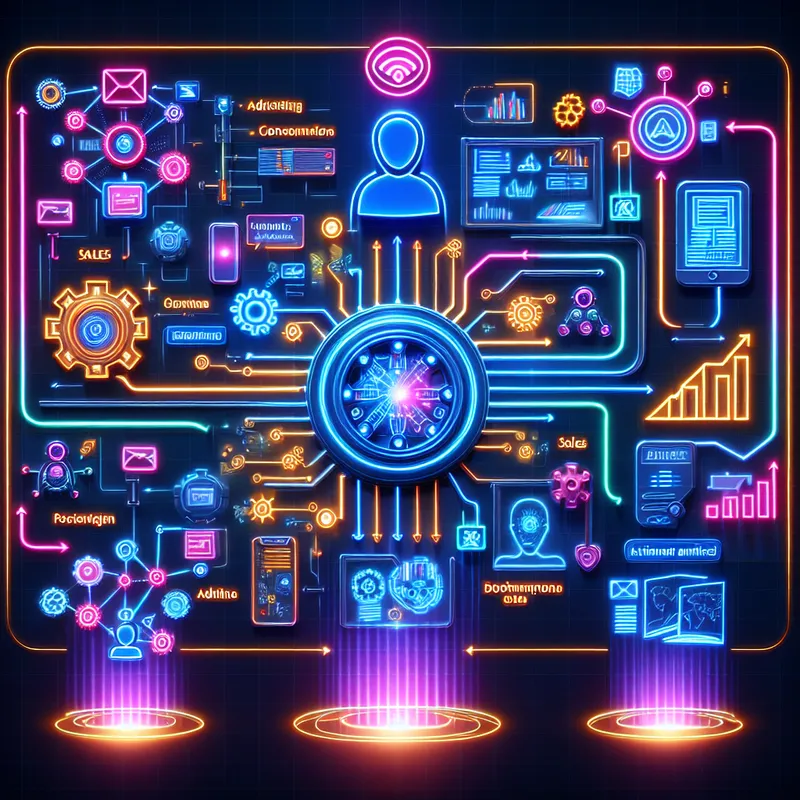
What does IT Asset Management look like in the year 2030? The keyword is Autonomous. Future ITAM systems will not just track assets; they will predict their demise. By analyzing global telemetric data, an ITAM AI will notify you that a specific batch of solid-state drives in your Dell laptops has a 98% chance of failing in the next 14 days. The system will autonomously order replacement drives from the vendor, schedule a FedEx pickup for the defective drives, and open a calendar invite with the affected employees to swap the hardware—all without a human IT admin lifting a finger.
Integrating ITAM with CI/CD and DevOps
In the modern software factory, assets are created and destroyed in seconds. A DevOps engineer triggers a CI/CD pipeline that spins up 50 Docker containers in AWS, runs a test, and destroys them three minutes later. Traditional ITAM tools cannot keep up with this velocity. Modern ITAM integrates directly into Kubernetes clusters and CI/CD tools (like Jenkins or GitLab). It tracks ephemeral cloud assets precisely, ensuring that the FinOps team knows exactly how much a specific 3-minute software build cost the company in compute resources.
The Gold Standard: ISO 19770 Compliance
For enterprise IT leaders, ISO/IEC 19770 is the holy grail. It is the international standard for IT Asset Management. Achieving ISO 19770 certification proves to auditors, investors, and clients that your organization has complete control over its IT infrastructure. An enterprise-grade ITAM software platform is specifically architected to map directly to the ISO 19770 framework, automating the documentation required for compliance and providing a verifiable audit trail for HIPAA (healthcare) and PCI-DSS (financial) regulatory bodies.
Pitching ITAM to the CEO and CFO: The Internal Narrative
Procurement and IT leaders often struggle to secure the budget for ITAM because they pitch it as an "administrative tool." You must change the narrative. When presenting to the C-suite, use this framework:
"We are currently managing a $50 million digital supply chain using outdated spreadsheets. This exposes us to three unacceptable risks: A multi-million dollar software audit penalty, a catastrophic cyber breach via an unpatched ghost asset, and 20% annual budget leakage due to unused cloud and SaaS licenses. Implementing this ITAM platform requires a $200k investment, but it guarantees absolute compliance, hardens our cybersecurity perimeter, and will mathematically recover $1.5 million in wasted OPEX in the first 12 months. It is the highest ROI defensive maneuver we can execute this year."
The ITAM Governance Masterclass
Having the best IT Asset Management Software is meaningless without a world-class governance structure. Technology is only 20% of the solution; the remaining 80% is people and processes. To achieve true mastery over your IT infrastructure, you must build an ITAM Center of Excellence (CoE).
The CoE is a cross-functional committee consisting of the CIO, the Chief Information Security Officer (CISO), the CFO, and the VP of Human Resources. This committee meets quarterly to review asset utilization rates, discuss upcoming software true-ups, and align the IT hardware refresh cycle with the company's fiscal budget. They are the ultimate governing body for all technology purchases.
15 Advanced ITAM KPIs You Must Track
Move beyond basic inventory counts. In 2026, your ITAM dashboard should track these 15 advanced Key Performance Indicators (KPIs):
- 1. Percentage of Ghost Assets: The ratio of assets detected on the network vs. assets formally registered in the CMDB. (Target: < 2%)
- 2. Software Harvest Rate: The dollar value of unused software licenses reclaimed and reallocated each quarter.
- 3. True-Up Cost Avoidance: The financial penalties avoided during vendor audits due to accurate ITAM records.
- 4. Average Asset Lifecycle: The average number of months a laptop or server remains in active production before failing or being retired.
- 5. Asset Refresh Compliance: The percentage of hardware replaced on-schedule according to the corporate depreciation policy.
- 6. Time to Provision (TTP): How long it takes for a new hire to receive their fully configured laptop and SaaS credentials.
- 7. Shadow IT Index: The volume of unauthorized applications discovered on the network by the ITAM agent each month.
- 8. License Compliance Rate: The percentage of installed software that matches a valid, purchased entitlement. (Target: 100%)
- 9. MTTR (Mean Time to Resolution) Correlation: How much faster support tickets are closed when the helpdesk agent has immediate access to the caller's asset data.
- 10. Cloud Idle Waste: The percentage of monthly AWS/Azure spend attributed to unattached storage volumes or unused compute instances.
- 11. BYOD Penetration: The ratio of employee-owned devices vs. corporate-owned devices accessing the network.
- 12. E-Waste Recycling Compliance: The percentage of decommissioned hardware backed by a verified Certificate of Destruction.
- 13. Hardware Warranty Coverage: The percentage of production servers currently covered by active vendor support contracts.
- 14. Orphaned SaaS Accounts: The number of active software subscriptions assigned to employees who have already left the company.
- 15. Total Cost of Ownership (TCO) Variance: The difference between the projected cost of an asset class and its actual historical cost.
The Crucial HR Integration: Onboarding and Offboarding
The biggest point of failure in asset management occurs when employees join or leave the company. If your ITAM system operates in a silo, separated from Human Resources (e.g., Workday or BambooHR), you are bleeding money.
When HR creates a profile for a new hire, an API webhook should instantly trigger the ITAM system to provision the exact hardware kit and SaaS licenses required for that specific role. Conversely, the exact second an employee is terminated in the HR system, the ITAM platform must autonomously revoke their Single Sign-On (SSO) access and generate a shipping label to recover their physical hardware. This integration eliminates "Orphaned Accounts" and secures corporate data instantaneously.
🌍 Global Compliance Alert: CCPA, GDPR, and E-Waste
In 2026, global enterprises face a dual-threat of data privacy fines (GDPR in Europe, CCPA in California) and strict environmental mandates. IT Asset Management Software ensures compliance on both fronts. By utilizing precise endpoint tracking, ITAM ensures that a laptop containing EU citizen data is never shipped to a non-compliant service center. Furthermore, the automated generation of Certificates of Destruction provides auditors with absolute proof that retired hardware was recycled sustainably, adhering to global ESG reporting standards.
Expand your operational knowledge: Managing internal IT assets is only half the battle. Read our Behemoth Guide to Vendor Management Software (VMS) to learn how to control external supplier risks, or dive into Software Asset Management (SAM) Tools for a hyper-focused look at licensing.
The 2026 Executive ITAM Pre-Flight Checklist
Before launching an enterprise-wide IT Asset Management initiative, the CIO and CFO must ensure the organization is structurally ready. Use this executive pre-flight checklist to guarantee a successful ITAM implementation and avoid the common pitfalls that doom 40% of IT projects.
1. Executive Sponsorship Confirmed
- Has the CEO explicitly mandated the ITAM project across all global business units?
- Is the CFO actively involved in designing the depreciation and FinOps reporting models?
- Have department heads agreed to surrender "Shadow IT" budgets back to centralized procurement?
2. Data Cleansing & Preparation
- Have we identified the primary "Source of Truth" for existing asset data (e.g., Active Directory)?
- Are we committing to abandoning all legacy Excel spreadsheets on Day 1 of the launch?
- Have we established a clean baseline for our top 5 software vendors (Microsoft, Oracle, Adobe, Salesforce, SAP)?
3. Policy & Governance Alignment
- Is our "Acceptable Use Policy" updated to reflect remote work and BYOD containerization?
- Have we established a strict "two-strike" penalty for employees who bypass the IT procurement portal?
- Is the IT Service Desk trained to update the ITAM record during every single support ticket resolution?
By treating ITAM not as a software installation, but as a fundamental shift in corporate governance, your enterprise will unlock millions in hidden capital and build an impenetrable shield against cyber threats and compliance audits.
Data Sovereignty & Legal Compliance (2026 Framework)
Regulatory Notice: The enterprise software architectures (ITAM and VMS) described in this guide are subject to international data residency laws. If you operate within the European Union (GDPR), Brazil (LGPD), or process federal data in the United States (FedRAMP), your platform must physically host data within legally approved geographic regions to avoid cross-border data transfer penalties. Always require your vendor to sign a comprehensive Business Associate Agreement (BAA) or Data Processing Agreement (DPA).



