1. Direct Introduction
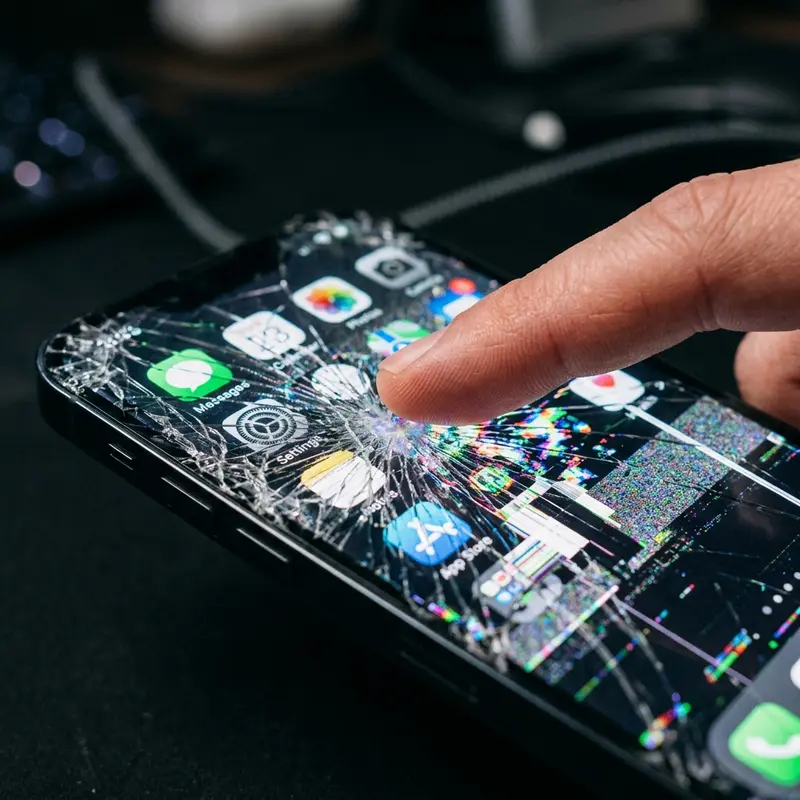
The phenomenon colloquially referred to as an iPhone stuck on a black screen represents one of the most complex, opaque, and multi-faceted diagnostic challenges within the modern landscape of mobile telecommunications, embedded systems engineering, and consumer electronics troubleshooting. When an iOS device unexpectedly enters this completely unresponsive and visually devoid state, it abruptly ceases to provide the standard graphical user interface, auditory signals, and haptic feedback loops that both end-users and diagnostic technicians inherently rely upon for interaction, telemetry, and state evaluation. This cessation of standard operational output is rarely a superficial or isolated display panel malfunction; rather, it is frequently a profound manifestation of a severe underlying hardware discontinuity, a critical software execution failure, or an intricate intersection of both. Exploring the absolute depths of this pervasive issue requires an uncompromisingly detailed understanding of the intricate and highly proprietary interplay between specialized power delivery networks, microscopic logic board components, advanced integrated circuits, and the heavily fortified cryptographic boot chain that strictly governs every aspect of iOS execution and validation. The ubiquitous black screen anomaly can precipitate from an extraordinarily diverse array of catalysts and systemic failures. These range from relatively benign unhandled kernel panics, deep-sleep state deadlocks, and entirely depleted lithium-ion chemical reserves, to far more catastrophic and irreversible events such as the catastrophic failure of the primary power management integrated circuits (PMIC), microscopic solder joint fracturing beneath the central processing unit due to thermal cycling or physical trauma, catastrophic substrate damage, or severe firmware corruption within the internal NAND flash memory architecture. This comprehensive, highly technical diagnostic guide endeavors to systematically deconstruct the iPhone black screen paradigm. We will analyze this critical failure state exhaustively through the rigorous lens of advanced systems engineering, digital forensics, microscopic logic board repair methodologies, and enterprise-level device management. By aggressively circumventing the traditional, oversimplified consumer-level troubleshooting paradigms—which often begin and end with basic force-restart combinations—we will delve into the profound technical infrastructure and low-level communication protocols that dictate iOS device behavior under the most critical failure conditions. Through this remarkably extensive exploration, enterprise IT fleet managers, forensic data recovery specialists, and advanced microscopic repair practitioners will definitively acquire the profound theoretical knowledge and robust practical frameworks necessary to confidently navigate, successfully diagnose, and ultimately remediate the sophisticated failure states inherently associated with the iPhone black screen anomaly. This guide will meticulously transform a seemingly impenetrable, completely inert device into a scientifically navigable landscape of quantifiable electrical potential, software diagnostic logs, and actionable recovery procedures.
2. Basic Architecture
To accurately diagnose and effectively resolve an iPhone stuck on a black screen, one must first possess a masterful comprehension of the underlying hardware architecture and the rigorous sequence of events that constitute the iOS boot process. The foundational architecture of an iPhone is heavily centralized around Apple’s proprietary A-series System-on-Chip (SoC), an incredibly dense piece of silicon that houses the central processing unit (CPU), graphics processing unit (GPU), neural engine, specialized image signal processors, and fundamentally, the SecureROM. The boot process is a meticulously orchestrated cryptographic chain of trust, designed to ensure that only officially signed Apple software can execute on the hardware. When the power button is depressed, or a USB power source is introduced, the primary Power Management Integrated Circuit (PMIC) is responsible for generating and distributing dozens of distinct power rails—such as VDD_MAIN, VDD_BOOST, and various PP1V8 lines—to specific subsystems across the logic board. Once the SoC receives stable power and the requisite clock signals, the hardcoded SecureROM initiates execution. This immutable code validates the Low-Level Bootloader (LLB), which in turn cryptographically verifies and loads iBoot, followed by the iOS kernel, and finally the user space environments, including the SpringBoard process that manages the graphical home screen. A black screen failure can inherently occur at any microsecond along this complex timeline. If the I2C communication lines between the CPU and the Display Power IC (Chestnut or equivalent in newer models) are severed, the liquid crystal display (LCD) or organic light-emitting diode (OLED) panel will simply fail to receive the necessary voltage to illuminate its pixels, despite the underlying OS booting perfectly—a state known as a blind boot or no-backlight/no-image fault. Conversely, if the NAND flash storage chip suffers from degraded blocks affecting the kernel cache, the device may enter an infinite kernel panic loop, constantly resetting before the MobileGestalt configuration can initialize the Mobile Industry Processor Interface (MIPI) Display Serial Interface (DSI) lines. Understanding this architectural dichotomy—distinguishing between a fully powered device lacking output capabilities versus a device trapped in a low-level power cycling loop—is the absolute foundation of advanced diagnostics. Technicians must mentally map the physical layout of the printed circuit board (PCB), tracking the flow of electrons from the battery terminal, through the Tristar/Hydra USB multiplexer and charging ICs, directly to the display subsystem connectors to systematically rule out architectural choke points.
3. Challenges and Bottlenecks
The primary challenge when confronting an iPhone stuck on a black screen is the inherent diagnostic opacity of the system in this state. Because the device offers absolutely zero visual telemetry, standard software-based diagnostic tools and user-interface interactions are rendered completely obsolete. This severe bottleneck forces technical professionals to rely heavily on indirect measurement techniques, analog signaling analysis, and highly specialized external hardware interfaces to infer the internal state of the logic board and the operating system. One of the most prevalent and significant bottlenecks is accurately differentiating between a Device Firmware Update (DFU) state, a corrupted Recovery Mode loop, and a genuine hardware-level short circuit on a critical power rail. When connected to a host machine via a lightning or USB-C interface, a device in DFU mode will broadcast a specific USB product ID indicating its readiness for a low-level firmware rewrite. However, if the USB communication IC (often referred to as Tristar or Kraken) is electrically damaged due to unregulated aftermarket chargers, the device will be completely incapable of negotiating a USB data connection, leaving it appearing completely dead and undetectable even if the core processor is functionally sound but awaiting command. Furthermore, micro-soldering technicians face immense physical bottlenecks when attempting to measure voltages and diode mode readings on tightly packed, underfilled Integrated Circuits. The miniaturization of components on modern iPhone logic boards means that a microscopic short to ground on a capacitor along the PP_VDD_BOOST line will cause the entire PMIC to trigger over-current protection, immediately shutting down all power generation and resulting in a persistent black screen. Diagnosing this requires injecting precise voltages into the suspected power rail using a specialized DC bench power supply and utilizing a high-resolution thermal imaging camera to detect the microscopic variations in heat emission that pinpoint the exact location of the shorted silicon or ceramic capacitor. Another major software bottleneck lies in the encryption of panic logs; if a device is experiencing a software-induced black screen crash but cannot fully boot to establish a trusted connection with a host computer, extracting the critical crash logs detailing the exact I2C bus failure or memory allocation error becomes an extraordinarily complex endeavor, often requiring the device to be painstakingly coaxed into an unstable, tethered diagnostic boot state.
4. Scalability Benefits
While an individual iPhone trapped in a black screen state is traditionally viewed as a localized hardware failure, approaching the resolution and recovery of these devices through the lens of standardized enterprise infrastructure introduces immense scalability benefits for large-scale IT operations, educational institutions, and massive corporate fleets. In environments managing thousands of iOS devices, establishing a highly scalable, systemic approach to black screen diagnostics dramatically reduces downtime, curtails unnecessary hardware replacement expenditures, and heavily optimizes the workflow of the IT support desk. The homogenous, tightly controlled nature of the Apple hardware and software ecosystem—whereby identical device models share highly predictable failure modes and recovery pathways—allows for the rapid development of standardized operational playbooks. By integrating specialized USB hub carts capable of simultaneous, high-throughput connections, enterprise administrators can effortlessly deploy Apple Configurator workflows to forcefully query, log, and subsequently restore dozens of unresponsive devices in parallel. If a batch of devices is stuck on a black screen due to a flawed Mobile Device Management (MDM) payload, an aggressive over-the-air (OTA) update corruption, or a synchronized software deadlock, these automated, highly scalable hubs can simultaneously broadcast the precise USB interrupt commands required to force the entire fleet into Recovery Mode and securely re-image the operating system without manual, device-by-device physical button manipulation. Furthermore, from a diagnostic scaling perspective, aggregating the telemetry data—such as specific error codes returned by iTunes or third-party flashing software during failed restoration attempts (e.g., Error 4013 indicating NAND communication failure, or Error 9 signaling USB bus interruption)—allows centralized IT management to mathematically track hardware failure rates across specific device batches or environmental conditions. This macro-level analytical scalability empowers organizations to negotiate warranty replacements with Apple in massive bulk configurations rather than individual tickets, optimizing logistical return material authorization (RMA) pipelines and ensuring that corporate communication channels remain robust and uninterrupted. Ultimately, the ability to scale the diagnostic and recovery procedures transforms a chaotic, unpredictable hardware failure into a manageable, statistically predictable metric within the broader IT infrastructure management lifecycle.
5. Practical Integration
The practical integration of advanced recovery protocols for an iPhone exhibiting a persistent black screen necessitates a strict, methodical, and highly disciplined workflow that seamlessly bridges software manipulation and intricate hardware analysis. The initial phase of integration always begins with the execution of non-invasive, low-level hardware interrupts—specifically, the complex force-restart physical button sequences uniquely hardcoded into the PMIC and the SecureROM. These sequences are designed to forcefully cut power to the application processor and initiate a cold boot cycle, bypassing the potentially frozen software state. If the device remains completely unresponsive, the practical integration must immediately pivot to analyzing the electrical consumption characteristics of the device. By connecting the iPhone to a specialized inline USB digital ammeter, a technician can instantly read the exact voltage and amperage being drawn by the battery management system. A device drawing 0.00 amps indicates a severed physical connection, a completely destroyed charging port, or a catastrophic short circuit preventing initial power negotiation. A device constantly cycling between 0.10 amps and 0.40 amps typically indicates an infinite bootloop caused by a logic board failure, specifically within the CPU or NAND communication lines, where the device attempts to boot, fails a hardware check, and instantly resets. If the ammeter reveals normal current draw but the screen remains entirely devoid of life, practical integration demands the use of a host machine running diagnostic software to probe the USB interface for DFU or Recovery mode broadcasts. When software recovery fails, the integration of microscopic hardware diagnostics becomes absolutely paramount. This involves removing the display assembly, disconnecting the internal lithium-ion battery, and using a high-precision digital multimeter in diode mode to meticulously measure the voltage drop across the display connectors (such as the J4200 FPC connector on modern boards). By systematically mapping the measured values against a known-good schematic database, technicians can definitively pinpoint if a critical MIPI data line filter has been blown, or if the backlight driver integrated circuit has catastrophically failed, thereby effectively translating a mysterious black screen into a precisely localized and highly repairable micro-soldering objective.
6. Security and Compliance
Navigating the black screen anomaly fundamentally intersects with the rigorous security architecture and strict compliance mandates embedded deep within the iOS ecosystem. Apple’s paramount commitment to user privacy and data security is enforced continuously by the Secure Enclave Processor (SEP), a highly hardened, isolated subsystem that exclusively manages all cryptographic keys and biometric data. When an iPhone is incapacitated by a black screen, the device typically enters a Before First Unlock (BFU) state if it has been forcefully restarted or has lost power. In the BFU state, the advanced file-based encryption (FBE) of iOS heavily safeguards the user partition; virtually all user data is fully encrypted and rendered entirely inaccessible until the complex passcode is mathematically verified by the SEP to release the decryption keys. This presents a monumental compliance and security bottleneck for forensic investigators and data recovery specialists attempting to salvage critical information from a seemingly dead device. Because the screen is black, the standard graphical method of inputting the passcode is physically impossible. Furthermore, Apple’s implementation of USB Restricted Mode creates an additional layer of formidable security defense. If the device has remained locked for an extended period, the Lightning or USB-C port is dynamically restricted to charge-only mode, actively terminating any and all data communication lines at the hardware multiplexer level to aggressively thwart brute-force password attacks or unauthorized data exfiltration via external accessories. Therefore, attempting to blindly extract data or inject diagnostic payloads into a black-screen device strictly requires compliance with advanced, non-destructive methodologies. In highly specialized forensic scenarios, compliance dictates that the logic board must be carefully repaired at the microscopic component level—restoring power to the display subsystem or transplanting critical paired components (CPU, EEPROM, baseband, and NAND) to a functional donor logic board—without ever tampering with the integrity of the Secure Enclave or the cryptographic boot chain. This ensures that the chain of evidence remains completely uncompromised, the encrypted data remains secure, and the eventual recovery of the passcode allows for legitimate, authorized decryption in strict accordance with legal search warrants, corporate compliance policies, and stringent global data protection regulations.
7. Costs and Optimization
The economic implications and intricate cost-optimization strategies surrounding the diagnosis and resolution of an iPhone stuck on a black screen are of paramount importance to both independent repair infrastructures and large-scale corporate IT asset management divisions. From a strictly financial perspective, the traditional, manufacturer-authorized approach to resolving a black screen unassociated with a simple battery depletion typically involves replacing the entire integrated logic board, or more frequently, conducting a full-unit out-of-warranty replacement. This methodology, while remarkably expedient, represents a massive and often entirely disproportionate cost expenditure, completely destroying the residual economic value of the otherwise highly functional peripheral components such as the complex camera modules, biometric sensors, and premium external chassis. Optimizing this severe cost disparity heavily relies on the implementation of advanced micro-soldering capabilities and deep-level board diagnostic workflows. By investing in specialized equipment—including high-powered stereoscopic microscopes, calibrated hot air rework stations, thermal imaging optics, and comprehensive schematic software—a highly skilled technical organization can radically optimize the cost structure. Instead of bearing the exorbitant expense of a $500 to $800 device replacement, a technician can meticulously identify and replace a single faulty, micro-sized capacitor on the VDD_MAIN line, or re-flow the solder balls beneath a completely failed display power IC, for a fractional component cost of mere pennies. This granular, component-level repair philosophy massively optimizes the return on investment (ROI) for enterprise fleets and significantly reduces global electronic waste. Furthermore, workflow optimization is achieved by implementing strict triage protocols; utilizing USB ammeters and diagnostic software early in the evaluation pipeline ensures that technicians do not waste countless hours needlessly disassembling devices that are simply trapped in a DFU software loop or suffering from a deeply depleted battery that has fallen below the minimum voltage threshold required to trigger the charging IC. By mathematically analyzing the repair success rates versus the labor time invested in micro-soldering distinct logic board architectures, organizations can dynamically optimize their cost-benefit algorithms, deciding precisely when to attempt an advanced component-level recovery versus when to definitively authorize a full hardware unit replacement.
8. Future of the Tool
The evolutionary trajectory of diagnostics and recovery methodologies for the iPhone black screen anomaly is rapidly moving toward an era defined by unprecedented wireless telemetry, deeply embedded autonomous self-healing architectures, and highly sophisticated artificial intelligence integration. As Apple continues to relentlessly miniaturize internal logic board components and aggressively seal external device chassis to achieve superior ingress protection, traditional physical intervention and microscopic probing will become exponentially more difficult, forcing a radical paradigm shift in how systemic failures are addressed. In the foreseeable future, the fundamental architecture of the SoC will likely integrate advanced, low-power ultra-wideband (UWB) or Bluetooth Low Energy (BLE) diagnostic beacon capabilities. These integrated beacons would operate on a completely isolated, microscopic backup power rail, designed to continuously broadcast highly encrypted, low-level kernel panic logs, specific PMIC failure codes, and thermal sensor anomalies to authorized diagnostic software on a host machine, even when the primary device battery is seemingly dead and the screen is completely black. This profound capability will allow enterprise fleet managers and automated diagnostic kiosks to instantly diagnose the exact point of hardware or software failure without ever physically opening the device or relying on standard USB multiplexing. Furthermore, the future of resolving the black screen lies in advanced, AI-driven failure prediction algorithms natively integrated within iOS. By continuously utilizing the neural engine to analyze millions of micro-variations in battery discharge rates, internal thermal fluctuations, and memory allocation errors, the operating system will possess the capability to predict an impending catastrophic logic board failure or deep-level kernel corruption days before the black screen state actually occurs. This predictive intelligence will seamlessly prompt the user to execute an emergency encrypted backup to iCloud and preemptively schedule a hardware service appointment, effectively mitigating the catastrophic data loss traditionally associated with unexpected sudden-death scenarios. Finally, future iterations of power management integrated circuits may incorporate intelligent, self-healing micro-routing capabilities, dynamically rerouting critical voltages around highly localized short circuits on the PCB substrate, thereby temporarily preventing a total system failure and allowing the device to maintain a basic operational state until formal repairs can be executed.
9. Final Conclusion
In ultimate summation, the occurrence of an iPhone being stuck on a profoundly unresponsive black screen is vastly more than a mere inconvenience; it is a highly complex, multi-layered diagnostic puzzle that sits at the absolute intersection of advanced materials science, complex embedded software engineering, and rigorous cryptographic security. Attempting to comprehend and successfully remediate this critical state demands far more than basic consumer intuition or superficial troubleshooting steps. It requires a formidable, architecturally sound understanding of how power fundamentally flows through microscopic silicon pathways, how the Secure Enclave meticulously governs the absolute chain of trust, and how low-level software protocols tirelessly negotiate communication between highly specialized integrated circuits. The intricate journey from identifying a completely inert device to successfully extracting its critical data or fully restoring its functionality highlights the phenomenal sophistication of modern mobile telecommunications hardware. As we have exhaustively explored through the comprehensive lenses of core system architecture, practical diagnostic integration, strict compliance security, and expansive enterprise scalability, the black screen anomaly is a definitive test of technical prowess and methodological discipline. By aggressively leveraging advanced USB telemetry, microscopic logic board diagnostics, and highly automated enterprise-level configuration workflows, technical professionals can systematically strip away the opacity of the black screen, effectively transforming a catastrophic failure state into a quantifiable, highly actionable engineering challenge. As the iOS ecosystem continues to evolve toward even greater levels of component density and security restriction, the foundational principles of methodical, component-level analysis and deep software interaction outlined in this exhaustive guide will remain absolutely paramount. Ultimately, mastering the iPhone black screen anomaly is not simply about fixing a broken display; it is about demonstrating total mastery over one of the most sophisticated, densely engineered, and widely utilized pieces of consumer technology ever developed in human history.