How to Turn Sketches into AI Art Using Scribble Diffusion

Scribble Diffusion transforms your sketches into stunning AI art with intuitive tools and advanced technology. This innovative platform leverages the power of ControlNet technology, allowing artists and designers to create visually compelling artwork from simple doodles. By understanding the core functionalities of Scribble Diffusion, users can unlock their creative potential and streamline their design processes.
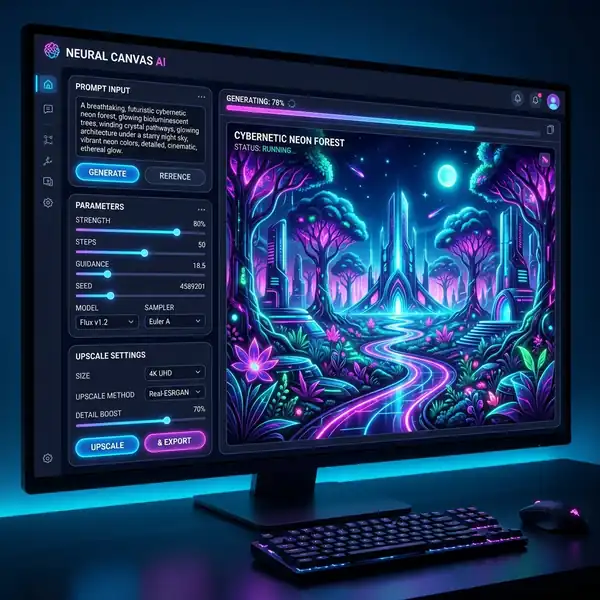
What is Scribble Diffusion: Doodling with ControlNet technology
DomineTec Tip: Scribble Diffusion is perfect for fast prototyping. If you want to design logos, check our article on best AI logo maker and brand palette.
Scribble Diffusion is an AI-driven tool designed to convert rough sketches into polished digital art. By utilizing ControlNet technology, it allows users to maintain greater control over the artistic output. This technology interprets the user’s doodles as a guiding structure, translating them into detailed visuals while preserving the original artistic intent. This capability makes it accessible for both novice and experienced artists.
The primary advantage of Scribble Diffusion lies in its ability to understand context and structure based on the simple lines and shapes drawn by the user. This is achieved through advanced algorithms that analyze the input doodle, inferring details such as perspective, shading, and even color schemes. The result is a seamless integration of user input with sophisticated AI processing, yielding artwork that retains the essence of the original sketch while enhancing it to a professional standard.
Interactive Canvas Guide: How to draw and define your layout
| Tool Name | Mechanism | Render Speed |
|---|---|---|
| Scribble Diffusion | Static canvas sketch processing | Fast (5-10s) |
| Krea AI Realtime | Interactive live canvas tracking | Instant (Real-time render) |
To begin using Scribble Diffusion effectively, familiarize yourself with the interactive canvas. This is where the transformation process starts. The canvas interface allows users to create their doodles directly or upload existing sketches. When drawing, focus on defining the layout clearly; use bold lines for primary elements and lighter strokes for details. This differentiation helps the AI understand the hierarchy of your sketch, ensuring that important features are accentuated in the final output.
Once your sketch is complete, utilize the canvas tools to adjust and refine your drawing. Scribble Diffusion includes options for erasing, redrawing, and even layering elements. Users should take advantage of these functionalities to enhance their compositions before initiating the AI processing. This attention to detail not only improves the quality of the output but also allows for greater creative expression.
Advanced Prompting: Directing textures, cameras, and colors
Advanced prompting in Scribble Diffusion is a important step for users looking to add specific textures, camera angles, and colors to their creations. The platform allows artists to input detailed prompts that guide the AI in interpreting their sketches. For texture, users can specify elements like "smooth," "rough," or "metallic," which will influence how the AI renders surfaces within the artwork. This flexibility enables artists to match their vision closely, ensuring the final piece aligns with their creative direction.
Camera angles also play a significant role in how the final artwork is perceived. Users can instruct the AI to render the sketch from a particular vantage point, such as “bird’s-eye view” or “close-up,” which can dramatically alter the composition's emotional impact. Additionally, defining color schemes can further personalize the artwork; users can either choose specific colors or describe a mood, like "warm and inviting" or "cold and distant," which allows the AI to select an appropriate palette.

Comparison Table: Scribble Diffusion vs. Krea AI vs. Leonardo Canvas
The landscape of AI art generation is rapidly evolving, with multiple platforms vying for attention. Scribble Diffusion, Krea AI, and Leonardo Canvas each offer unique features tailored to different artistic needs. While Scribble Diffusion excels in transforming sketches with detailed control, Krea AI focuses on collaborative features and community-driven art sharing. On the other hand, Leonardo Canvas provides extensive customization options that appeal to professional artists seeking a high level of refinement in their creations.
When comparing the three, consider factors such as ease of use, output quality, and available features. Scribble Diffusion stands out with its interactive canvas and user-friendly interface, making it particularly appealing for beginners. Krea AI, however, might be preferable for users looking to engage with a community of artists. Leonardo Canvas, being more complex, caters to users who require intricate customization and control over every aspect of their artwork.

Creative Workflows: Speeding up concept art for marketing and projects
For designers and marketers, the ability to quickly produce concept art is invaluable. Scribble Diffusion offers a streamlined workflow that significantly reduces the time needed to generate high-quality visuals. By starting with a rough sketch and leveraging the AI's capabilities, users can rapidly iterate on designs, making it easier to present ideas to clients or stakeholders. The interactive nature of the platform also allows for real-time adjustments, which can be particularly beneficial during brainstorming sessions.
Employing Scribble Diffusion in creative workflows involves integrating it into your regular design process. Begin by sketching initial concepts, then utilize the AI to explore variations and enhancements. This approach not only saves time but also inspires creativity, as the AI can generate unexpected outcomes that might spark new ideas. By adopting this method, teams can enhance their productivity, ensuring that they meet tight deadlines while still delivering compelling artwork.
Additional Resources and Recommended Links
For more guides and tutorials on AI image and video generators, check out our step-by-step articles on best AI logo maker and brand palette and how to create a professional logo in canva for free. For official platforms and tools, visit the Official Scribble Diffusion Website.
Mastering Advanced Prompting Techniques and Parameters for Enhanced AI Art Generation
When it comes to generating high-quality AI art using Scribble Diffusion, mastering advanced prompting techniques is essential for leveraging the full capabilities of the tool. Understanding the nuances of various parameters can significantly influence the output quality and style of the generated images. Key parameters include style weights, aspect ratios, and the often-overlooked sref, vref, and chaos settings. By strategically manipulating these parameters, users can achieve a refined aesthetic that aligns closely with their creative vision.
The style weight parameter allows users to dictate the influence of different styles within a single prompt. For example, if you wish to create a piece that combines realism with an impressionistic touch, you can assign specific weight values to each style. A prompt like "a serene lakeside scene" with a style weight of 0.7 for realism and 0.3 for impressionism will yield results that favor realistic textures while incorporating impressionistic colors and brush strokes. This technique emphasizes the importance of balancing the weights to ensure that the dominant style does not overshadow the subtler elements of the secondary style.
Aspect ratios are equally important as they determine the dimensions of the final artwork. Scribble Diffusion allows users to specify aspect ratios that can drastically alter the composition and focus of the generated images. For instance, a 16:9 aspect ratio is ideal for landscape-oriented visuals, while a 1:1 ratio is suitable for social media posts. By tailoring the aspect ratio to fit the intended use of the artwork, creators can ensure that the generated images are not only visually appealing but also practical for their specific applications.
Furthermore, parameters such as sref (style reference) and vref (visual reference) play important roles in directing the AI's focus toward particular elements. The sref parameter can be used to fine-tune the style by referencing specific examples from existing artworks, thereby providing the AI with a clearer understanding of the desired aesthetic. Meanwhile, the chaos parameter introduces an element of randomness to the generation process. By adjusting the chaos level, artists can explore a range of creative outputs, from highly controlled designs to more experimental results. Understanding how to apply these parameters effectively can lead to a more satisfying and productive experience with Scribble Diffusion.
Integrating AI Art Outputs into Professional Creative Workflows for Design and Marketing
Utilizing the outputs generated by Scribble Diffusion within professional workflows can significantly enhance a variety of creative projects, ranging from graphic design to marketing campaigns. One of the primary applications of AI-generated art is in the design process, where it can serve as a foundational element for further refinement. After creating initial sketches or artwork with Scribble Diffusion, designers can import these images into software like Adobe Photoshop or Figma for additional layering, texturing, and compositional adjustments. This integration allows for greater control over the final output while still benefiting from the speed and creativity afforded by AI-generated art.
In the realm of marketing, AI-generated artwork can be particularly useful for creating eye-catching visuals that resonate with target audiences. For instance, brands can utilize these unique images in social media campaigns, promotional materials, or product packaging. By combining AI art with traditional design elements, marketers can maintain a consistent brand identity while also exploring new visual directions. This not only saves time in the design process but also enables teams to experiment with innovative concepts that may not have been feasible through conventional methods.
Moreover, integrating automation tools into the workflow can further streamline the process of using AI art. For example, platforms like Canva offer automation features that allow users to create templates incorporating AI-generated images. This can be particularly beneficial for e-commerce businesses looking to generate multiple product images quickly. By setting up a system where AI art is generated and automatically inserted into templates, businesses can maintain a steady flow of fresh content while reducing the time spent on manual design tasks.
As the use of AI-generated art becomes more mainstream, it is important for professionals to remain aware of copyright considerations and the rights associated with the generated images. Many AI art platforms operate under specific licensing agreements that dictate how the outputs can be used commercially. It is advisable for designers and marketers to familiarize themselves with these guidelines to ensure compliance and avoid potential legal issues. By integrating AI art outputs responsibly, creative professionals can enhance their workflows while adhering to ethical standards.
Understanding the Technical Limitations and Ethical Considerations of Scribble Diffusion
While Scribble Diffusion offers a powerful platform for generating AI art, it is essential to recognize its technical limitations to maximize its effectiveness. One of the primary challenges users face is the inconsistency in results, which can stem from various factors, including the complexity of the prompts and the inherent randomness of AI algorithms. Beginners often encounter issues when their prompts are either too vague or overly complex, leading to outputs that do not align with their expectations. A clear and concise prompt, supplemented by well-defined parameters, is key to achieving more predictable results.
Another common mistake for novice users is the tendency to overlook the importance of iterative refinement. Many beginners may generate a piece of art and expect it to be perfect on the first attempt. However, the true potential of Scribble Diffusion is realized through a process of trial and error. Users should embrace the idea of generating multiple iterations, tweaking prompts, and adjusting parameters after each output. This iterative approach not only enhances the quality of the final artwork but also fosters a deeper understanding of how various inputs influence the generated images.
From a legal perspective, users must navigate the complexities of commercial usage rights associated with AI-generated artworks. While many platforms offer the ability to use outputs freely, others may impose restrictions on commercial applications or require attribution. Understanding these legalities is important for anyone looking to leverage Scribble Diffusion in a professional context. Additionally, ethical considerations arise when using AI-generated art, particularly concerning the originality of the work and the potential for plagiarism. Creators should always strive to incorporate their unique vision into the art generated by AI, ensuring that the final product reflects their individual creativity.
Lastly, it is vital to consider the impact of AI technologies on the broader artistic landscape. As AI-generated art becomes more prevalent, discussions around its implications for traditional artistry and creative industries are increasingly important. Artists and designers should engage in these conversations to better understand the role of AI in their fields and to advocate for ethical practices that support both technological advancement and the preservation of human creativity. By acknowledging the limitations and ethical considerations of tools like Scribble Diffusion, creators can responsibly harness AI technology while contributing positively to the artistic community.




