
How to Set Up VLANs on a Managed Switch: Step-by-Step
Setting up VLANs on a managed switch can enhance network segmentation and security.
Understanding VLANs and Their Importance
Virtual Local Area Networks (VLANs) allow for logical segmentation of networks, improving performance and security.
Each VLAN is identified by a unique VLAN ID, which facilitates traffic management across the network infrastructure.
Prerequisites for VLAN Configuration
Ensure that the managed switch is compatible with VLAN tagging protocols such as IEEE 802.1Q.
Access to the switch's management interface is required, typically via a web browser or command-line interface (CLI).
Configuration Overview and Topology
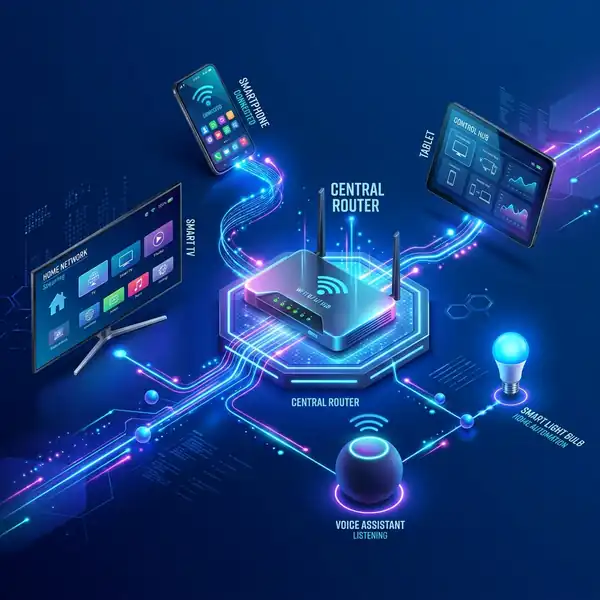
A typical network topology includes a managed switch connected to routers and various devices segmented into VLANs.
Devices within the same VLAN can communicate with each other, while inter-VLAN communication requires a Layer 3 device.
Step-by-Step Command Configuration
- Access the switch management interface via SSH or web interface.
- Enter configuration mode by using the command:
configure terminal. - Create a VLAN with the command:
vlan 10followed byname "Sales". - Assign ports to the VLAN using:
interface range fastethernet 0/1-10andswitchport access vlan 10. - Repeat for additional VLANs, such as
vlan 20for "Marketing". - To save the configuration, use:
write memoryorcopy running-config startup-config.
Comparison of VLAN Types
| VLAN Type | Description | Use Case |
|---|---|---|
| Data VLAN | Used for user-generated traffic. | Workstations and server communication. |
| Voice VLAN | Dedicated to voice traffic, ensuring quality. | VoIP systems. |
| Management VLAN | Used for device management traffic. | Switch and router management access. |
DomineTec Tip: Always label VLAN IDs clearly and maintain documentation for easy management and troubleshooting.
Testing and Validating VLAN Configuration
Testing can be performed using tools like ping to ensure devices in the same VLAN communicate effectively.
Use the command show vlan brief to verify VLAN assignments on the managed switch.
Best Practices for VLAN Management
Implementing VLANs requires adherence to best practices to ensure network efficiency and security.
Documenting VLAN assignments, including their purposes and associated devices, is crucial for future reference and troubleshooting.
Regularly auditing VLAN configurations can help identify unused or misconfigured VLANs, optimizing network resources.
Employing naming conventions for VLANs enhances clarity and simplifies management, especially in larger networks.
Advanced VLAN Features
Managed switches often support advanced VLAN features like Private VLANs (PVLANs) that enhance security in shared environments.
Dynamic VLAN Assignment allows devices to join specific VLANs based on authentication, streamlining user management.
Another feature, VLAN Trunking Protocol (VTP), can automate VLAN management across multiple switches, reducing manual configuration efforts.
Understanding and implementing these features can significantly improve both security and management efficiency in complex networks.
Troubleshooting Common VLAN Issues
Troubleshooting VLANs can be challenging, but identifying common issues can streamline the process.
Misconfigured trunk ports often lead to VLAN communication failures; ensuring correct encapsulation settings is essential.
Another frequent issue is incorrect VLAN assignments on switch ports, which can prevent devices from communicating as intended.
Utilizing diagnostic commands such as 'show vlan' and 'show interfaces trunk' can aid in identifying and resolving these problems.
Security Considerations for VLANs
While VLANs enhance network segmentation, they also introduce unique security challenges that must be addressed.
Implementing Access Control Lists (ACLs) on VLANs can restrict traffic and minimize the risk of unauthorized access.
Additionally, enabling VLAN Isolation can prevent devices in different VLANs from communicating, further bolstering security.
Regularly reviewing and updating security policies and configurations will ensure VLANs remain secure against evolving threats.
Integrating VLANs with Other Networking Technologies
Integrating VLANs with technologies such as Quality of Service (QoS) can enhance network performance and user experience.
By prioritizing traffic from specific VLANs, QoS ensures that critical applications receive the bandwidth they require.
Link Aggregation can also be utilized in conjunction with VLANs to increase bandwidth and redundancy between switches.
Understanding how to combine these technologies effectively can lead to a more resilient and efficient network architecture.
Monitoring VLAN Performance
Monitoring VLAN performance is essential for maintaining optimal network functionality and user satisfaction.
Implementing network monitoring tools can provide insights into traffic patterns and identify potential bottlenecks.
Utilizing SNMP (Simple Network Management Protocol) allows administrators to gather real-time data about VLAN usage and performance metrics.
Regular performance reviews will help in making informed adjustments to configurations as network demands evolve.
Future Trends in VLAN Technology
The landscape of VLAN technology is continuously evolving, with trends influencing how networks are designed and managed.
Software-Defined Networking (SDN) is gaining traction, allowing for more dynamic and programmable VLAN configurations.
Furthermore, the emergence of Virtual Extensible LAN (VXLAN) is enabling greater scalability and flexibility in multi-tenant environments.
Staying informed about these trends will prepare network administrators for upcoming changes and improvements in VLAN technology.
Understanding VLAN Tagging Protocols
VLAN tagging is crucial for the proper identification and management of VLAN traffic across a network. The most common tagging protocol is IEEE 802.1Q, which inserts a VLAN tag into Ethernet frames to define their VLAN membership.
This tag consists of a 32-bit field that includes a 12-bit VLAN ID, allowing for the identification of up to 4096 VLANs within a single network. Understanding this tagging process is essential for configuring switches and ensuring that traffic is routed correctly.
Another protocol worth mentioning is Inter-Switch Link (ISL), a Cisco proprietary protocol that encapsulates the entire frame instead of just tagging it. While ISL is less common today, it is still relevant in legacy systems and requires specific configuration steps.
When configuring VLANs, it's imperative to choose the correct tagging protocol based on network requirements and compatibility with existing hardware, ensuring seamless communication across all devices.
Implementing Voice VLANs
Voice VLANs are designed to prioritize voice traffic, ensuring high quality and low latency for VoIP communications. This specialized VLAN configuration allows for the separation of voice and data traffic, enhancing overall network performance.
To implement a Voice VLAN, administrators must configure the switch port settings to recognize voice traffic. This includes specifying the Voice VLAN ID and setting Quality of Service (QoS) parameters to prioritize voice packets.
Moreover, ensuring that all network devices, from phones to switches, properly support the Voice VLAN configuration is vital. This may involve updating firmware or adjusting settings on IP phones to ensure compatibility.
As part of best practices, it is essential to regularly monitor voice traffic and adjust configurations as needed, ensuring that the network remains optimized for voice communication even as demand fluctuates.
Configuring VLAN Trunking
VLAN trunking allows multiple VLANs to traverse a single physical link between switches, which is essential for efficient network design. The trunking configuration typically involves setting up switch ports to handle tagged frames using protocols like IEEE 802.1Q.
When configuring trunk ports, it is important to specify the allowed VLANs that can pass through the trunk. By default, most switches allow all VLANs, but restricting this to only the necessary VLANs enhances security and performance.
Another critical aspect of trunking is configuring native VLANs, which define the untagged traffic on the trunk link. Mismatched native VLANs between switches can lead to significant issues, including VLAN hopping attacks.
To optimize trunking performance, regularly review and audit trunk configurations, ensuring that only required VLANs are included and that all devices are correctly configured to handle tagged and untagged traffic.
Creating Private VLANs (PVLANs)
Private VLANs (PVLANs) offer an additional layer of isolation within a VLAN, allowing for more granular control over traffic flow. This configuration is particularly useful in environments such as data centers, where security and resource sharing are critical.
PVLANs consist of primary VLANs and secondary VLANs, which can be further categorized into isolated, community, and trunk VLANs. This structure allows for communication between some devices while isolating others, enhancing security without sacrificing connectivity.
To configure PVLANs, administrators must first define the primary VLAN and then create the necessary secondary VLANs based on the desired communication policies. Each switch port must be configured accordingly to reflect the PVLAN settings.
Regular monitoring and auditing of PVLAN configurations are advisable to ensure compliance with security policies, as misconfigurations can inadvertently expose sensitive data or lead to unauthorized access.
Utilizing VLANs for Network Segmentation
Network segmentation using VLANs can significantly improve performance and security. By logically dividing a network into segments, VLANs help to minimize broadcast traffic and isolate sensitive data.
To effectively implement network segmentation, identify the different functional groups within the organization and assign VLANs accordingly. This logical separation ensures that traffic is contained within defined boundaries, enhancing security protocols.
Implementing Access Control Lists (ACLs) in conjunction with VLANs can further enhance security by restricting access between VLANs based on specific rules. This layered approach ensures that sensitive information is not exposed to unauthorized users.
It is essential to regularly review VLAN configurations to adapt to organizational changes, ensuring that segmentation remains effective as new devices and users are added to the network.
Implementing VLAN Routing
VLAN routing is essential for enabling communication between different VLANs. This process typically requires a Layer 3 switch or a router that supports inter-VLAN routing. Configuring routing for VLANs allows devices on separate VLANs to communicate without compromising the segmentation benefits.
To implement VLAN routing, start by ensuring that each VLAN is properly configured and that IP addresses are assigned to the VLAN interfaces. For instance, if using a Cisco router, the command `interface vlan [VLAN_ID]` followed by `ip address [IP_ADDRESS] [SUBNET_MASK]` will create an interface for each VLAN.
Next, configure routing protocols if needed. For static routing, use the command `ip route [DESTINATION_NETWORK] [SUBNET_MASK] [NEXT_HOP_IP]`. If employing dynamic routing protocols like OSPF or EIGRP, ensure that the router interfaces for each VLAN are included in the routing protocol configuration.
After configuring inter-VLAN routing, it is crucial to verify connectivity between VLANs. Use commands like `ping [IP_ADDRESS]` from devices in different VLANs to ensure proper routing. Troubleshoot any issues by checking VLAN configurations and routing tables for accuracy.
VLAN Management Tools and Software
Managing VLANs efficiently requires robust tools and software that facilitate monitoring, configuration, and troubleshooting. Various network management systems (NMS) can provide insights into VLAN performance and health. These tools often include features for real-time monitoring and alerting.
Popular VLAN management tools include SolarWinds Network Performance Monitor and Nagios, which allow network administrators to visualize VLAN topology and track performance metrics. Additionally, these tools can automate configuration backups and provide change management capabilities.
For larger networks, Software-Defined Networking (SDN) solutions can simplify VLAN management by abstracting the control plane from the hardware. This approach allows for more dynamic and flexible VLAN configurations, enabling administrators to adjust VLAN settings quickly in response to network changes.
Finally, consider implementing a centralized VLAN management platform that supports role-based access control (RBAC). This ensures that only authorized personnel can make changes to VLAN configurations, enhancing security and reducing the likelihood of misconfigurations.
Deploying VLANs in a Cloud Environment
With the increasing adoption of cloud services, understanding how to deploy VLANs in a cloud environment is becoming vital for modern network management. Many cloud providers offer virtual networking options that mimic traditional VLAN configurations.
To deploy VLANs in a cloud environment, start by accessing the cloud provider's networking dashboard. Create virtual networks (VPCs) that correspond to your desired VLANs, ensuring that they are segmented as per your organizational requirements. Each VPC can have its own CIDR block, effectively acting as a separate VLAN.
Next, configure network interfaces for your virtual machines (VMs) within these VPCs. Assign each VM to the appropriate VPC to ensure it inherits the VLAN settings. Utilize tagging features provided by the cloud platform to maintain organization and clarity within your VLAN architecture.
Finally, implement security groups and network ACLs to control traffic flow between VLANs and ensure compliance with security policies. Regularly monitor and audit your cloud VLAN configurations to maintain optimal performance and security in a dynamic cloud environment.
Dynamic VLAN Assignment
Dynamic VLAN assignment allows network administrators to assign VLANs to users and devices based on authentication rather than static configuration. This method utilizes the IEEE 802.1X protocol, which provides a framework for port-based network access control.
To implement dynamic VLAN assignment, a RADIUS server is required to authenticate devices attempting to access the network. The RADIUS server can then communicate with the managed switch to assign the appropriate VLAN based on user credentials or device type.
Configuration begins with enabling 802.1X on the managed switch. This can typically be done using the command dot1x system-auth-control on the global configuration mode. Each port on the switch must also be configured to operate in 802.1X mode using the command interface followed by dot1x port-control auto.
In conjunction with the switch configuration, the RADIUS server must have the VLAN assignment attributes defined within its policies. The switch must be configured with the RADIUS server's IP address, shared secret, and authentication methods using the command radius-server host .
After configuration, testing is crucial to ensure that devices receive the correct VLAN assignment. This can be done by connecting devices and verifying their VLAN membership using the command show vlan brief.
Implementing VLAN Access Control Lists (VACLs)
VLAN Access Control Lists (VACLs) enhance security within VLANs by allowing or denying traffic based on specific criteria. Unlike traditional ACLs that filter traffic at the interface level, VACLs filter traffic within the VLAN itself.
To implement a VACL, first create an access list that defines the criteria for allowing or denying traffic. This can be accomplished using the command ip access-list extended , followed by specific permit or deny statements.
Next, apply the access list to the VLAN using the command vlan access-map , where the access map references the access list created earlier. The command match ip address is used to specify which traffic should be filtered.
Once the access map is created, it can be associated with the VLAN using the command vlan filter . This association ensures that the defined access rules are enforced for traffic within the specified VLAN.
Regular monitoring and updates of VACLs are essential to ensure network security. Use the command show access-lists to view active access lists and their corresponding statistics, which can help in identifying potential security breaches or misconfigurations.
Frequently Asked Questions
What is a VLAN?
A VLAN is a logical segmentation of a network, allowing multiple networks to coexist on the same physical infrastructure.
How many VLANs can a managed switch support?
The number of VLANs supported varies by switch model; typical limits range from 128 to 4096 VLANs.
Can VLANs communicate with each other?
Direct communication between VLANs is not possible without a Layer 3 device configured for inter-VLAN routing.
What is trunking in VLANs?
Trunking allows multiple VLANs to be carried over a single physical link by using VLAN tags.
How can VLANs improve security?
VLANs enhance security by isolating sensitive data and restricting broadcast traffic between segments.




