1. Direct Introduction
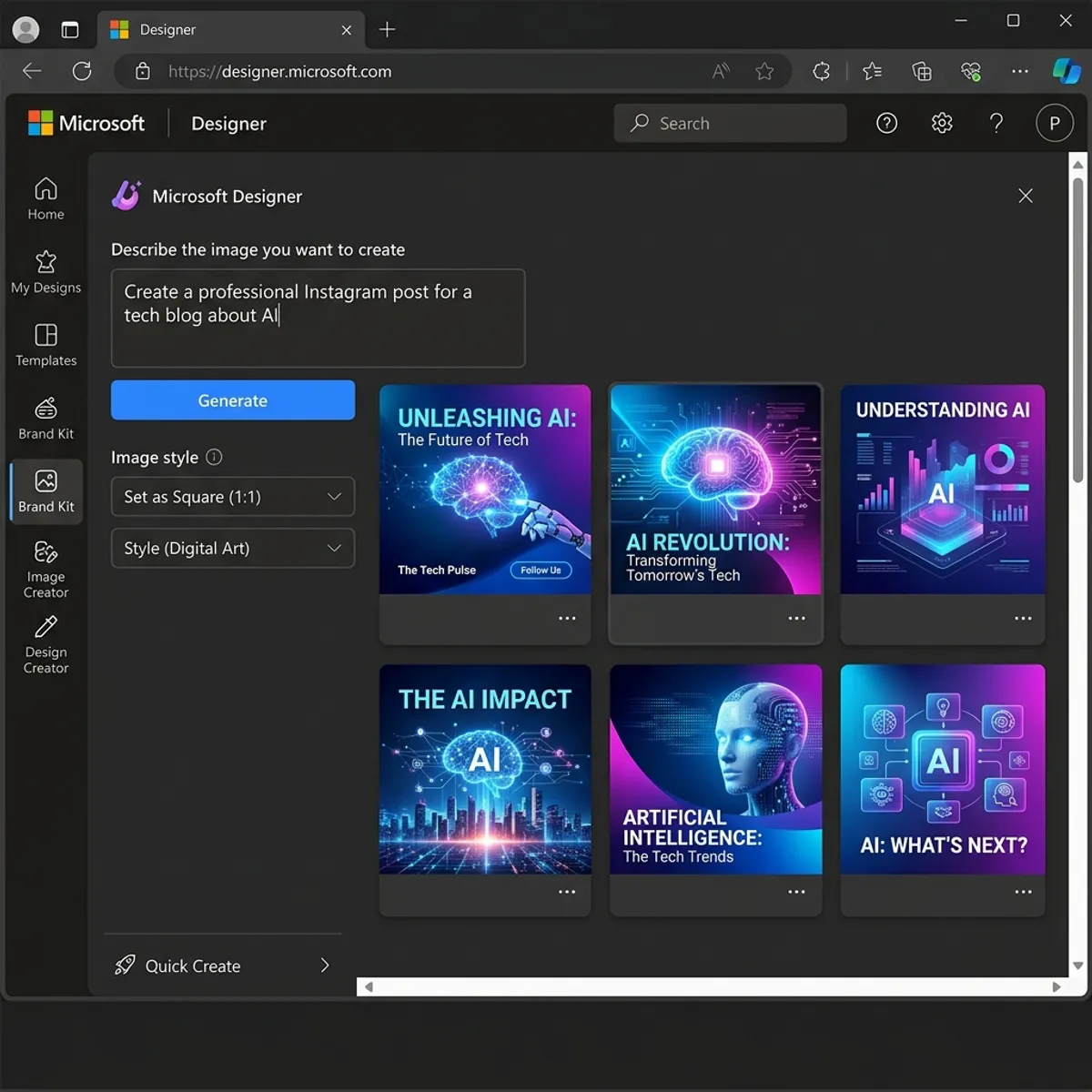
The contemporary digital landscape has been irrevocably transformed by the advent of generative artificial intelligence, particularly in the domain of visual synthesis. When we examine the paradigm of how to create AI images free of charge, we are not merely discussing consumer-grade applications or superficial web interfaces, but rather a profound democratization of computational creativity powered by immensely complex neural networks. This democratization represents a seismic shift from historically proprietary, cost-prohibitive rendering pipelines to accessible, open-source or freemium architectures that place unprecedented graphical power into the hands of the global populace. The ability to create AI images free of direct monetary cost is predicated on a convergence of algorithmic breakthroughs, primarily the refinement of diffusion models, which iteratively denoise randomized pixel matrices into coherent semantic representations based on textual conditioning. By circumventing traditional software licensing models and expensive cloud-compute gateways, these free generative frameworks leverage a combination of localized computational offloading and subsidized inference servers to construct high-fidelity visual outputs. Consequently, the discourse surrounding the generation of artificial imagery at zero cost extends far beyond simple utility; it delves into the fundamental restructuring of digital asset creation, the commoditization of pixels, and the democratization of visual articulation in an era where data and algorithms govern the creation of media.
Furthermore, the intrinsic value of platforms that allow users to create AI images free of charge lies in their capacity to dissolve the barriers between abstract ideation and concrete visual manifestation. Historically, the translation of a conceptual thought into a high-resolution image required either years of specialized artistic training or significant financial investment in professional design services. Today, the interface between human imagination and digital realization is mediated by advanced mathematical functions and multi-dimensional vector spaces. These zero-cost generative engines operate by mapping human language into a latent spatial representation, interpreting linguistic nuances, and projecting them onto a visual canvas through a meticulously orchestrated stochastic process. The sheer volume of computational work required to achieve this—billions of matrix multiplications per image—makes the availability of such tools at no cost a modern engineering marvel. This introduction serves to unpack the profound implications of this technological leap, recognizing that the phrase 'create AI images free' encapsulates a revolution in accessible computing, fundamentally altering the economics of content creation and challenging our traditional understanding of artistic genesis and technological distribution.
2. Basic Architecture
To comprehend how platforms allow users to create AI images free, one must dissect the underlying neural network architecture that drives these generative capabilities, primarily focusing on Latent Diffusion Models (LDMs). The architecture is elegantly bifurcated into several distinct but heavily interdependent components, starting with the text encoder. Most free generative frameworks utilize variations of the Contrastive Language-Image Pretraining (CLIP) model, which acts as the crucial bridge between human language and machine-understandable vectors. When a user inputs a prompt into a free image generator, the CLIP text encoder translates this sequence of words into a high-dimensional mathematical embedding. This embedding contains the semantic essence of the request, capturing relationships between subjects, styles, and environmental contexts. This process is computationally intensive but highly optimized in modern free models to ensure that the initial translation from text to mathematical intent occurs with near-zero latency, laying the necessary foundation for the subsequent visual synthesis.
Following the textual encoding, the architecture relies on a perceptual compression mechanism, typically a Variational Autoencoder (VAE). Because generating high-resolution images in the raw pixel space is computationally prohibitive and would render the 'free' aspect economically unviable for service providers, the VAE compresses the target image space into a much smaller, denser latent space. The core generation process—the actual diffusion—occurs entirely within this latent space. A neural network, almost universally a U-Net architecture supplemented with cross-attention layers, is tasked with iteratively removing Gaussian noise from a random starting tensor. The U-Net is conditioned by the CLIP embeddings, guiding the denoising process step-by-step so that the noise gradually coalesces into a coherent latent representation of the requested image. The cross-attention mechanisms allow the U-Net to focus on specific parts of the text prompt while generating specific regions of the latent image. Finally, the VAE decoder translates this denoised latent representation back into the standard pixel space, resulting in the final high-resolution image. The efficiency of operating within the latent space rather than the pixel space is the primary architectural innovation that has drastically reduced computational requirements, thereby allowing developers and organizations to deploy infrastructure where users can create AI images free of cost on consumer-grade hardware or highly optimized cloud clusters.
3. Challenges and Bottlenecks
Despite the architectural elegance of diffusion models, deploying systems that enable users to create AI images free introduces a massive array of technical challenges and computational bottlenecks. The most prominent bottleneck is the sheer demand for Video Random Access Memory (VRAM) and raw GPU compute power. Inference—the act of generating the image from a trained model—requires loading multi-gigabyte weight files into active GPU memory. For cloud providers offering free tiers, multiplexing thousands of concurrent user requests across a finite pool of hardware accelerators creates immense queuing and latency issues. When a system is saturated, the scheduling algorithms must aggressively manage batch sizes and context switching, often leading to unpredictable generation times. Furthermore, the iterative nature of the diffusion process, which historically required fifty to one hundred sequential denoising steps, means that the GPU must perform vast amounts of computation before a single image is finalized. This sequential dependency fundamentally limits the throughput of free image generation services, acting as a hard cap on how many requests can be processed per second without incurring catastrophic infrastructure costs.
Another significant challenge inherent in environments where users create AI images free is the management of model precision and memory bandwidth. High-fidelity models are typically trained in 32-bit or 16-bit floating-point precision, demanding exorbitant memory bandwidth to move data between the GPU's memory and its processing cores. In free-tier architectures, memory bandwidth is often the limiting factor rather than theoretical compute capability (FLOPs). Additionally, free systems must contend with the 'cold start' problem. If an API spins down idle instances to save money, a new user request necessitates reloading the massive neural network into memory from disk, incurring a massive latency penalty. Developers attempting to mitigate these bottlenecks frequently have to resort to aggressive quantization, reducing the numerical precision of the model weights to 8-bit or even lower, which can sometimes degrade the subtle aesthetic qualities of the generated imagery. Balancing the economic necessity of high throughput against the user expectation of high-quality, photorealistic output remains the central engineering dilemma for any platform promising the ability to create AI images free of financial barriers.
4. Scalability Benefits
Addressing the aforementioned bottlenecks requires innovative scalability solutions, which in turn unlock profound benefits for ecosystems designed to create AI images free. The primary mechanism for scaling these systems horizontally is through distributed inference architectures. Instead of relying on monolithic, centralized supercomputers, modern free generation platforms increasingly leverage decentralized clusters or even federated edge computing. By distributing the inference workload across a vast mesh of consumer-grade GPUs or cost-effective cloud instances, the network can elastically scale to meet sudden spikes in demand. This horizontal scalability is particularly beneficial for free services, as it allows for the integration of dynamic scaling policies where compute nodes are only provisioned precisely when needed, minimizing idle time and maximizing resource utilization. Furthermore, asynchronous queuing systems and advanced load balancers ensure that user prompts are optimally routed to the least burdened nodes, maintaining reasonable latency even during peak global usage.
Moreover, the drive to scale systems that create AI images free has catalyzed tremendous advancements in algorithmic optimization. The necessity for scale has birthed Latent Consistency Models (LCMs) and advanced distillation techniques that drastically reduce the number of inference steps required to generate a high-quality image. Where traditional diffusion required fifty steps, optimized models can now synthesize equivalent visuals in merely two to four steps. This exponential increase in computational efficiency directly translates into scalability benefits, allowing a single GPU to process an order of magnitude more requests per minute. Additionally, advancements in hardware-specific compilation, such as leveraging NVIDIA's TensorRT or optimizing for Apple's Neural Engine, allow the underlying models to execute with unprecedented speed on diverse hardware profiles. These scalability benefits not only ensure the survivability of free cloud generators but also empower the open-source community to run highly complex models entirely locally on personal hardware, completely decoupling the generation process from centralized server dependencies and achieving ultimate, infinitely scalable free usage.
5. Practical Integration
The true utility of systems that allow individuals to create AI images free is realized through their practical integration into broader software ecosystems and professional workflows. At the enterprise level, integration is primarily achieved via robust, asynchronous REST APIs or GraphQL endpoints. These gateways allow developers to programmatically submit prompts, define parameters such as aspect ratio and seed values, and retrieve webhook notifications upon generation completion. For platforms offering free tiers, these APIs are heavily rate-limited and often incorporate sophisticated token-bucket algorithms to prevent abuse while ensuring equitable access. In a production environment, integrating a free generative API involves building resilient middleware capable of handling timeouts, implementing exponential backoff retry logic, and gracefully degrading the user experience when the free tier infrastructure is operating at maximum capacity. The integration code must also manage the downloading and local caching of the resulting high-resolution assets to minimize redundant bandwidth usage.
Conversely, for creative professionals and power users, the practical integration of tools to create AI images free often occurs locally through advanced graphical interfaces like ComfyUI or Automatic1111. These localized integrations fundamentally bypass the limitations of free cloud services by leveraging the user's own hardware. This node-based or highly configurable WebUI integration allows for intricate, multi-stage generative pipelines. Users can string together multiple neural networks, seamlessly passing latent space arrays from a base diffusion model into an upscaler, and finally through an algorithmic detail enhancer, all without paying a single cent for compute. This level of practical integration requires a deep understanding of Python environments, dependency management (such as PyTorch and CUDA toolkits), and manual memory management to prevent out-of-memory errors. The result is a highly bespoke, zero-cost production environment that integrates seamlessly into tools like Photoshop or Blender, completely revolutionizing the digital art pipeline by embedding unrestricted generative capabilities directly into the local workflow.
6. Security and Compliance
When operating platforms that allow users to create AI images free, security and compliance represent a highly complex, multi-dimensional matrix of legal and ethical challenges. The foundational compliance issue revolves around the provenance of the training data. Free image generation models are typically trained on massive, scraped datasets containing billions of images, many of which are copyrighted. Implementing compliance frameworks in free tools requires navigating the murky legal waters of 'fair use' and algorithmic transformation. To mitigate legal exposure, advanced systems are beginning to incorporate safety tensors and localized data filtering techniques to prevent the exact replication of copyrighted works. Furthermore, from a security standpoint, the unconstrained ability to generate photorealistic imagery introduces severe risks regarding the creation of deepfakes, non-consensual explicit material, and automated disinformation campaigns. Free, public-facing platforms must deploy rigorous, computationally expensive safety checkers—often secondary neural networks—that evaluate the resulting image against established safety policies before returning it to the user.
However, the open-source nature of many models used to create AI images free presents a paradoxical security challenge. When the underlying model weights are freely distributed for local execution, centralized safety checkers are easily bypassed by malicious actors. Therefore, the security paradigm is shifting towards cryptographic watermarking and provenance tracking embedded directly into the neural network's generation process. By training models to intrinsically weave invisible, robust cryptographic signatures into the spatial frequencies of the generated pixels, researchers are attempting to ensure that any image generated—whether locally or via a free cloud API—can be definitively identified as AI-generated. Compliance with emerging digital legislation, such as the EU AI Act, mandates stringent transparency regarding the origin of synthetic media. Consequently, managing the security of free image generation requires a delicate balance between open access, computational efficiency, and robust, cryptographically verifiable content moderation.
7. Costs and Optimization
The proposition to create AI images free is an economic paradox; computational thermodynamics dictates that the energy and hardware utilized to perform trillions of floating-point operations possess intrinsic, unavoidable costs. The sustainability of free image generation platforms relies entirely on hyper-aggressive mathematical and architectural optimization. Cloud providers offering these services must amortize the exorbitant capital expenditure of GPU clusters through economies of scale and relentless efficiency engineering. One of the primary optimization vectors is dynamic batching. When thousands of users request images simultaneously, the server infrastructure consolidates these discrete requests into massive, unified matrices, processing them concurrently through the GPU cores. This maximizes the utilization of the hardware's massive parallel processing capabilities, significantly reducing the energy cost per individual image generated. Without sophisticated, real-time batching algorithms, the overhead of context switching would render any free tier financially ruinous.
Furthermore, the drive to maintain services where users can create AI images free has spearheaded the development of extreme model compression techniques. Model pruning algorithms meticulously analyze the neural network, identifying and excising millions of redundant or low-impact parameters without fundamentally degrading the output quality. This reduction in the model's physical footprint directly translates to lower VRAM requirements, allowing operators to deploy multiple model instances on a single GPU. Additionally, quantization techniques, which reduce the mathematical precision of the weights from 32-bit floating-point to 8-bit or 4-bit integers, drastically reduce memory bandwidth bottlenecks. The synthesis of these optimizations—batching, pruning, quantization, and the utilization of hyper-efficient schedulers—creates a highly refined computational pipeline. It is only through this rigorous, systemic reduction of waste at the micro-architectural level that the economic illusion of 'free' AI image generation is mathematically sustained in the real world.
8. Future of the Tool
Looking toward the horizon, the trajectory of systems designed to create AI images free points towards a total, invisible integration of generative synthesis into every facet of digital interaction. The current state of discrete, prompt-based image generation will soon be considered an archaic, transitional phase. The immediate future involves the rapid evolution from static imagery to dynamic, temporal coherence—specifically, free AI video generation. As latent consistency models continue to improve, the computational cost of generating sequential frames will plummet, enabling real-time, high-definition video synthesis at zero cost to the end consumer. This evolution will be heavily reliant on neuromorphic engineering and specialized Application-Specific Integrated Circuits (ASICs) designed explicitly for diffusion workloads, fundamentally shifting the paradigm away from generalized GPUs towards hardware optimized solely for probabilistic visual rendering.
Moreover, the future capability to create AI images free will transcend localized two-dimensional screens and merge seamlessly with spatial computing and augmented reality. Generative models will continuously operate in the background, synthesizing complex, contextual, and hyper-personalized three-dimensional environments in real-time based on eye-tracking and biometric feedback. The underlying models will become smaller, highly localized, and capable of extreme few-shot learning, allowing them to adapt to a user's specific stylistic preferences instantaneously without requiring heavy cloud compute. This decentralization of generative power means that the act of creating imagery will no longer be an explicit, conscious task, but rather an automatic, continuous augmentation of digital existence. The ultimate future of these tools is their ubiquity and absolute zero-friction accessibility, rendering the very concept of paying for pixel generation entirely obsolete.
9. Final Conclusion
In final analysis, the proliferation of ecosystems that allow individuals to create AI images free represents one of the most significant democratizations of computational power in the history of computer science. It is a triumph of mathematical optimization, open-source collaboration, and distributed systems engineering. By bridging the chasm between raw human imagination and high-fidelity visual output, these systems have dismantled traditional barriers to entry in creative industries and established a new baseline for digital communication. The underlying architecture—from the semantic translations of CLIP to the stochastic denoising of latent U-Nets—demonstrates a profound mastery over multi-dimensional data structures. Yet, as we have explored, this capability is not without its extreme complexities. The continuous battle against computational bottlenecks, the ethical imperatives of security and compliance, and the relentless drive for cost optimization form a constantly shifting, highly intricate technical landscape.
Ultimately, the ability to create AI images free is a testament to the compounding nature of technological advancement. What required supercomputers merely a half-decade ago is now executed on consumer hardware or subsidized entirely by algorithmic efficiency. As we progress, the artificial distinction between human-created and machine-synthesized imagery will dissolve, not through deception, but through the ubiquitous, zero-cost availability of these generative engines. The future of visual media is intrinsically linked to the ongoing refinement of these open, accessible, and profoundly powerful algorithmic models. They are not merely tools for creation, but fundamental extensions of human cognitive expression, ensuring that the power to visualize the abstract remains a universal, unrestricted capability for generations to come.